Understand what makes a garment stretch
Stretch can come from the way a fabric is knitted, from elastic fibres blended into the yarn, or from a separate band of elastic sewn into a garment. A cotton T-shirt may stretch because of its knit construction, while leggings may contain elastane to help them return to shape. A skirt can have little stretch in its main fabric but still rely on an elastic waistband. These differences matter: the fabric and the waistband may react differently to wear and washing.
Start with the garment’s care label rather than assuming every stretchy item needs the same treatment. Check for separate instructions on removable parts or trims, and consider how the item is made. A delicate knitted top, for example, may need more support while drying than a pair of sturdy exercise shorts. When in doubt, choose gentler handling and avoid high heat.
Reduce strain during wear
Choose a fit that stretches comfortably without feeling under constant tension. If seams pull sharply, a waistband rolls or the fabric becomes noticeably thin when worn, the garment may be working harder than intended. This does not always mean it is the wrong size: the cut, fabric weight and placement of elastic also affect comfort. Trying a different shape can sometimes help more than sizing up or down.
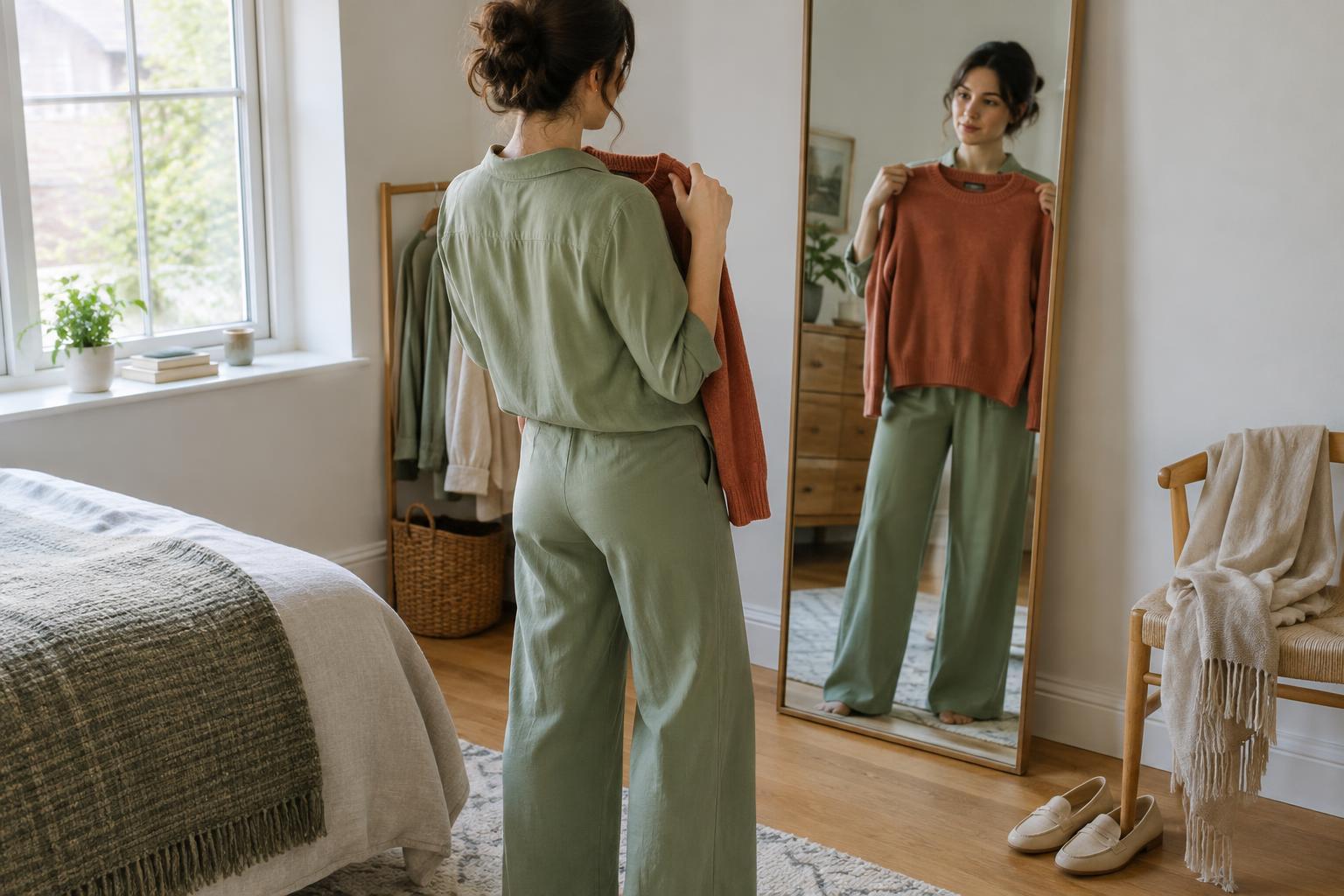
Take care when pulling on fitted clothes. Ease fabric over shoulders, hips or feet instead of tugging at one seam or gripping a waistband in a single spot. Empty heavy pockets when you can, particularly on lightweight stretch trousers. After wearing an item, let it rest and air out if it is clean enough to wear again. Rotating frequently worn pieces gives you a chance to notice loose threads, thinning patches or elastic that no longer springs back.
Wash without unnecessary friction or heat
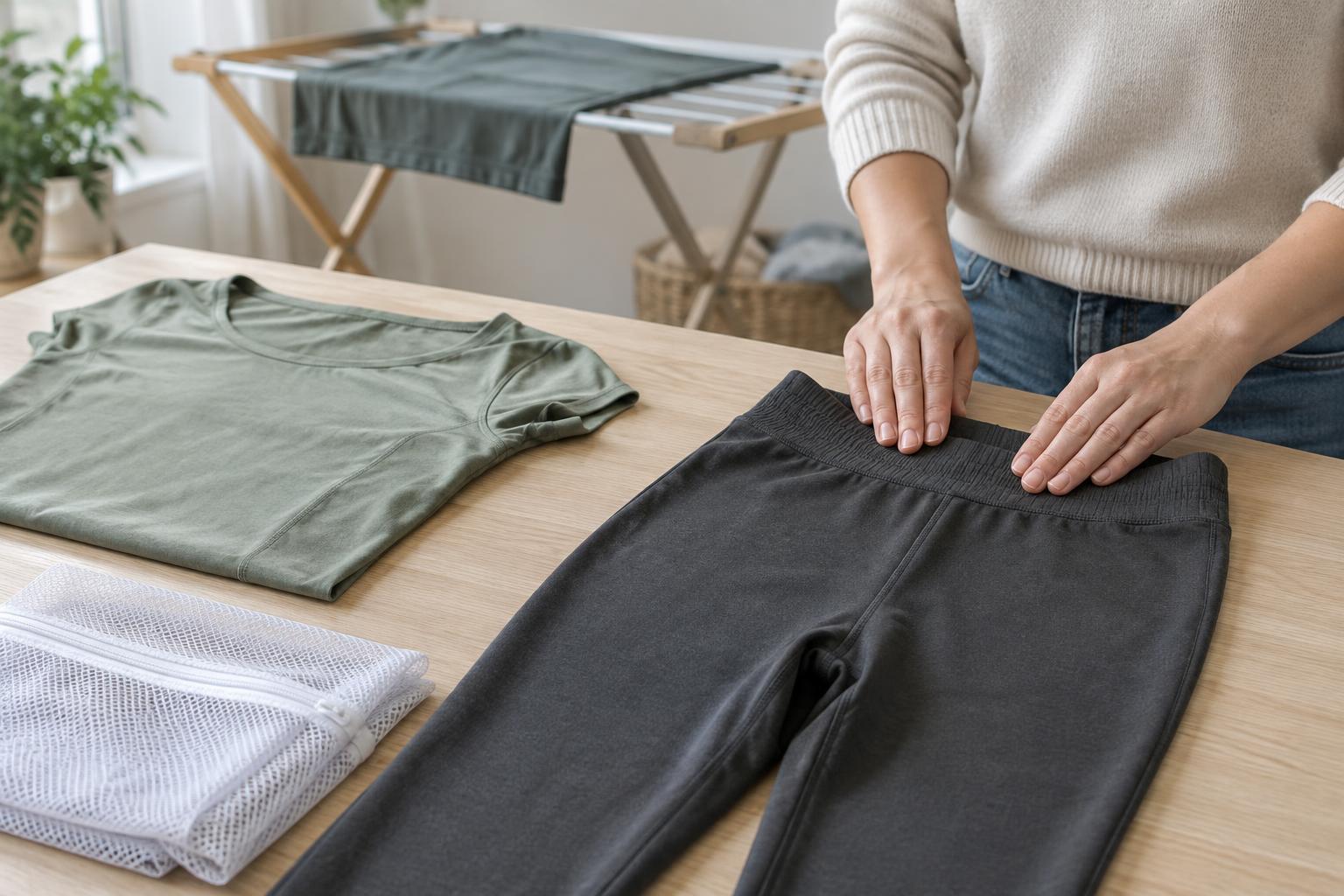
Wash stretch garments when they need it, following the care label for temperature and cycle. Turning fitted items inside out can reduce rubbing on their outer surface. Fasten hooks and zips on other clothes in the load so they are less likely to catch on soft knits. A mesh laundry bag can help contain smaller or delicate pieces, but it will not protect an item from an unsuitable temperature or an overloaded machine.
Use the recommended amount of detergent and rinse thoroughly. Extra detergent is not a substitute for an appropriate wash cycle, and residue can leave fabric feeling stiff. Avoid adding products such as bleach or fabric softener by habit; check whether the garment’s instructions allow them. For a heavily soiled item, pretreat the affected area gently rather than scrubbing the entire fabric. Vigorous rubbing can distort a knit or roughen its surface.
Dry and store with shape in mind
High heat can be hard on some elastic fibres and waistbands, so use the drying method on the label. When air-drying, smooth the garment into shape without pulling it longer or wider. Lay heavier knits flat on a clean, dry surface if hanging would stretch them. Lighter pieces may hang safely when their weight is evenly supported. Give garments enough space to dry fully before putting them away.
Fold stretchy clothes that are likely to droop on a hanger, such as soft knit tops or leggings. If an item needs to hang, use a hanger that supports its shape without pressing sharp points into the shoulders or waistband. Avoid stretching a waistband around an oversized hanger or stuffing a drawer so tightly that garments must be pulled free. Comfortable storage makes it easier to handle clothes gently every day.
Know when care is not enough
If an elastic waistband stays loose after washing and drying as directed, it may have lost some of its ability to recover. Repeated washing is unlikely to restore it. Some garments have an accessible elastic casing, which may allow the elastic to be replaced. Others have elastic stitched into several seams, making alteration more involved. Check the construction before deciding whether a repair is practical.
Look for changes beyond a loose fit: seams that have begun to split, fabric that remains baggy at the knees, or areas that have become thin enough to need reinforcement. A small repair may extend the life of an otherwise useful piece, while a worn-out fabric may not hold a lasting fix. Gentle care cannot prevent every sign of wear, but it can help you keep stretch clothing comfortable and recognise when it is time to repair or replace it.