Start with the outfits you actually wear
Before shopping, look at the clothes you reach for during an ordinary week. Note the trouser lengths, skirt or dress shapes, and level of formality you wear most often. A shoe that looks appealing on its own may be less useful if it only works with one outfit. Aim first for a pair that suits several combinations you already enjoy.
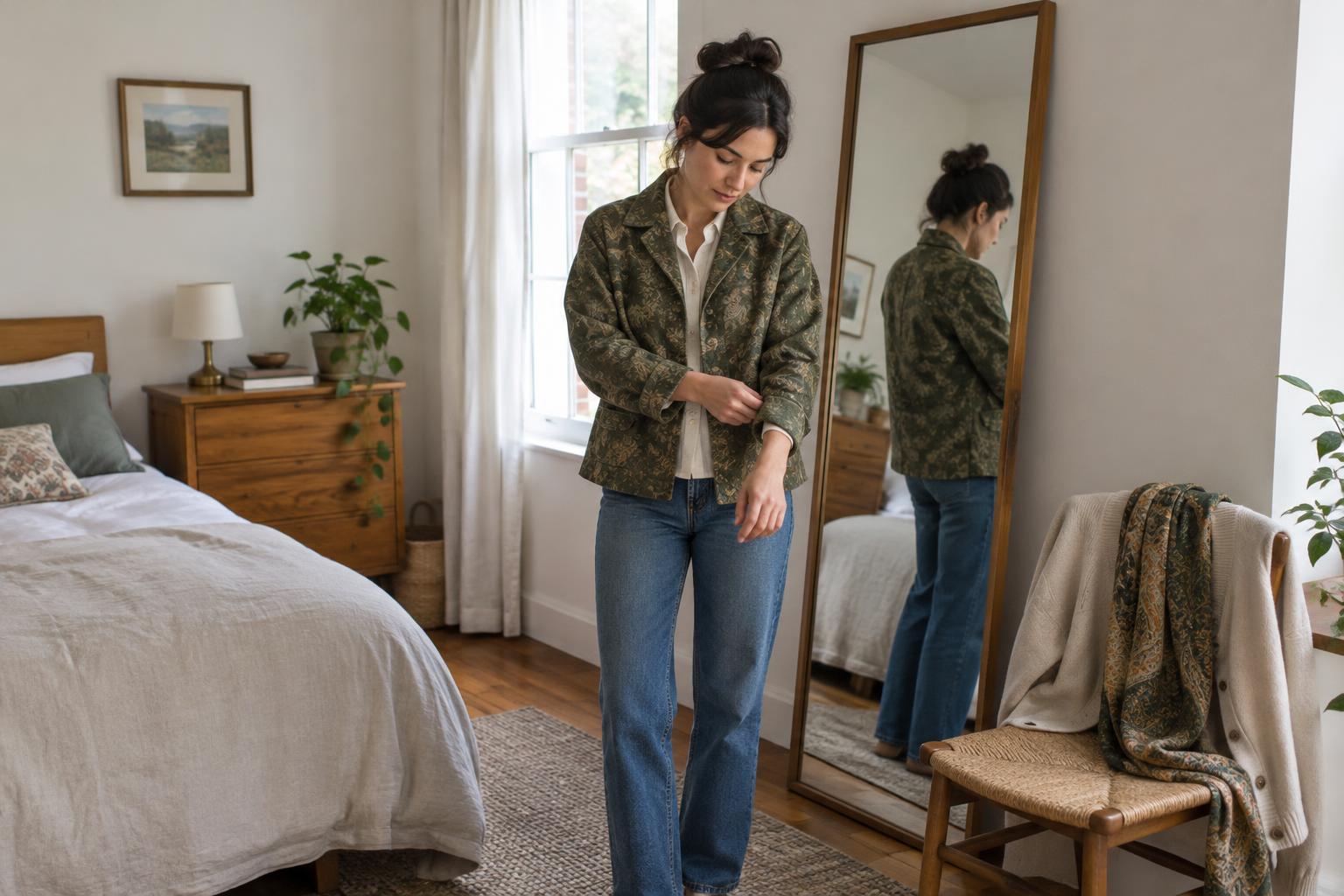
It can help to photograph a few typical outfits and ask what each one needs at the bottom: a streamlined shape, a sturdier sole, or a slightly more polished finish. Your answer may differ from someone else’s. If your days involve casual trousers and plenty of walking, for example, your most useful shoe may not be the dressiest pair in your wardrobe. Start with the gap you encounter often, not an imagined occasion.
Decide what each pair needs to do
An everyday shoe should suit both your clothes and the way you spend your day. Think about how far you walk, whether you stand for long periods, the surfaces you cross, and the weather you commonly dress for. A smooth sole may feel adequate indoors but be less practical on wet pavement. An open design might be pleasant in warm weather yet unsuitable when you need more coverage.
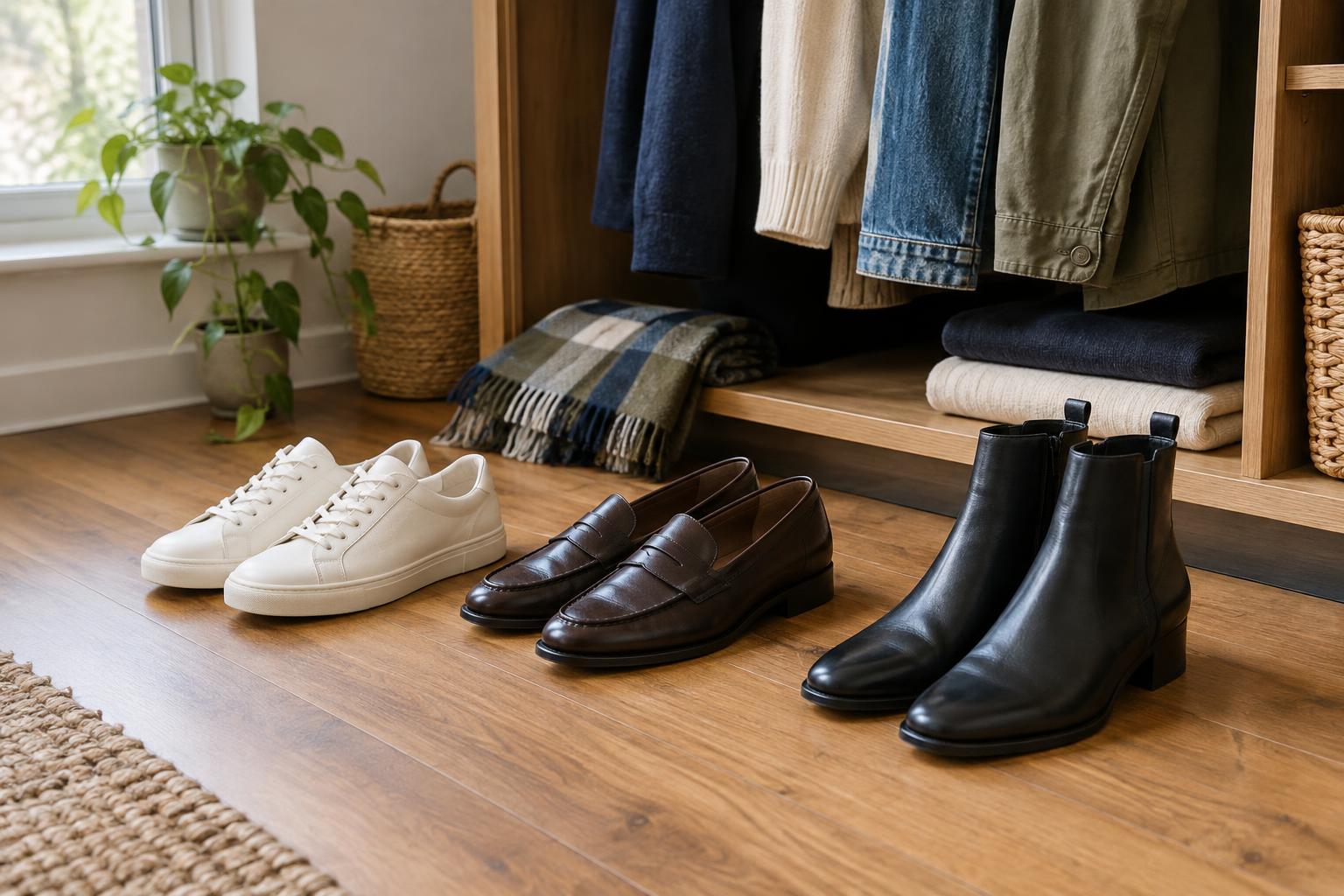
Give each prospective pair a clear job. One might be a casual walking shoe, another a neat option for work or dinners, and a third a weather-appropriate choice. These jobs can overlap; you do not need a separate pair for every outfit. If two pairs would serve exactly the same purpose, consider whether the new one offers a meaningful difference in comfort, appearance or seasonal use before buying it.
Check fit while standing and moving
Try shoes with the socks or hosiery you expect to wear. Stand up and check whether your toes have room to move, your heel feels reasonably secure, and the shoe holds your foot without pinching. Walk on a firm surface if possible. Notice any rubbing, slipping or pressure that appears after several steps, not just how the shoe feels when you first put it on.
Check both feet rather than assuming they feel the same. If a pair needs significant stretching before it feels wearable, it may not be a dependable everyday choice. Also consider how easy it is to put on and adjust: laces, straps and closures can make a difference when you are getting dressed in a hurry. Comfort is personal, so treat a popular style as an option to test rather than a fit guarantee.
Use shape and colour to connect outfits
Shoe shape changes the impression of an outfit without requiring a new set of clothes. A sleek, low-profile shoe often sits quietly beneath tailored trousers, while a chunkier sole can add visual weight to wide denim or a relaxed dress. Neither approach is a rule. Look at the whole outfit in a mirror and decide whether you like how its proportions work together.
For a versatile first pair, consider a colour that repeats elsewhere in your wardrobe or feels natural with your most-worn bottoms. That could be dark brown, black, cream or another shade you use often. Matching a shoe exactly to a bag is optional; a shared level of formality or a similar colour depth can be enough to make an outfit feel considered. Choose a finish you will enjoy wearing, since a theoretically versatile shoe is not useful if you always leave it behind.
Build a rotation you can maintain
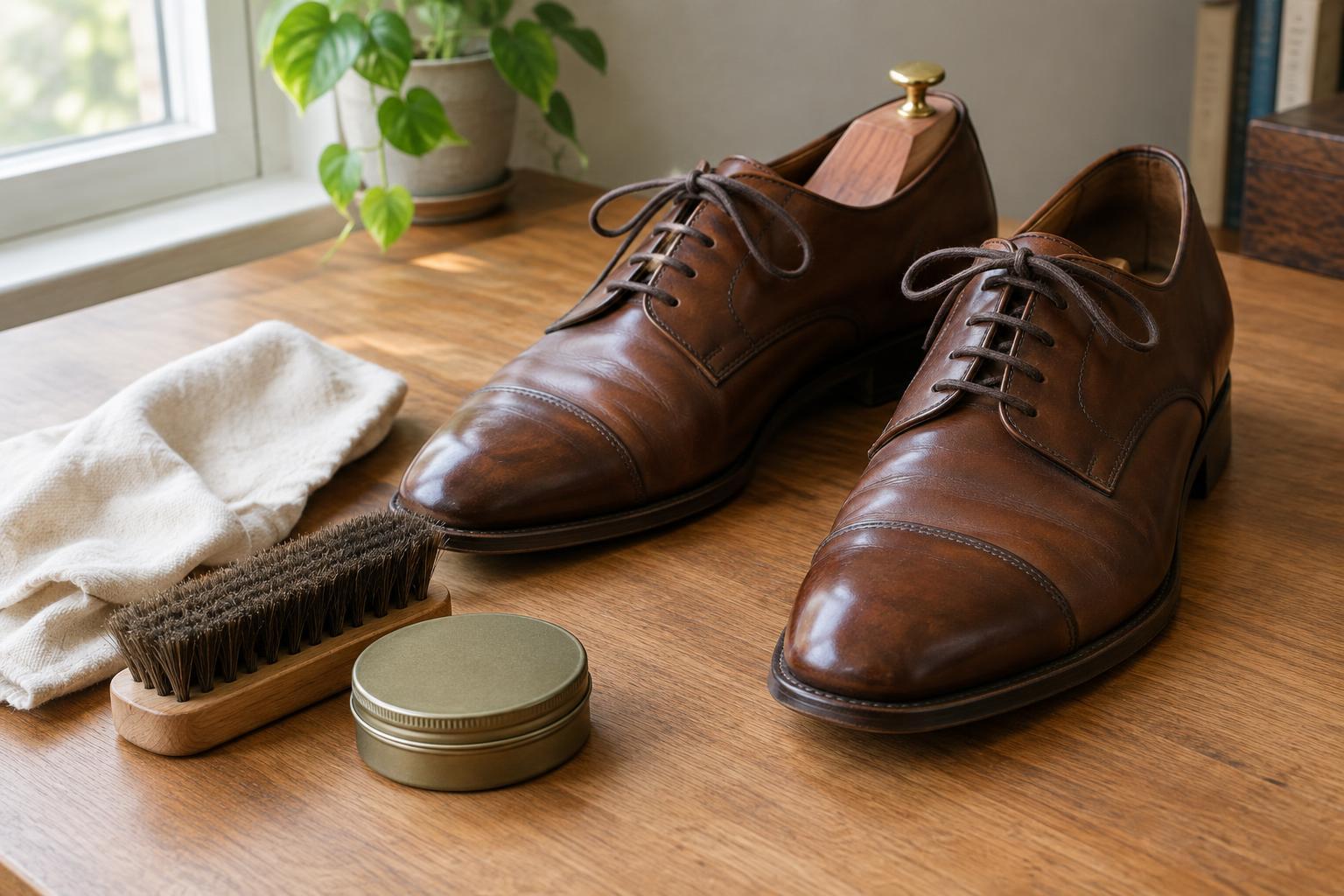
Even a small shoe collection works better when each pair has a place and a care routine you can manage. Check the material and any care guidance before buying. Some finishes are easy to wipe clean; others may need more attention or be less suited to frequent wet-weather wear. Think about where you will store the shoes and whether you have time to let a damp pair dry before wearing it again.
When reviewing your collection, identify the pairs you wear repeatedly and the reasons they succeed. Perhaps they are easy to walk in, work with your usual trouser hems, or feel appropriate in several settings. Use those observations when replacing a worn pair or filling a genuine gap. A practical rotation is not defined by a fixed number of shoes. It is one that supports your daily outfits without leaving you dependent on a pair that never quite feels right.