Start with what feels unfamiliar
Sometimes a piece catches your eye but seems out of place once it is in your wardrobe. It might be a brighter colour than you normally wear, a different shape, or a fabric you associate with a particular occasion. Before trying to build an outfit around it, name the specific difference. “This is too bold for me” is difficult to work with; “I am not used to wearing this much colour near my face” gives you somewhere to begin.
It also helps to separate unfamiliarity from discomfort. A new silhouette may simply take a few tries to understand, while a waistband that pinches or a collar you keep adjusting presents a practical problem. You do not have to make every piece work. The aim is to find out whether you enjoy wearing it, not to prove that you can.
Put it into an outfit you already trust
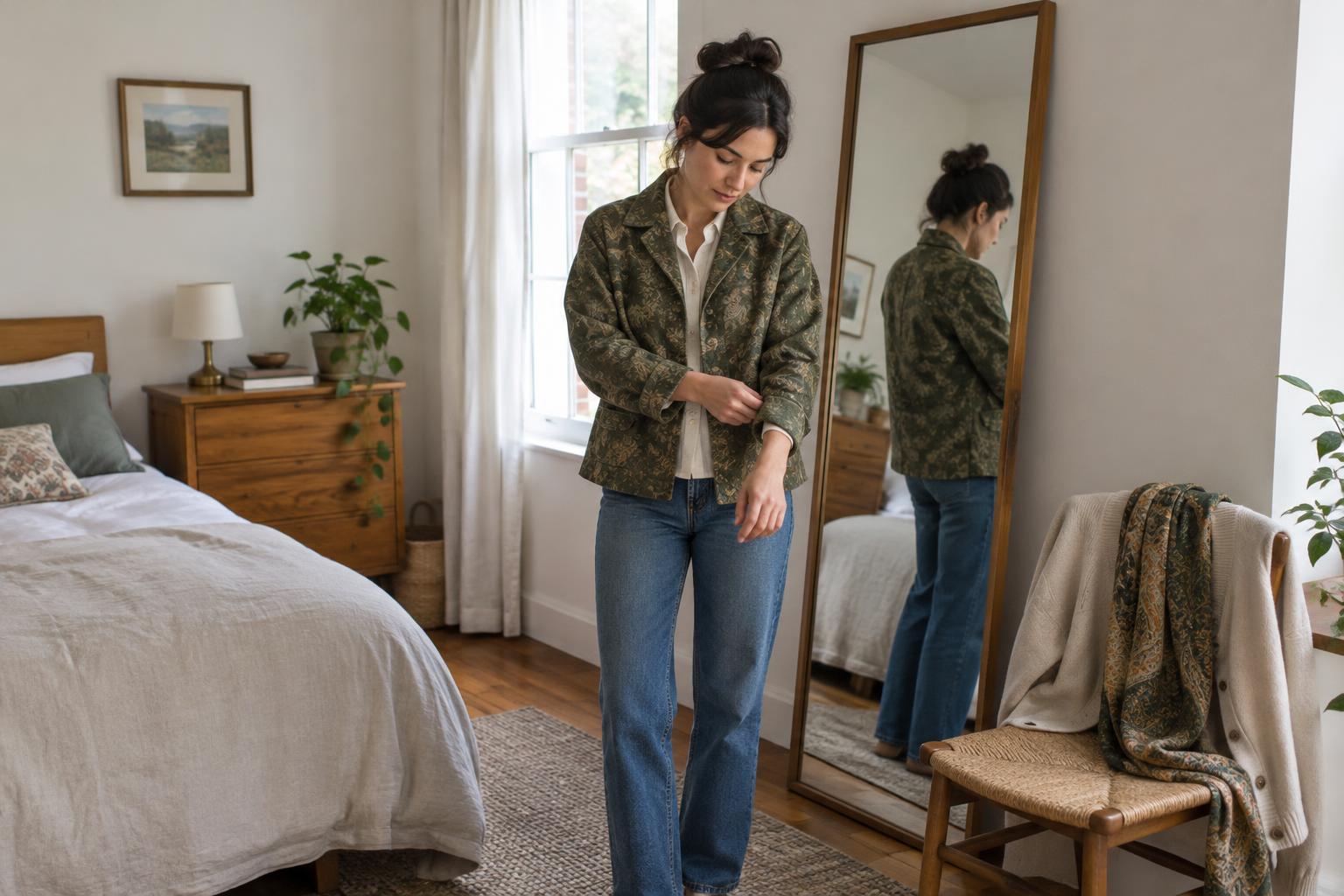
Choose an outfit you wear often and replace just one element with the unfamiliar piece. If you usually feel good in straight trousers, a simple top and flat shoes, keep most of that combination intact. Try the unusual jacket over it, or swap in the new trousers while keeping the top and shoes. Familiar pieces give you a point of comparison: you can notice what the new item changes without having to judge an entirely new look.
Pay attention to more than whether the colours match. Notice where the outfit feels fitted or loose, where its visual weight sits, and whether you can move as you normally do. A voluminous shirt, for example, may feel easier with trousers you already know how to style than with another unfamiliar shape. This is a starting point, not a rule about which silhouettes belong together.
Use small choices to bring it closer to you
An outfit can feel personal because of details that are easy to overlook. Try wearing the new piece with your usual shoes, a familiar bag, or jewellery you reach for regularly. You could change how a shirt is tucked, roll a sleeve, leave a layer open, or choose a different neckline underneath. These adjustments may help the item sit more naturally alongside the things you already wear.
If colour is the sticking point, you need not repeat the new colour throughout the outfit. Surrounding it with colours you enjoy may be enough. If the piece feels unusually formal, try it with your everyday shoes or a relaxed layer; if it feels more casual than your usual clothes, pair it with a neater item you own. Change one detail at a time so you can tell which choices actually help.
Test the outfit in a real part of your day
Trying on combinations at home is useful, but an outfit can feel different once you sit, walk, carry a bag or put on a coat. Choose a low-pressure occasion that fits the piece and wear it for a while. You do not need to commit to a whole day. The useful question is whether you can go about your routine without feeling preoccupied by what you are wearing.
Afterwards, be specific about your reaction. Perhaps you liked the colour but disliked the way the fabric moved, or the outfit felt comfortable until you added your usual outerwear. That information gives you a next step: try another layer, save the piece for a different activity, or decide it is not quite right. A piece does not have to become an everyday staple to earn a place in your wardrobe, but it helps to know when you would genuinely choose it.
Let your style make room without changing its centre
Personal style need not be completely consistent to feel like yours. You can enjoy one dramatic skirt while preferring quiet outfits most days, or wear a structured jacket only when the setting suits it. The question is not whether the piece matches every item you own. It is whether you can make a few outfits you enjoy wearing in your actual life.
If repeated attempts still feel forced, set the piece aside rather than buying more clothes to justify it. If one combination works, remember what made it work: the familiar shoes, the proportions, or the occasion. You can use that insight the next time you encounter something outside your usual choices, while keeping the freedom to decide that some appealing clothes are simply not for you.