Start with the fabric and the shape
A tidy wardrobe is useful, but the neatest-looking arrangement is not always the kindest to your clothes. A hanger supports some garments and pulls others out of shape. A drawer protects some pieces from stretching but leaves others with stubborn creases. To decide what to do, consider three things: how easily the fabric stretches, how readily it wrinkles and whether the garment has a shape you want to preserve.
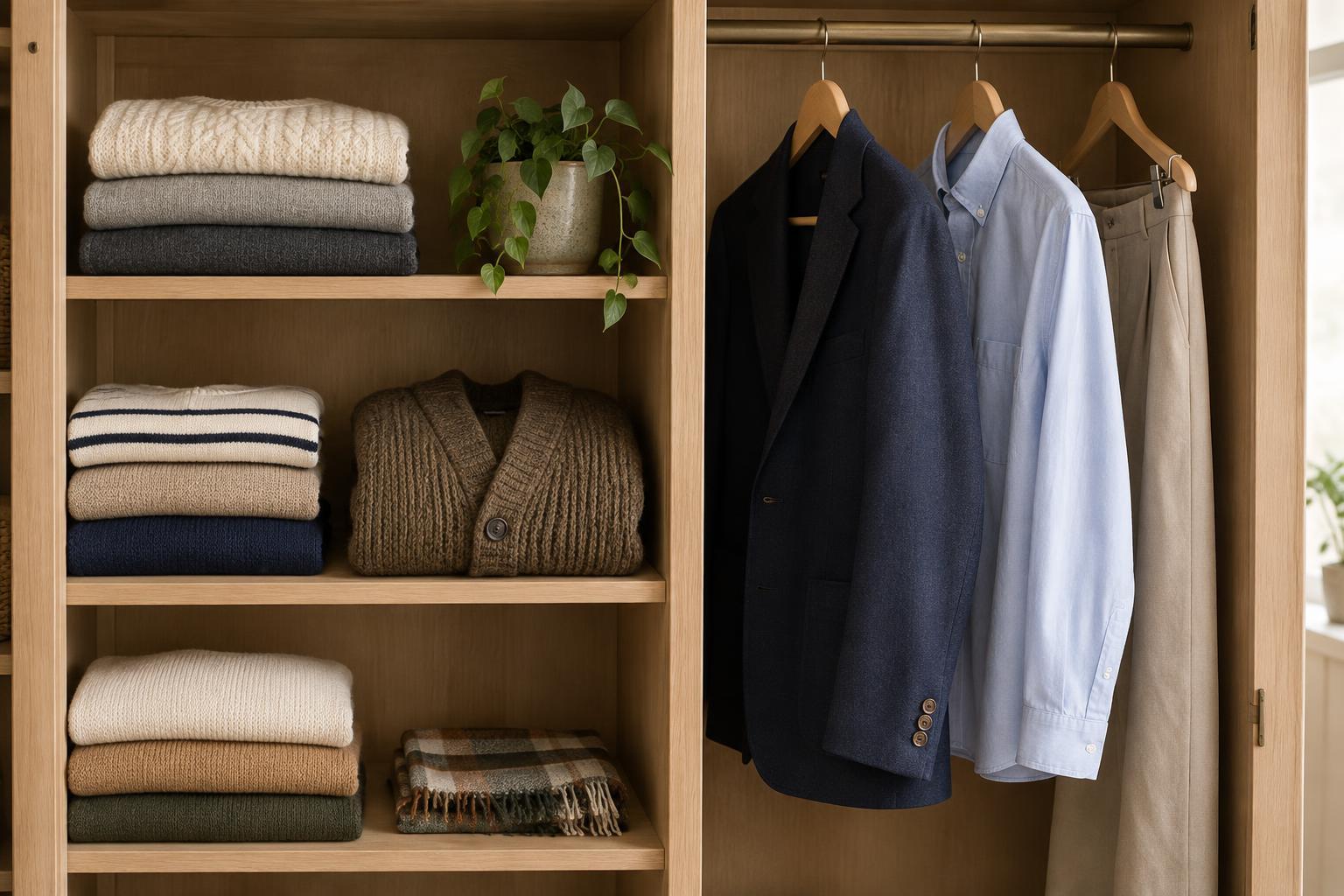
As a general rule, fold soft, stretchy or heavy items that might sag under their own weight. Hang tailored or easily creased items that benefit from keeping their intended shape. These are starting points rather than strict rules. A lightweight cardigan and a heavy knit dress may both be knitwear, yet the dress’s weight makes a hanger especially risky. If a garment has a care label with storage guidance, follow that first.
Fold knits and other pieces that can stretch
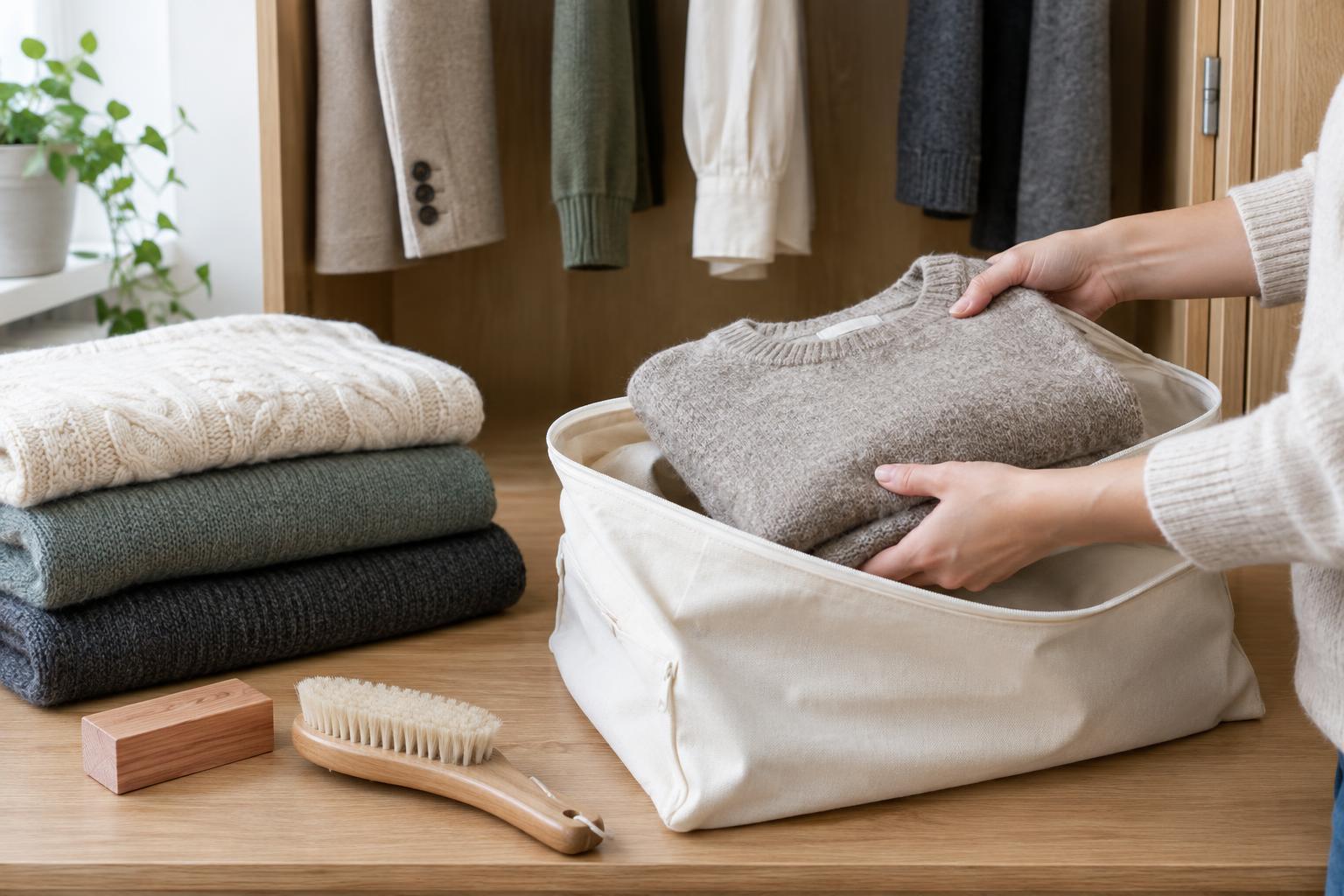
Sweaters, cardigans and knitted tops usually do best folded. Hanging them for long periods can put strain on the shoulders, neckline and sleeves, especially when the knit is loose or substantial. Fold each piece along its natural lines without pressing it into a tight bundle. In a drawer, stack only as high as you can without compressing the garments underneath. On a shelf, leave enough room to lift one item without pulling the whole pile apart.
T-shirts, sweatshirts, leggings and other casual jersey pieces can also be folded. They often tolerate light creasing better than a crisp shirt does, and folding frees hangers for garments that need them. If you prefer to see everything at once, fold items so they stand in a drawer, provided they are not squeezed in tightly. A heavy knit dress, embellished top or garment with a weighty hem is generally safer folded than hanging, because its own weight may gradually change its proportions.
Hang pieces with structure or a tendency to crease
Blazers, tailored jackets, button-front shirts and many dresses are good candidates for hanging. A hanger helps a blazer retain its shoulder line and lets a shirt hang without acquiring fold marks. Choose a hanger that suits the garment: broad enough to support a jacket’s shoulders, but not so wide that it pushes beyond the shoulders of a shirt. Fastening a button or two on a shirt or jacket can help it sit evenly.
Woven trousers, skirts and dresses may also benefit from hanging, particularly if their fabric holds creases. Use a trouser bar or clips that grip securely without leaving obvious marks; for delicate fabrics, a soft barrier between the clip and garment can help. Hang dresses by their shoulder seams unless their weight makes that impractical. If a dress has small hanging loops, they can help distribute its weight. Avoid crowding hanging clothes together, since a tightly packed rail can create wrinkles even when everything is on a hanger.
Make exceptions for delicate, heavy or unusual garments
Some clothes need a closer look. A flowing silk or satin blouse may crease when folded, so a smooth hanger with enough space around it is often convenient. A delicate garment that snags easily may need a breathable garment cover, whether it hangs or rests on a shelf. Beaded or heavily embellished pieces can be surprisingly weighty; folding them carefully may reduce strain on seams and shoulders. Place a clean layer of plain, soft tissue at folds if sharp creases are a concern.
Coats usually belong on sturdy hangers that support their shoulders, rather than on narrow wire hangers. Linen shirts and dresses are often easier to manage on hangers if you want to limit fold lines, although some wrinkling is part of how linen wears. For scarves, the best choice depends on the fabric and available space: fold delicate or knitted scarves loosely, and hang sturdier scarves over a smooth bar if they will not stretch or slip. When uncertain, check the item after a few days and adjust if you notice pulling, marks or deep creases.
Set up storage that makes good habits easy
The right method only helps if you can maintain it. Give frequently worn clothes the easiest places to reach, and leave space to put them away without forcing them into a crowded drawer or rail. Keep clean, fully dry clothes in a dry storage area. Let recently worn garments air out before returning them to a tightly packed space, especially if they feel damp. For longer storage, clean items first and choose a place away from persistent damp and direct sunlight.
You do not need to buy a matching set of storage products to improve your wardrobe. A few well-shaped hangers for jackets, enough drawer space for knits and a little breathing room between garments can make a meaningful difference. Revisit your choices as you use your clothes: if a folded shirt always needs extra ironing, try hanging it; if a hung sweater develops shoulder bumps, fold it instead. Let the garment’s condition, as well as your daily routine, guide the final decision.