Start by identifying the leather
Before reaching for a cleaner, look at the shoe’s surface and any care information supplied with it. Smooth, finished leather usually tolerates a gentle wipe and products made for leather shoes. Suede and nubuck have a soft, textured surface that needs a different approach: water, polish and ordinary leather conditioner can leave visible marks or flatten the texture. Patent leather, coated finishes and shoes made from a mix of materials may also call for specific care.
If you are unsure what a shoe is made from, begin with the least aggressive option: a soft, dry cloth or brush. Test any new product on a small, inconspicuous area and let it dry before treating the whole shoe. This matters especially with pale colours, delicate finishes and products that may darken leather. The aim is to remove dirt without stripping the finish or changing the shoe’s appearance.
Build a quick cleaning routine
A little attention after wearing shoes can prevent dirt from becoming difficult to remove. Let mud dry, then brush it away gently. For smooth leather, remove loose dust with a soft brush or cloth, paying attention to seams and the area where the upper meets the sole. Wipe remaining surface dirt with a cloth that is slightly damp rather than wet. If that is not enough, use a small amount of cleaner intended for the shoe’s finish, following its directions.
Avoid soaking leather or scrubbing at a stain with force. Too much water can affect the shape or finish, while hard rubbing may spread a mark or wear through colour. Remove laces when they get dirty so you can clean around the eyelets and tongue. Laces can usually be washed separately or replaced when worn; they often make a noticeable difference to how tidy a pair looks.
For suede or nubuck, use a brush designed for that surface once the shoe is dry. Brush lightly in a consistent direction to lift dust and restore texture. A suitable suede eraser may help with small marks, but test it first. If a stain does not lift with gentle treatment, repeated rubbing is more likely to damage the surface than improve it.
Condition, polish and protect with restraint
Smooth leather may benefit from occasional conditioning, particularly if it feels dry or looks dull. Apply a thin layer of a product suitable for the finish, allow it to absorb as directed, then buff away any excess with a clean cloth. Using more product is not necessarily better: buildup can leave shoes sticky or uneven. Conditioning is not usually appropriate for suede, nubuck or patent finishes unless a product specifically says it is suitable.
Polish is optional, but it can refresh the appearance of smooth leather and help disguise minor scuffs. Choose a colour that matches closely, or consider a neutral product if an exact match is difficult. Apply a small amount and buff gently. For significant scratches or lost colour, a shoe repairer may be better equipped to advise than another layer of polish.
A protector made for the shoe’s material can help with everyday exposure to moisture and dirt, but it will not make every shoe waterproof. Check the label, test for colour change and follow the application and drying instructions. Even protected leather shoes are best kept out of prolonged heavy rain when possible.
Dry wet shoes slowly
If shoes get wet, remove surface moisture with a soft cloth and let them dry at room temperature. Take out removable insoles if the shoe’s construction allows it, and loosen the laces to improve airflow. Plain paper placed inside can help absorb moisture and support the shape; replace it if it becomes damp. Avoid packing the shoes so tightly that the uppers stretch.
Keep wet leather away from radiators, hair dryers and strong direct heat. Rapid drying can leave leather stiff or affect adhesives and finishes. Once smooth leather is fully dry, assess whether it needs a little conditioner. If shoes have been exposed to road salt, wipe away visible residue promptly with a lightly damp cloth, without saturating the leather. Persistent marks may need a product suited to the finish or help from a specialist.
Store shoes well and repair them early
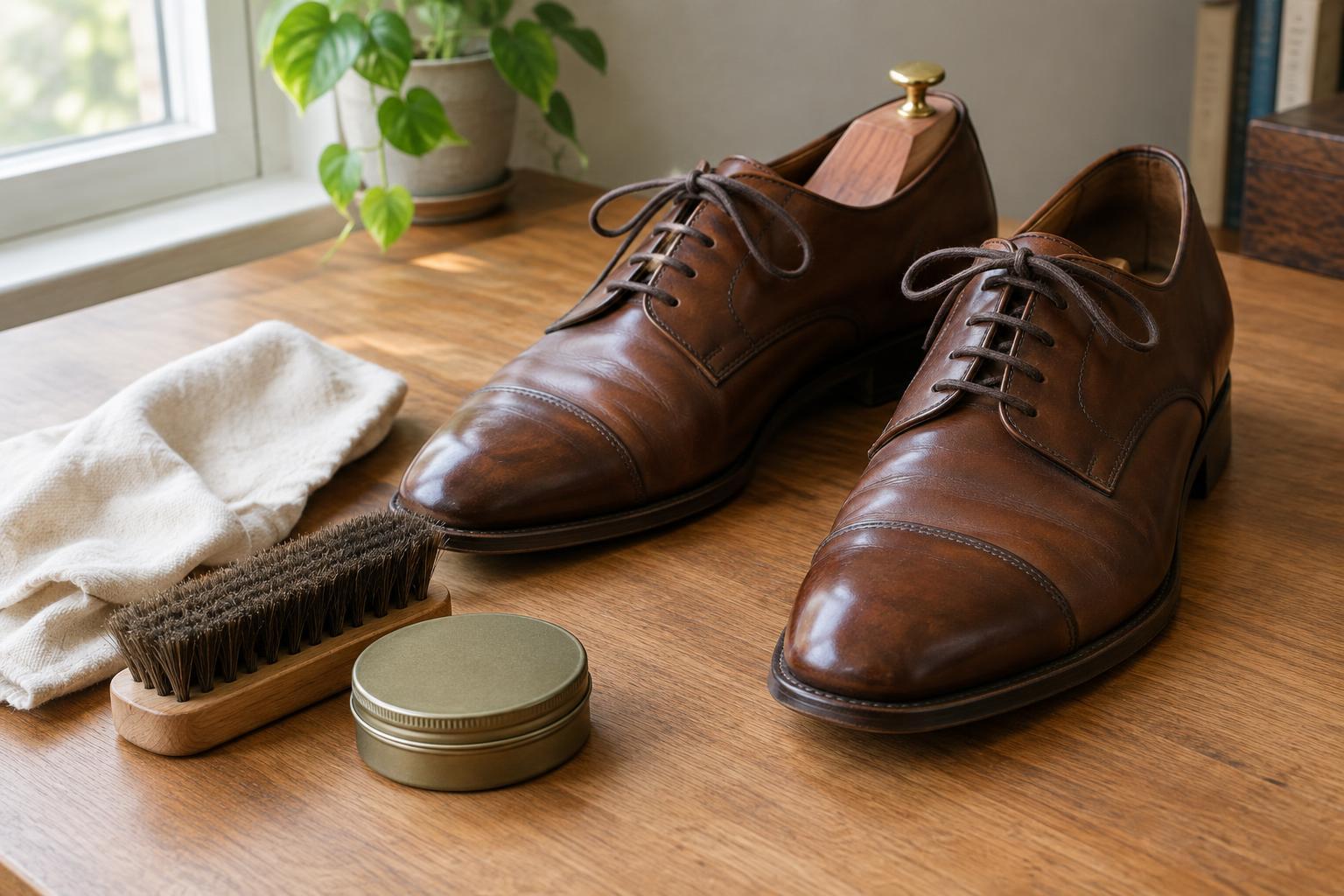
Give shoes time to air out between wears when practical. For longer storage, clean and fully dry them first, then keep them in a cool, dry place away from prolonged direct sunlight. Shoe trees can help smooth leather shoes hold their shape; loosely placed paper is another option. A breathable bag or box can protect them from dust without trapping moisture.
Check soles, heels and stitching from time to time. A worn heel tip or lifting sole is often easier to address before it affects how the shoe feels or wears. Cleaning and conditioning can maintain the upper, but they cannot fix a structural problem. A repairer can tell you whether a favourite pair is worth repairing and which work is possible for its construction.