Start with a clean, dry wardrobe
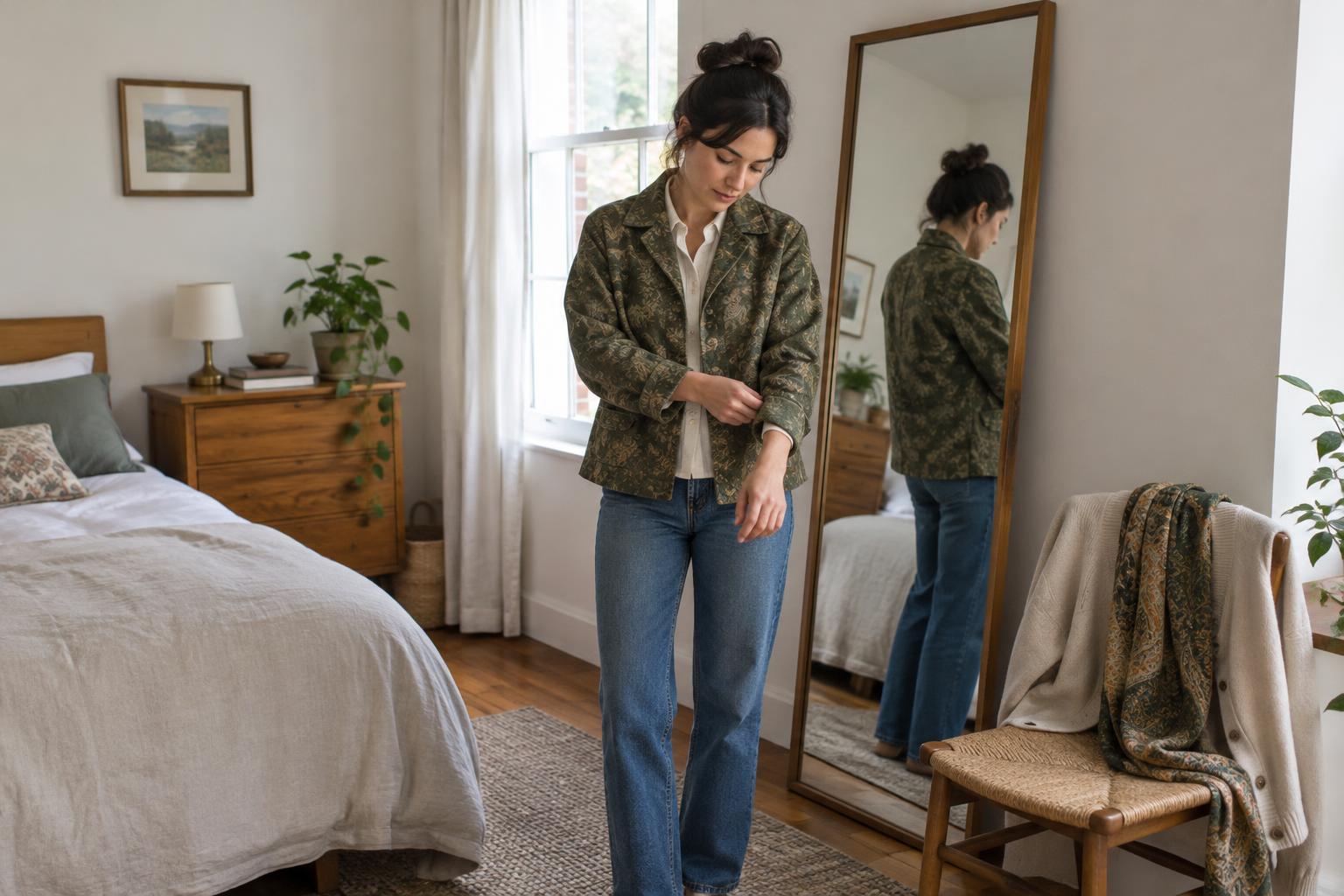
Seasonal storage works best when it starts with a small wardrobe edit. Take out the clothes you plan to put away and decide what you still want to wear next season. This is a useful time to mend loose seams, replace missing buttons and separate anything that needs more attention. Storing only clothes you intend to keep saves space and makes unpacking easier.
Wash or professionally clean garments according to their care labels before packing them. Even clothes that look clean may hold traces of food, skin oils or perspiration. Give each piece enough time to dry completely; trapped moisture can lead to musty smells or damage. Check pockets, remove detachable accessories and let freshly cleaned clothes air out before closing them inside a container.
Choose storage that suits the fabric
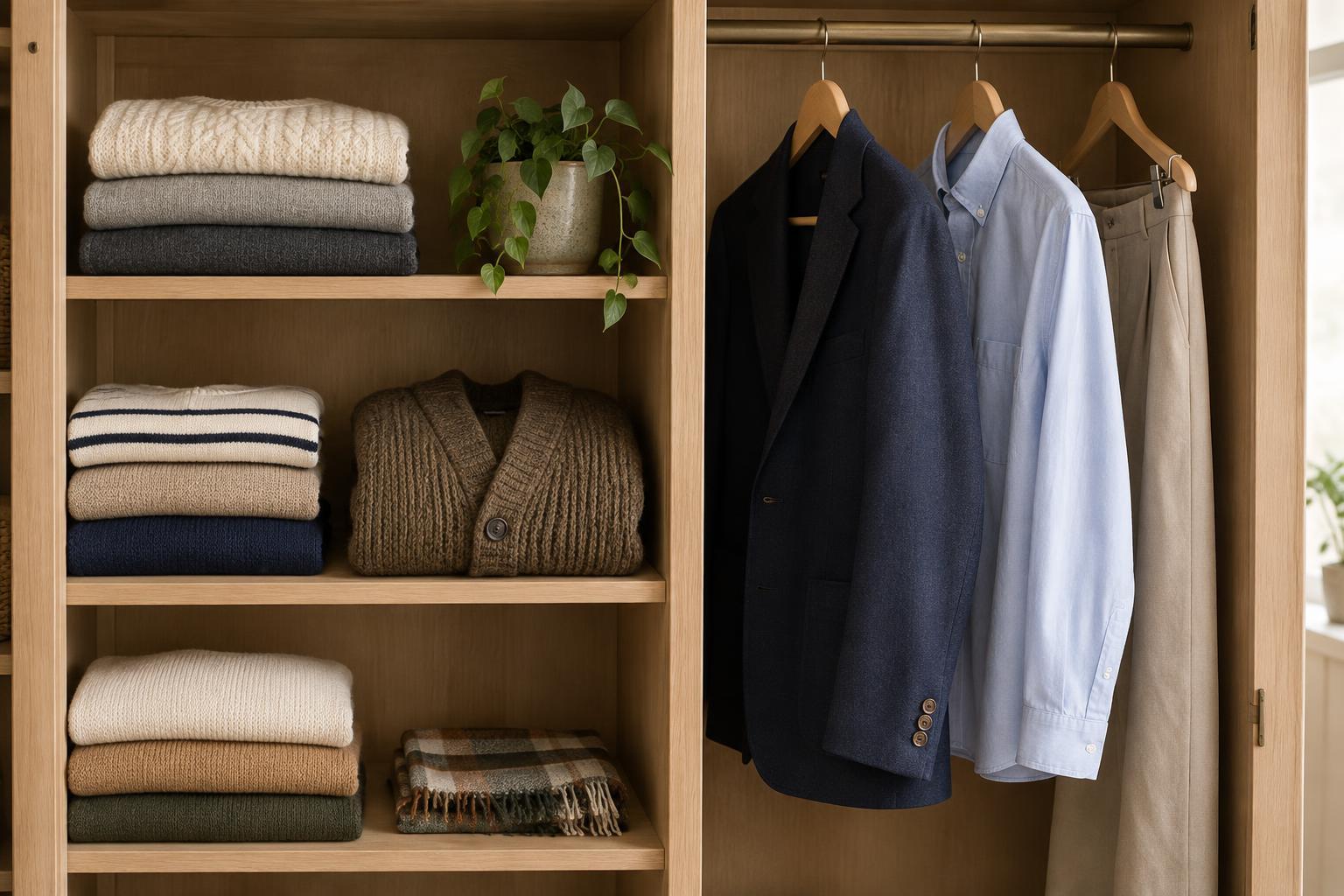
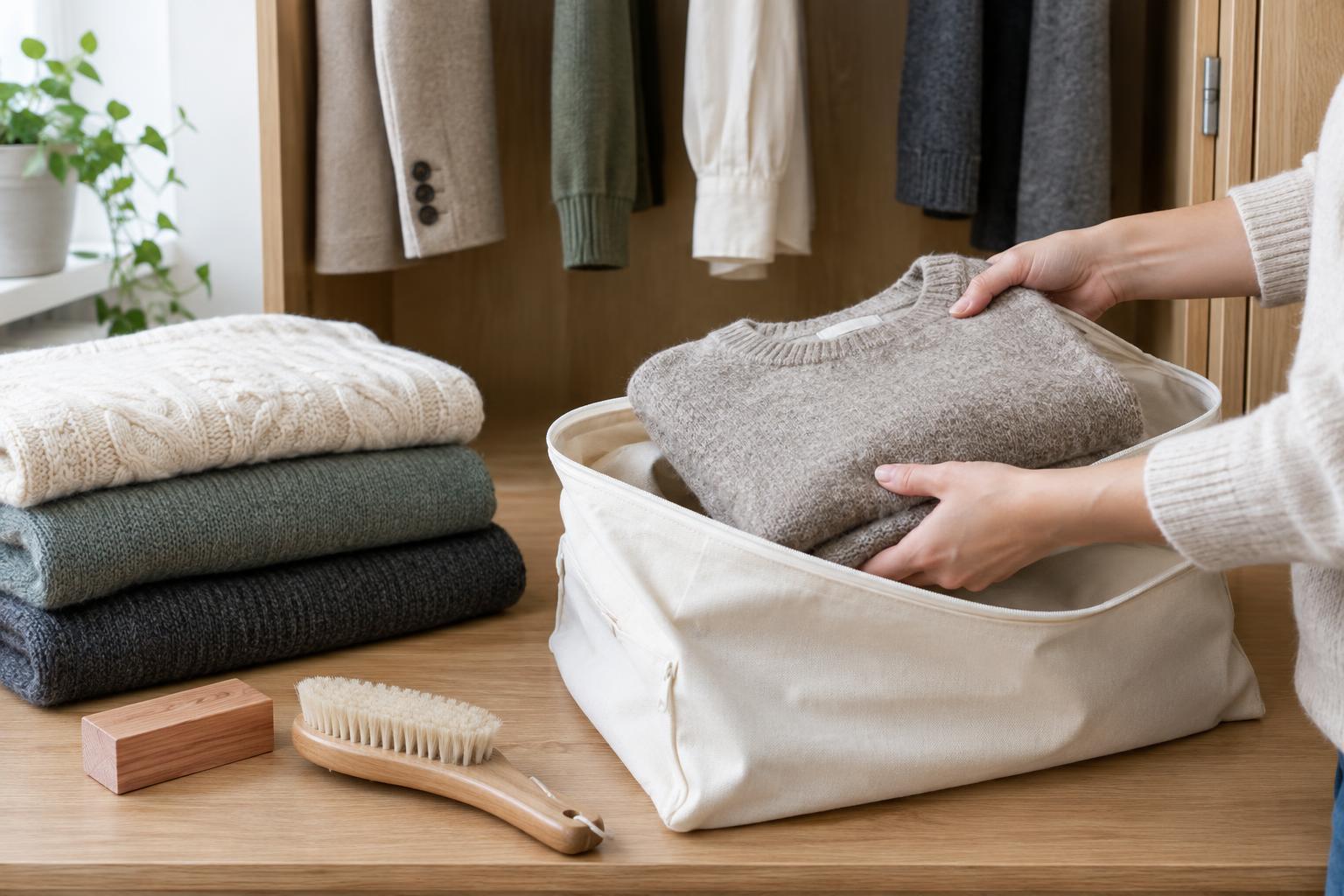
Fold knitwear, especially heavier sweaters, so it does not stretch on a hanger. Place delicate pieces near the top of a stack rather than under heavy denim or coats. For garments that need to hang, such as structured jackets, use supportive hangers and leave a little room between items. A clean garment bag can keep off dust, but it should not be treated as a guaranteed barrier against insects.
For clothes stored over a season, choose clean containers that close securely and fit your available space. Closely sealed boxes can help keep insects out if the clothes inside are fully dry. Breathable fabric storage bags may suit garments that need airflow, though they offer less protection from pests. Avoid leaving clothes in open piles or loose cardboard boxes, where they are harder to inspect and protect.
Pay particular attention to moth-prone clothes
Clothes moth larvae can damage animal-based fibres, including wool and cashmere. Silk and garments containing fur or feathers may also need attention. The adult moths you might notice are not the stage that eats fabric, so a garment can be at risk even when you have not seen moths flying around. Focus on keeping vulnerable pieces clean, enclosed and easy to check.
Before packing these items, look along seams, cuffs, folds and other undisturbed areas for small holes or signs of insects. If you find possible damage, set the affected garment aside and inspect nearby clothes and the storage area rather than putting everything straight back. Moth traps can help you notice activity, but they are a monitoring tool, not a complete solution. Cedar and scented sachets may make storage smell pleasant, but do not rely on fragrance alone to protect clothing.
Pick a sensible place and make it easy to check
Store seasonal clothes somewhere clean, dry and away from strong sunlight. A closet shelf or under-bed space may be more suitable than an area that becomes damp or has large temperature swings. Keep boxes off the floor if that floor is prone to moisture, and avoid packing them so tightly that lids bend or garments are badly creased.
Label each container with broad contents, such as “winter knitwear” or “summer shirts.” A simple label makes it easier to retrieve one item without opening every box. Check stored clothing occasionally, particularly if you have previously noticed moth activity. You do not need to unpack the whole wardrobe each time: look for changes around the container, then examine a few vulnerable garments before closing it securely again.
Unpack with care when the season changes
When you bring clothes back into rotation, inspect them before hanging or wearing them. Give garments time to air, and follow their care labels if they need washing or pressing. If a piece smells musty or shows possible insect damage, keep it apart from the rest of your wardrobe while you assess it.
Use this moment to improve your routine for next time. If sweaters emerged creased, try smaller stacks. If boxes were difficult to reach, move frequently worn transitional pieces somewhere more accessible. The aim is not an elaborate storage system: clean clothes, appropriate containers and occasional checks do most of the practical work while keeping your favourite pieces ready to wear.