Start with two pieces, not a complete outfit
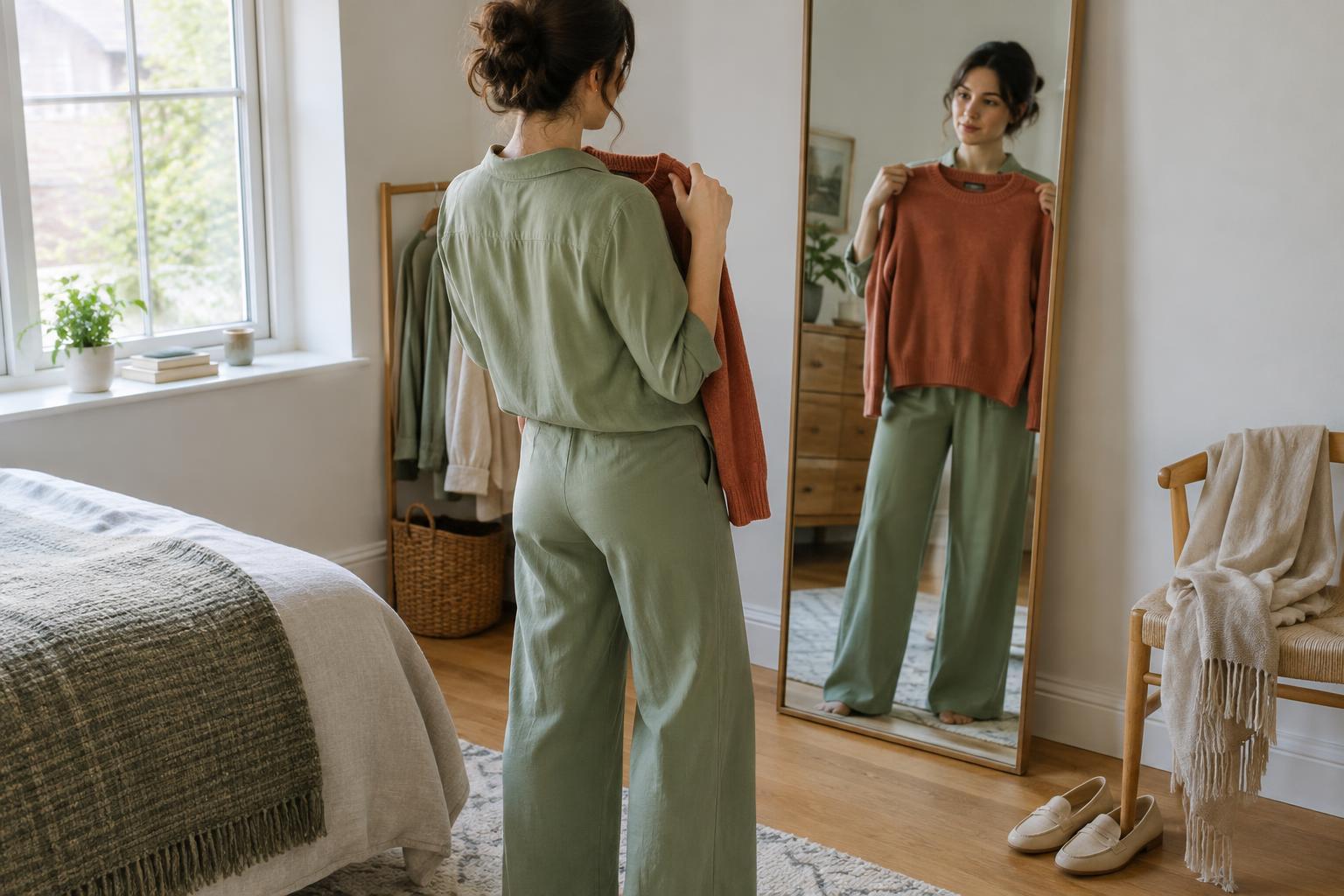
When you want to try an unfamiliar colour pairing, begin with the two garments that prompted the idea. Put them together before choosing shoes, a bag or jewellery. This makes it easier to judge the relationship between the colours without being distracted by the rest of the outfit. A shirt and trousers, a dress and cardigan, or a top and skirt are enough for a first test.
Ask what you notice first. Does one colour dominate because it covers more of the body? Do the colours feel distinct, or do they look almost the same but not quite? There is no universal answer to whether a pairing works. The useful question is whether it gives the effect you want: quiet, lively, crisp or relaxed. If you cannot tell from garments laid on a bed, put them on. Shape, texture and the amount of each colour visible can change your impression.
Check the amount of each colour
A combination that feels overwhelming may need a change in proportion rather than a different colour. For example, a bright top with equally bright trousers creates a different effect from the same top worn under a mostly neutral jacket. Before ruling out a pairing, try making one colour the main part of the outfit and the other a smaller detail.
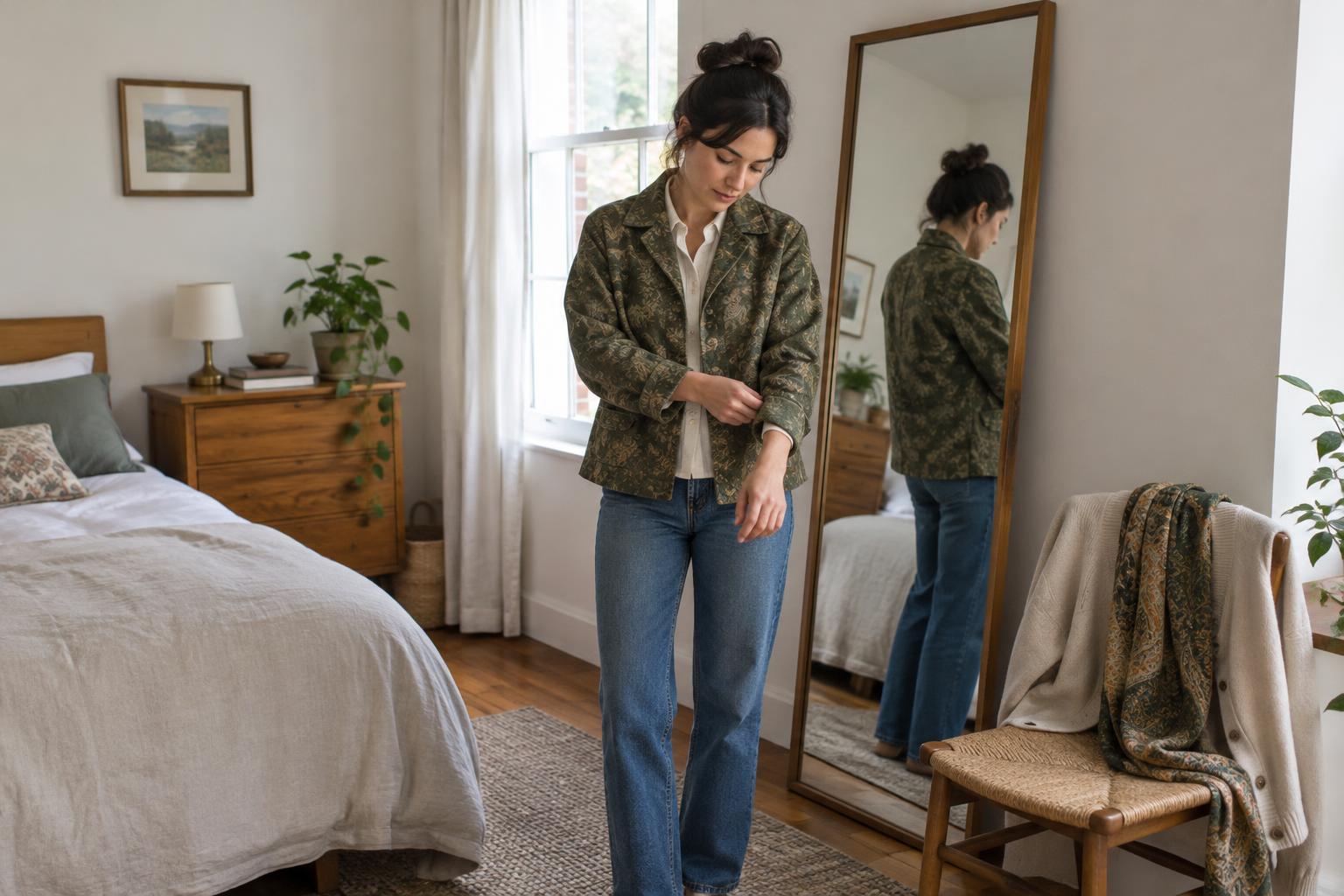
You can change the visible area without changing clothes. Roll up sleeves, leave a jacket open, tuck in a top or let a shirt collar show above a jumper. These small adjustments affect where colour appears and how often it repeats. Look at the whole outfit from a normal viewing distance, not only close up in the mirror. A combination that seems busy when you inspect individual garments may look balanced when you see it as one outfit.
Look at the pairing in useful light
Colour can appear different under different lighting. If possible, check the outfit near a window as well as in the room where you usually dress. You do not need to find a single, perfectly accurate view. The aim is to notice whether the pairing still appeals to you in the conditions where you are likely to wear it.
Pay particular attention to colours that seem close together. Two dark garments may look alike in a dim room but show noticeably different undertones in daylight. That difference might add interest, or it might not suit the look you had in mind. A quick mirror check can also reveal whether one piece is more faded or worn than another. This is not necessarily a problem, but it helps to see the outfit as it actually appears rather than as you remember each item.
Add the remaining pieces one at a time
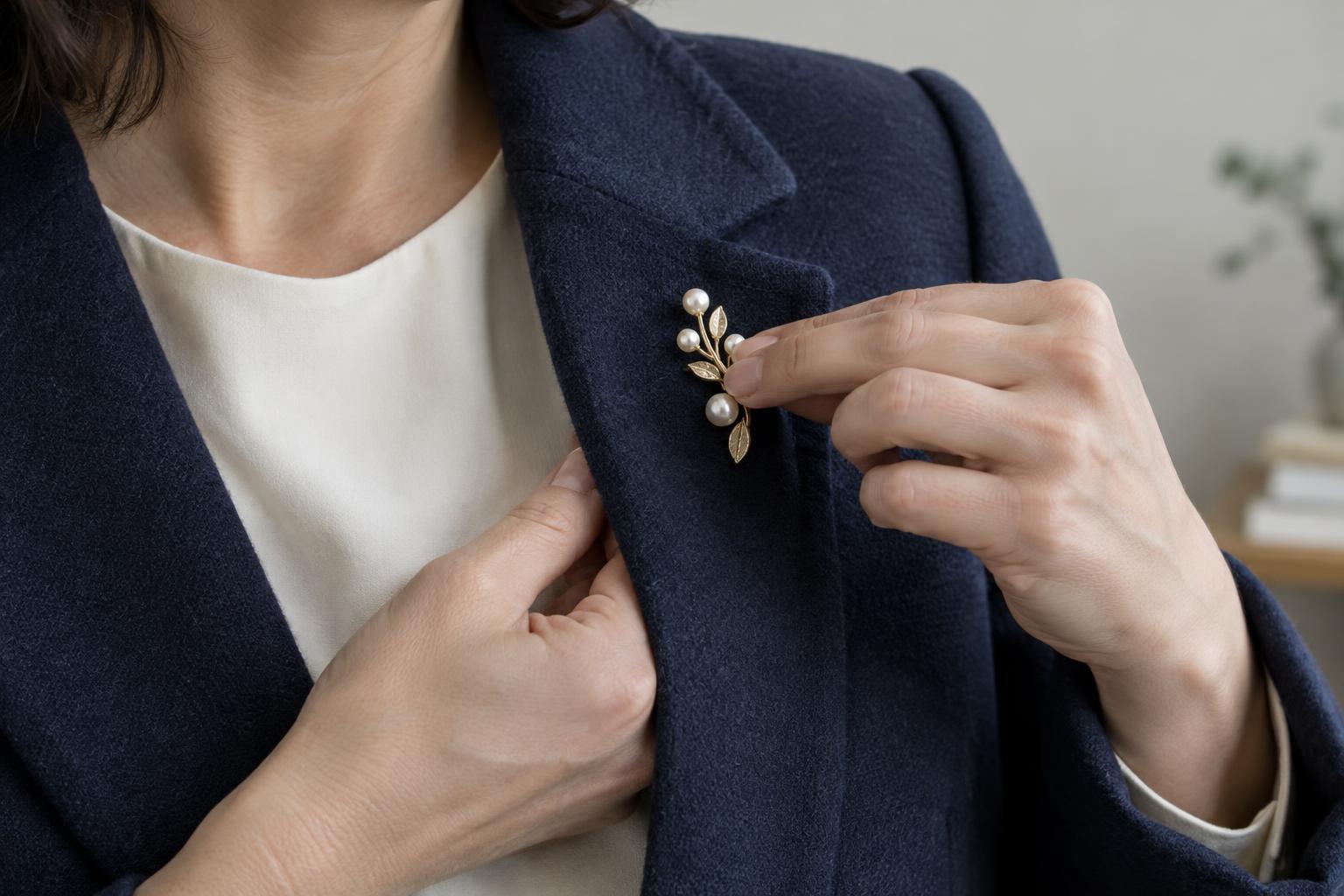
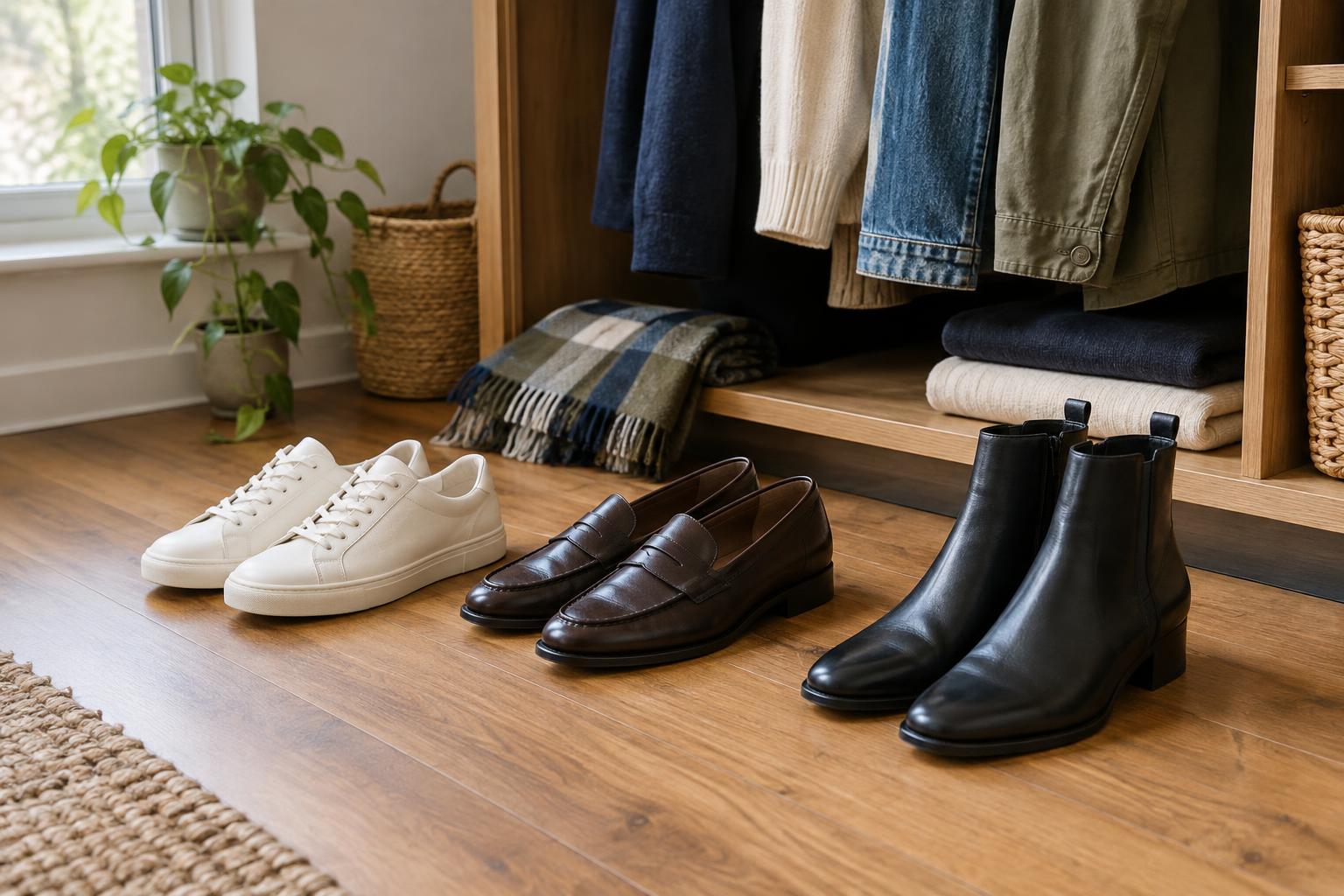
Once the main garments feel right, add shoes, outerwear and accessories individually. Each addition can shift the overall colour balance. If the outfit starts to feel crowded, remove the last item and try a quieter alternative. A familiar shoe or bag can give you a useful point of comparison when testing colours you do not often wear together.
Finish by moving around in the outfit. Sit down, put on your coat and check what remains visible. An open coat may frame both colours, while a closed one may hide the pairing altogether. If you like the result, make a brief note or take a personal reference photo so you can repeat it without starting from scratch. If you do not, identify the smallest useful change: a different layer, less of one colour or a simpler accessory. Testing is worthwhile even when the first version does not make it out the door; it helps you learn what you enjoy wearing.