Start with the two main decisions
When shopping for jeans, it helps to separate cut from rise. Cut describes the shape of the legs: how closely the fabric follows your thighs, knees and calves, and how wide it is at the hem. Rise describes the distance from the crotch seam to the top of the waistband. Together, these features affect how jeans look and feel, but neither tells you the whole story about fit.
A label is a starting point, not a guarantee. One brand’s straight leg may look narrower than another’s, and the same rise measurement can sit differently on different bodies. Fabric also matters. Jeans with stretch may feel easier to move in, while a firmer denim may hold its shape differently. Instead of searching for one universally flattering style, decide what you want from the pair: room to move, a neat line under a jacket, space for boots, or an easy shape for everyday wear.
Understand the common leg cuts
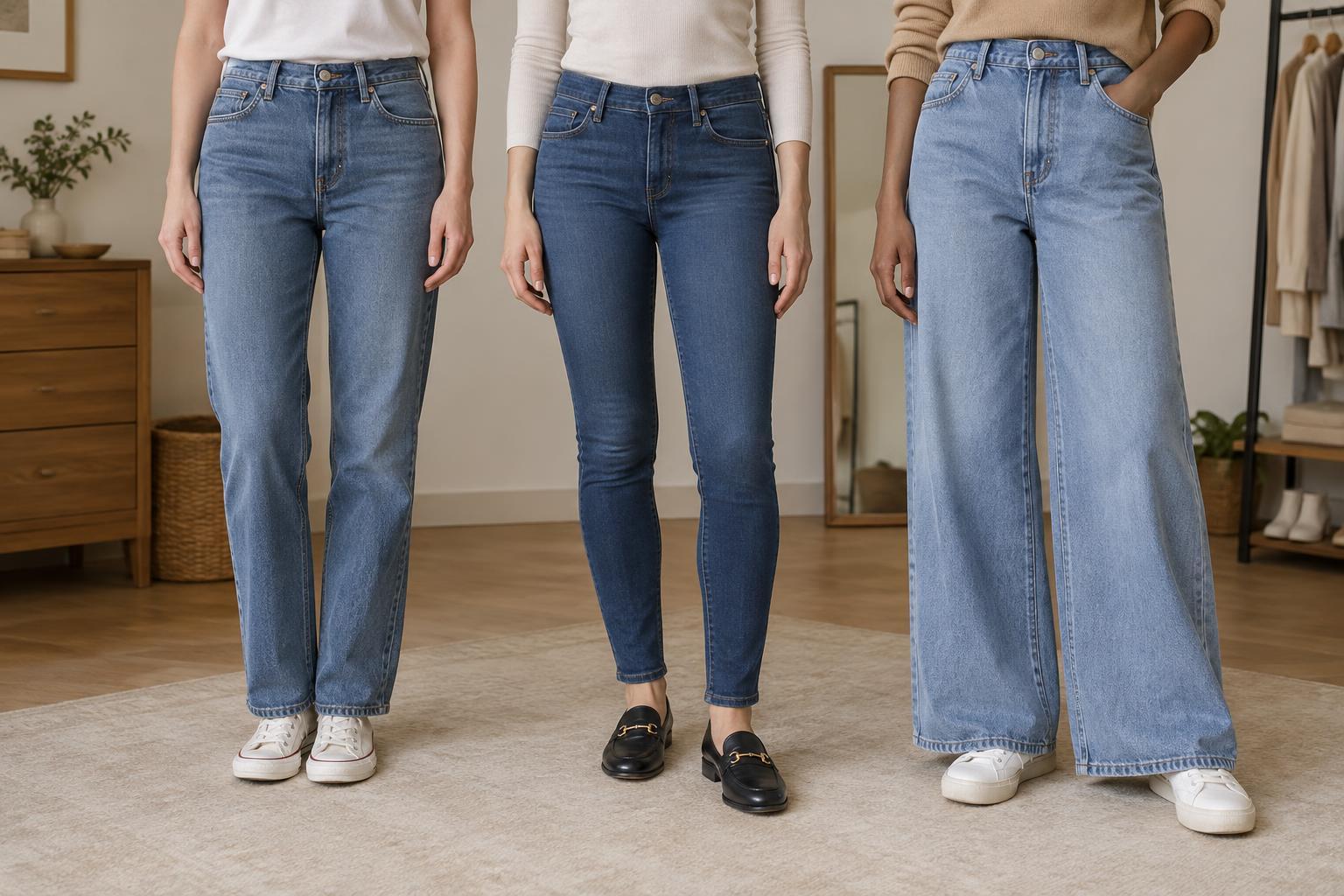
Straight-leg jeans stay roughly the same width from the knee to the hem. They are a useful place to begin if you want a shape that works with many shoes and tops. Slim jeans follow the leg more closely without necessarily clinging to it. Skinny jeans fit closely through the thigh, knee and calf; check that you can bend and sit comfortably if you prefer this cut.
Relaxed jeans allow more room, especially around the seat and thighs. Wide-leg jeans have a noticeably broader shape down the leg, though the amount of width varies. Bootcut jeans narrow through the upper leg and widen somewhat below the knee, leaving room for certain boots. You may also see tapered jeans, which provide more space higher up and narrow toward the ankle.
Look at the entire outline rather than relying on the name alone. Two pairs can both be described as relaxed, yet one may have a narrow ankle and the other a wide hem. If you already own jeans you enjoy wearing, compare a new pair with them: where does it feel roomier, and where does it feel closer?
Choose a rise for comfort and proportion
Low-rise jeans sit lower on the hips, mid-rise jeans usually sit around the middle of the torso, and high-rise jeans sit higher, often near the natural waist. Those descriptions are approximate. Your torso length and the jeans’ construction will influence where the waistband actually lands.
Rise changes how an outfit comes together. A higher waistband can give a tucked-in top a clear stopping point and may feel secure when you move. A lower waistband can suit an untucked top or appeal to someone who dislikes fabric pressing at the waist. Mid-rise jeans can offer a middle ground, but comfort is more important than the label. Try sitting down: a waistband that feels fine while standing might dig in, gap or slide once you move.
Pay attention to both the front and back. If the waistband gaps at the back while the jeans fit elsewhere, a different cut or waistband shape may help. If the crotch feels tight or there is excess fabric there, changing size alone may not solve it; try another rise or fit.
Try jeans on the way you will wear them
Begin with the seat and thighs. You should be able to sit, walk and bend without feeling restricted, and the jeans should stay where you want them without constant adjustment. Then check the waistband. It should feel secure without requiring you to hold your breath or depend on a belt to make an overly loose pair fit.
Check the length with shoes you often wear. A straight or slim leg may end at the ankle, sit on top of the shoe or fall lower, depending on the look you want. Wider and bootcut legs need particular attention at the hem: too much fabric may drag, while a shorter length will show more of the shoe. If everything else fits, hemming can be simpler than trying to change how the jeans fit through the hips or thighs.
Finally, consider the fabric. A small amount of stretch can change how jeans feel when you sit, but comfort should not depend on hoping a painful pair will loosen. If possible, compare a few sizes and cuts rather than assuming that one number should fit in every style.
Make your first choice easy to wear
For a first versatile pair, choose a cut and rise that feel comfortable and work with several tops and shoes you already own. Straight-leg or gently relaxed jeans may be easy starting points, but there is no required shape. Think about your usual outfits: a wide leg can balance a shorter top, while a closer leg can sit neatly beneath a long layer. These are options, not rules.
Try picturing three ordinary outfits before buying: one for a casual day, one with a warmer layer and one with the shoes you reach for most. If the jeans feel good in motion and fit naturally into those combinations, they are likely to be more useful than a pair chosen for its label alone.