Start with how you plan to wear it
A well-fitting blazer is not defined by one silhouette. A close-fitting jacket, a relaxed linen blazer and a roomy double-breasted style are meant to sit differently. Before judging the fit, decide what you want to wear underneath and how you want the blazer to look. Bring a typical shirt, knit or T-shirt when trying one on. A jacket that fits over a thin top may feel restrictive over the layers you actually wear.
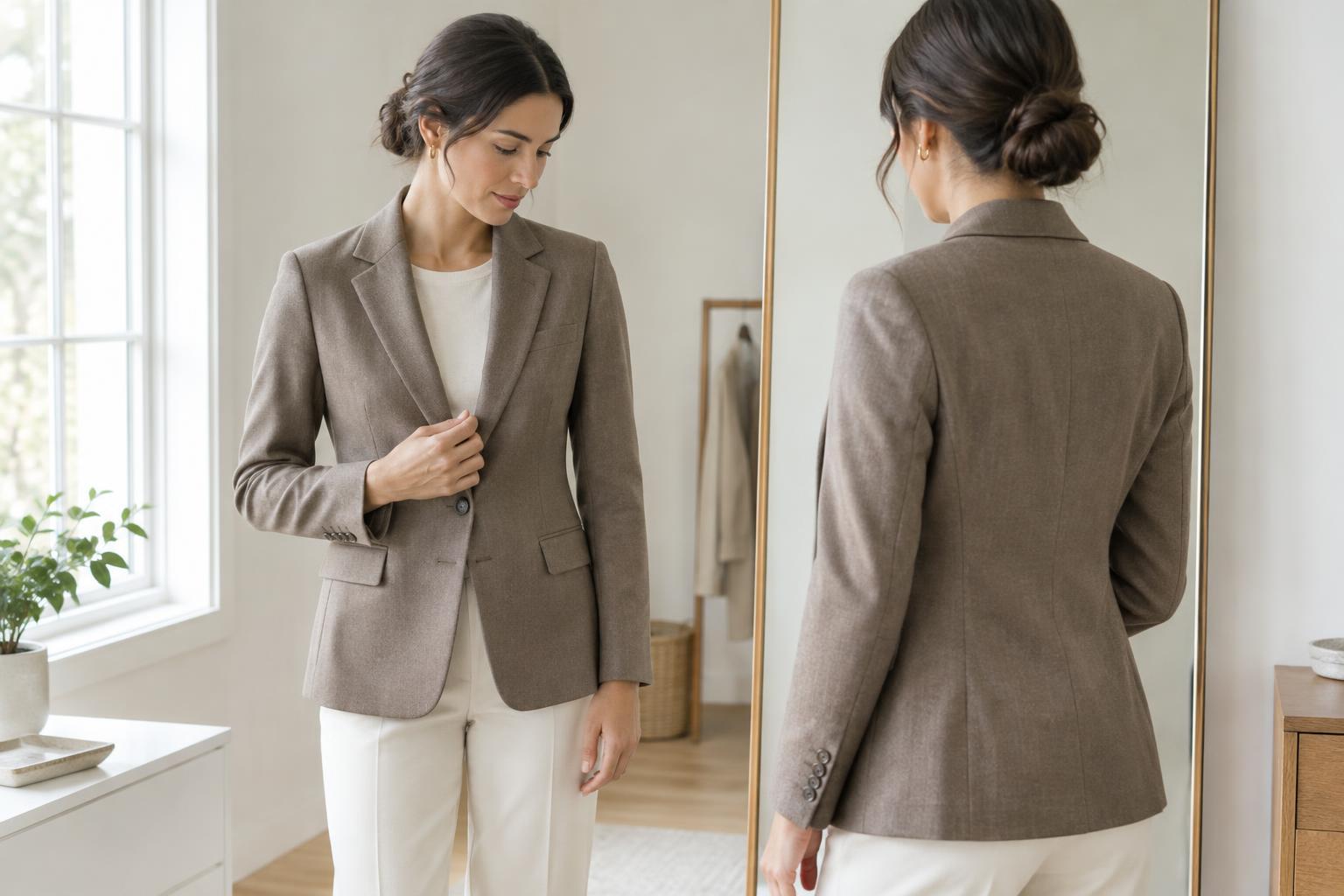
Stand naturally in front of a mirror with the blazer open and then fastened. Look at the overall balance: does it follow the intended shape without pulling, collapsing or feeling as though you must keep adjusting it? Check the fit from the side and back as well as the front. If you like the appearance but cannot sit, reach or walk comfortably, it may not be the right size or cut for you.
Check the shoulders and upper back first
Shoulders are a useful starting point because changing their structure can be difficult. On a structured blazer, the shoulder seam will generally sit close to the edge of your shoulder. If it falls well down your arm when the design is not deliberately oversized, the jacket may be too broad. If the sleeve head feels tight or pulls upward, try a different size or shape. A dropped shoulder, by contrast, may be an intentional feature of a relaxed blazer.
Turn around and look at the upper back. The fabric should have enough room for you to bring your arms slightly forward without a sharp feeling of resistance. Some folds are normal, especially in softer fabrics, but strong horizontal pulling across the back can signal that the jacket is too narrow. Excess fabric that bunches persistently around the shoulder blades may mean the cut is too generous in that area.
Look at the chest, lapels and button closure
Fasten the blazer as it is designed to be worn and let your arms rest at your sides. The front should meet without a struggle. If fastening it creates pronounced diagonal pulls from the button, or the lapels lift away from your chest, you may need more room through the chest or waist. A small amount of shaping is different from a jacket that feels strained when you breathe or move.
Pay attention to what happens when you leave the blazer open, too. Many people wear theirs this way most of the time, so the front should hang in a way you enjoy. The lapels need not lie perfectly flat on every body or every style, but they should not demand constant smoothing. If one size looks good open but cannot close comfortably, consider whether you truly want an open-only layer before choosing it.
Assess the sleeves and jacket length
With your arms relaxed, check where the sleeves end and whether the fabric twists or bunches. A traditional tailored look often leaves a little shirt cuff visible, while a casual blazer may be worn with longer sleeves or pushed up. The useful test is whether the sleeves stay comfortable when you bend your elbows and whether their length works with your usual outfits. Sleeve length is often easier to alter than the fit at the shoulder, though cuffs with working buttons can make alterations less straightforward.
Jacket length is partly a matter of proportion and preference. A shorter blazer can work well with high-waisted trousers or skirts; a longer one may give a more relaxed line over dresses or straight-leg trousers. Look at where the hem falls relative to the clothes you own, rather than relying on a rule about where it must end. Also check that the back vent, if there is one, hangs freely instead of spreading or curling when you stand.
Move around and decide what is worth changing
Try a few ordinary movements before making a decision: sit down, reach forward and lift your arms enough to put on a bag or coat. A tailored blazer will not move like a sweatshirt, but it should let you go about your day without pinching. If the lining catches on your clothes or the jacket rides up and stays there, try another cut. Feel the fabric as well; its weight and structure should suit the season and the way you expect to wear it.
Minor changes, such as adjusting sleeve length or taking in a little fabric at the waist, may help a blazer feel more personal. Major problems in the shoulders, chest or overall balance are usually better addressed by trying another style. When comparing options, take a photo in your usual outfit and notice which jacket you can stop thinking about once it is on. The best fit is one that supports the look you want and feels practical enough to wear regularly.