Start with the way you want to wear them
Before judging the fit, decide where you want the waistband to sit and how much ease you like through the leg. High-rise shorts sit closer to the natural waist, while mid- and lower-rise styles sit farther down. A pair that feels too tight at one position may feel comfortable at another, but it should not need constant pulling into place. Your preferred rise and silhouette are more useful starting points than the size printed on the label.
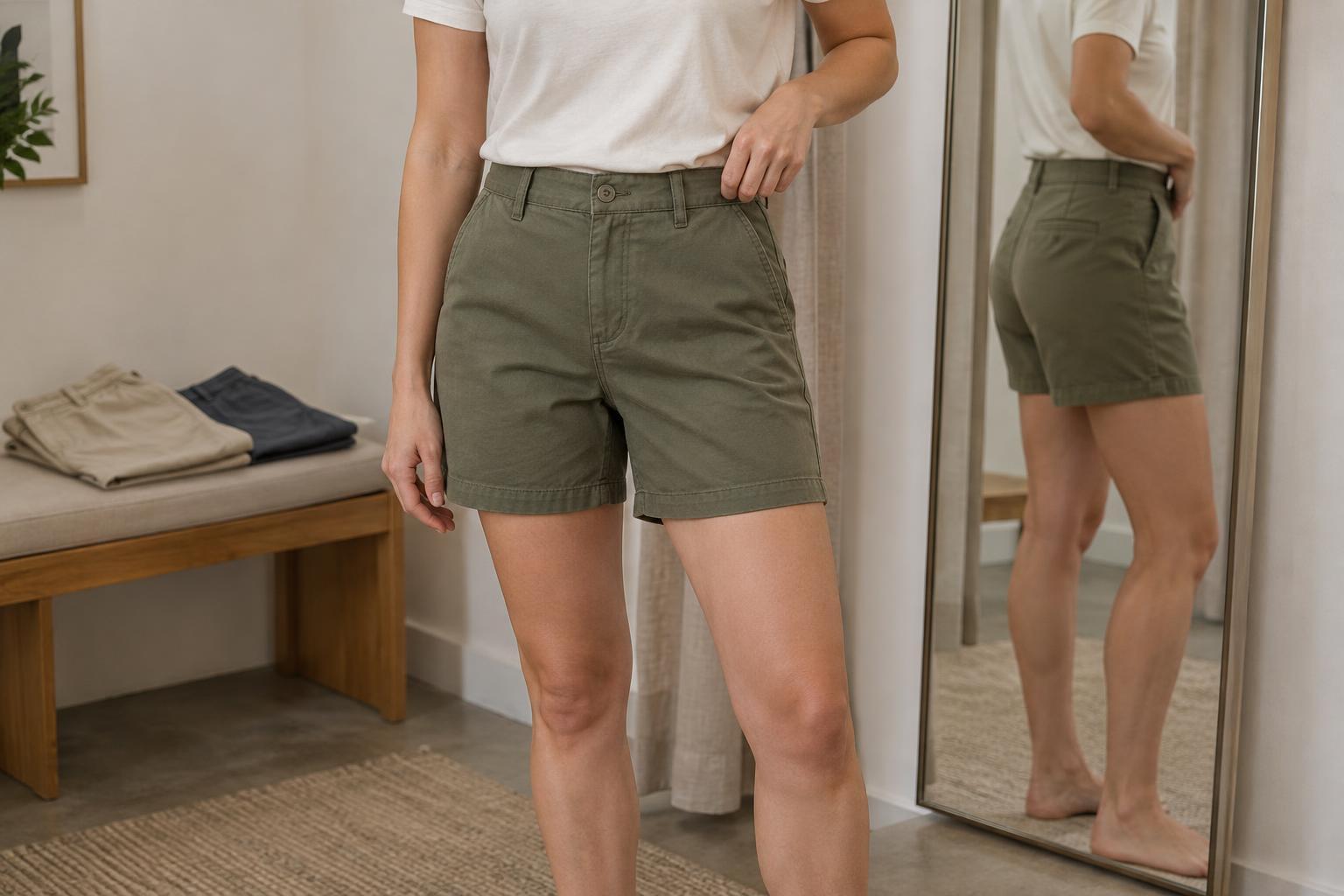
If you are shopping in person, take two or three sizes into the fitting room. Try the shorts with a top you might actually wear, then look at them from the front, side and back. The goal is not to eliminate every wrinkle. It is to find a pair that feels secure while standing and still gives you room to sit, walk and bend.
Check the waist without overlooking the rise
Fasten the shorts and let the waistband settle where it naturally wants to sit. It should feel secure without digging in or leaving a large gap at the back. If the front pulls around the button or zip, the waist may be too small, or the rise may not suit your shape. If the shorts slide down as you walk, a belt may hold them up, but it will not necessarily solve a poor fit.
Rise affects more than waistband height: it also changes how much room you have through the body of the shorts. If the waistband fits but the fabric pulls upward at the crotch, try a different rise or cut rather than automatically sizing up. Sizing up may add the needed room in one place while making the waist too loose. If a pair fits well everywhere except for a modest waist gap, it may be worth asking a tailor whether the waistband can be taken in.
Look for comfortable room through the seat
From the back, the fabric should follow your shape without feeling stretched across it. Horizontal pull lines, pockets that flare open, or a back seam that feels strained can suggest that the seat needs more room. Excess fabric that bunches below the seat can point to too much room or a cut that does not suit you. Check how the shorts feel as well as how they look; a smooth standing fit is not much use if sitting feels restrictive.
Sit down on a chair and lean forward slightly. The waistband should not drop so far that you feel exposed, and the back of the shorts should not pull uncomfortably. Pocket placement and design can affect the appearance of the seat, but they cannot compensate for a cut that is too tight. If several sizes in one style present the same problem, move on to a different style.
Give the thighs space to move
Stand with your feet apart, take a few steps and sit down again. The leg openings should not pinch or ride up so much that you have to keep adjusting them. A little movement is normal, particularly with shorter shorts, but the fabric should not feel as though it is gripping your thighs. If it does, look for a wider leg opening or a more relaxed cut rather than relying only on a larger waist size.
Length also changes how shorts feel. A hem that ends at a wider part of your thigh may feel snug even when the upper leg has enough room. Trying a slightly shorter or longer inseam can make a difference. Look at the hem while seated as well as standing, especially if you want shorts for walking or long periods of wear.
Use fabric and alterations to fine-tune the choice
Fabric affects how forgiving a fit feels. A structured cotton or linen blend may hold its shape and show pulling clearly; a softer fabric may drape more easily. Stretch can add comfort, but it should not be the only reason you can fasten the shorts. If a pair already feels strained when you first put it on, it is unlikely to become a reliably comfortable choice through styling alone.
Choose the size that accommodates the areas hardest to alter, usually the seat and thighs, then assess the waist. A tailor may be able to reduce a slightly loose waistband or shorten a hem, while adding room to a tight seat or thigh is often limited by the available fabric. Once you find a promising pair, repeat the sitting and walking checks before removing the tags. The best everyday shorts are the ones you can wear without planning your movements around them.