What warm and cool mean in a wardrobe
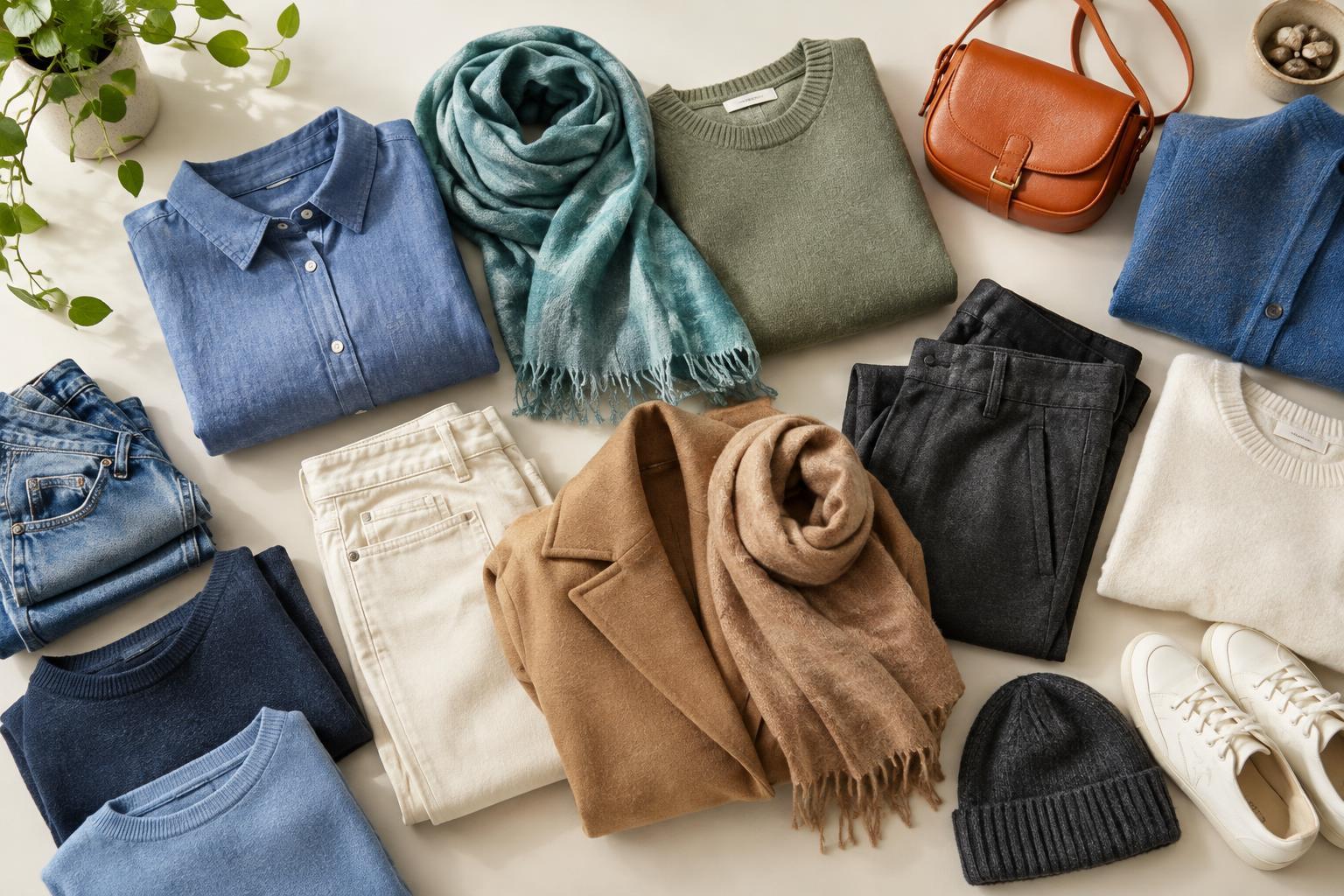
Warm colours tend to suggest sunlight or earth: rust, mustard, camel and tomato red are familiar examples. Cool colours often suggest water or shade: cobalt, lavender, blue-grey and berry are common examples. These labels are useful starting points, not strict rules. A colour can also sit somewhere in the middle, and its temperature may be easier to notice beside another garment than on its own.
The name of a colour does not tell you everything about it. A yellow-green can feel warmer than a blue-green, while an orange-leaning red feels warmer than a pink-leaning red. Even beige can look golden, pinkish or grey. When comparing two items, place them next to each other and ask which looks more yellow or orange and which looks more blue or violet. You do not need to classify every piece perfectly to put together an outfit.
Start with one colour as the anchor
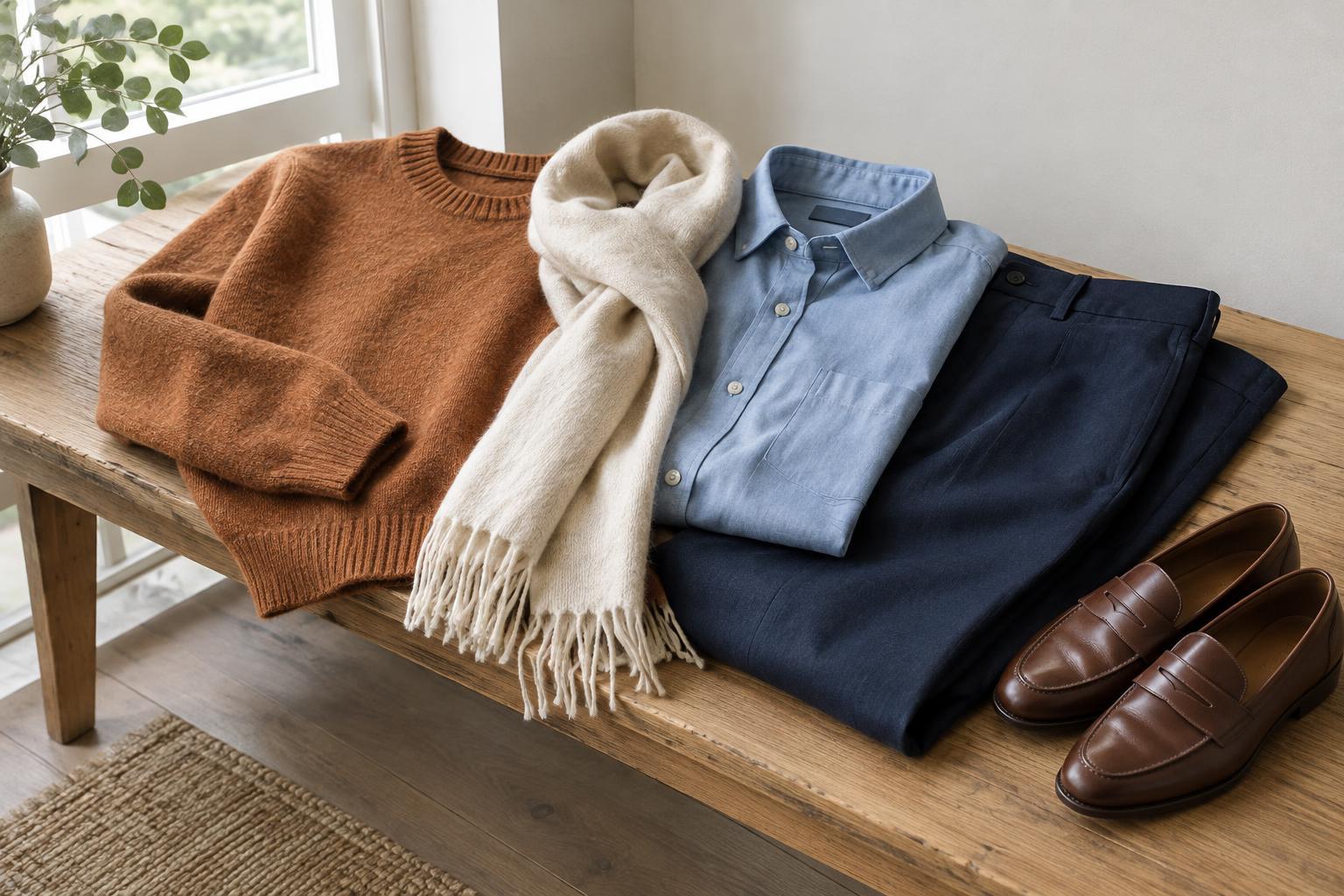
Mixing temperatures is simpler when one colour does most of the work. Start with a piece you want to wear, such as a warm terracotta jumper or a cool navy jacket. Add a second colour in a smaller area: a scarf, shirt, belt or pair of shoes. This gives the eye a clear starting point while leaving room for contrast. If the combination feels busy, reduce the number of colours rather than assuming warm and cool cannot mix.
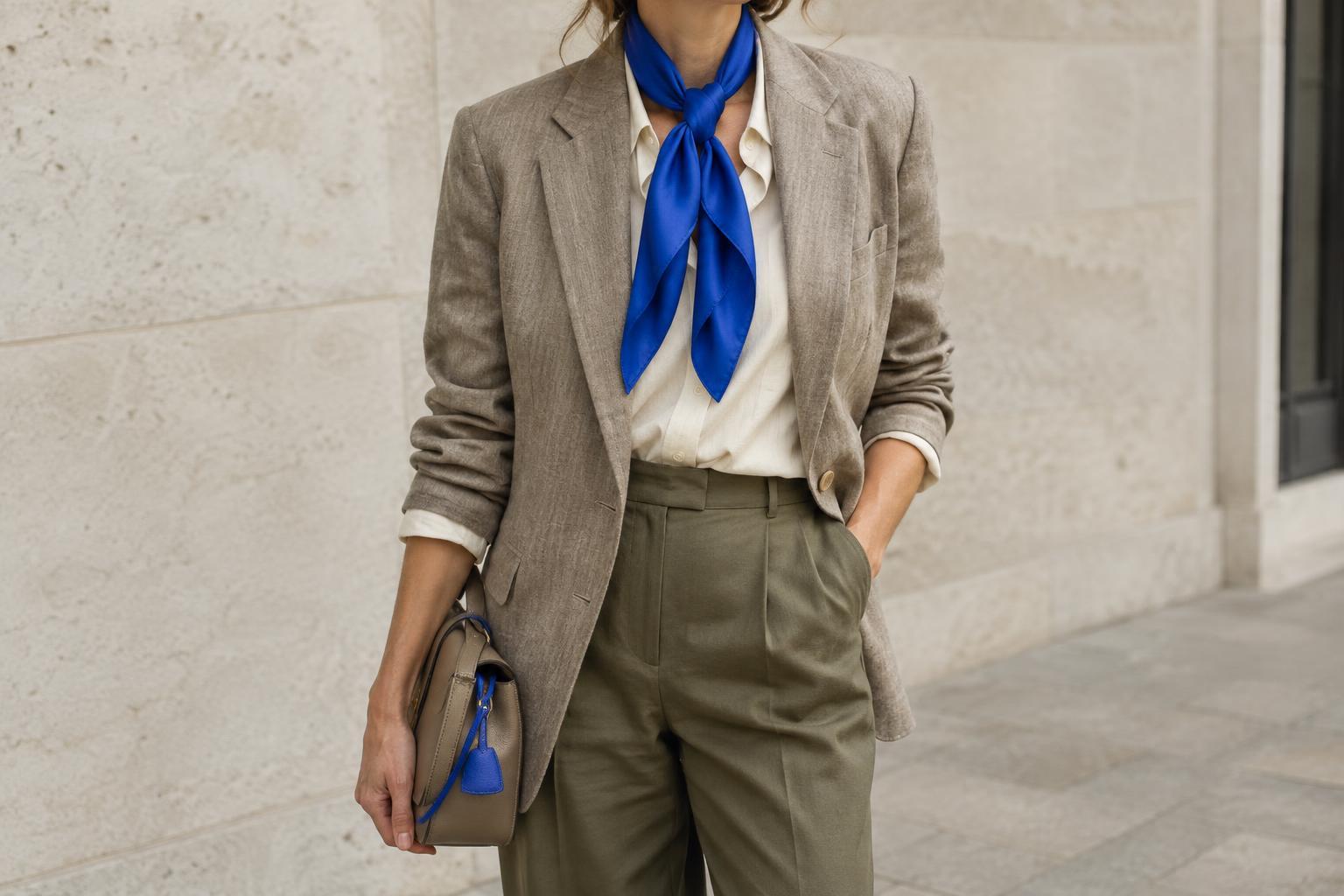
You can also repeat one colour in two places to make the outfit feel deliberate. A cool blue shirt and blue bag can frame warm brown trousers, for instance. Or a warm tan belt can echo tan shoes beneath a cool grey coat. The repeated shade need not match exactly; a close family resemblance is often enough. Try laying the pieces together before dressing so you can judge their balance without the distraction of fit or styling.
Use neutrals as a bridge
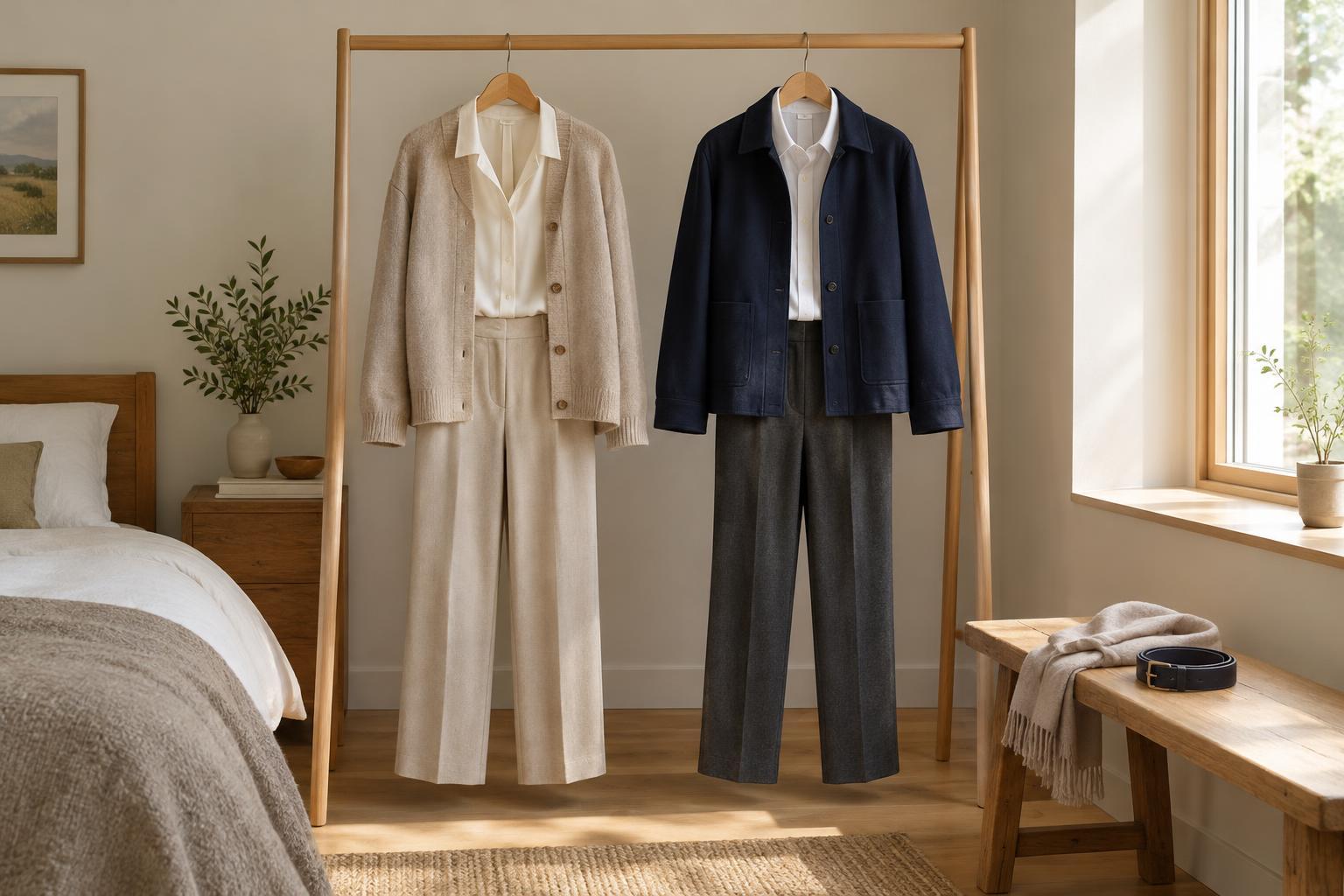
Neutrals give contrasting colours some breathing room. White, charcoal, denim and many shades of grey can sit between a warm and a cool piece. Picture a rust top with dark blue jeans and a grey outer layer: the jeans and grey make the contrast feel familiar. A cream shirt can play a similar role with cool green trousers and warm brown footwear. Because neutrals vary in temperature too, choose the one that looks comfortable beside both main colours.
Pay attention to how much of each colour is visible. A large warm coat over an equally bright cool dress creates a strong contrast; that may be exactly what you want. For a quieter outfit, let one temperature dominate and use the other as an accent. A small accessory is an easy place to experiment because you can change it without rebuilding the whole outfit. Your usual shoes and bag can also help connect pieces that initially seem unrelated.
Look beyond temperature when something feels off
Temperature is only one part of a colour combination. Lightness and intensity matter as well. A muted sage green and a soft clay pink may sit together comfortably even though one leans cool and the other warm; both have a subdued quality. Bright cobalt beside vivid orange creates a much sharper effect. If two colours clash more than you intended, try keeping the same warm-cool pairing but changing one piece to a lighter, darker or softer version.
Texture and pattern can change the impression too. A chunky knit makes a colour feel different from a smooth, shiny fabric. A patterned scarf may already contain both warm and cool tones, giving you a ready-made guide for choosing a coat or top. Pick one or two colours from the pattern rather than trying to match every shade. This approach works especially well when you want to introduce a new colour without buying several new garments.
Decide what works for you
If you are unsure about a colour near your face, try it in natural daylight with clothing you already own. Notice whether you enjoy the overall effect, not just whether a shade belongs to a particular category. Preferences, makeup, hair colour and lighting can all affect how a combination feels. There is no need to remove every warm or cool item from your wardrobe because of a rule you have heard; you can wear a less-favoured shade farther from your face or in a smaller amount.
A practical way to learn your preferences is to photograph a few outfits you actually wear. Compare a warm-dominant look, a cool-dominant look and a mixed one, then note which combinations you would happily repeat. Over time, you may find a small set of reliable pairings, such as navy with camel or olive with blue-grey. Keep those as starting points, not limits. The best colour plan is one that helps you get dressed and still feels like yours.