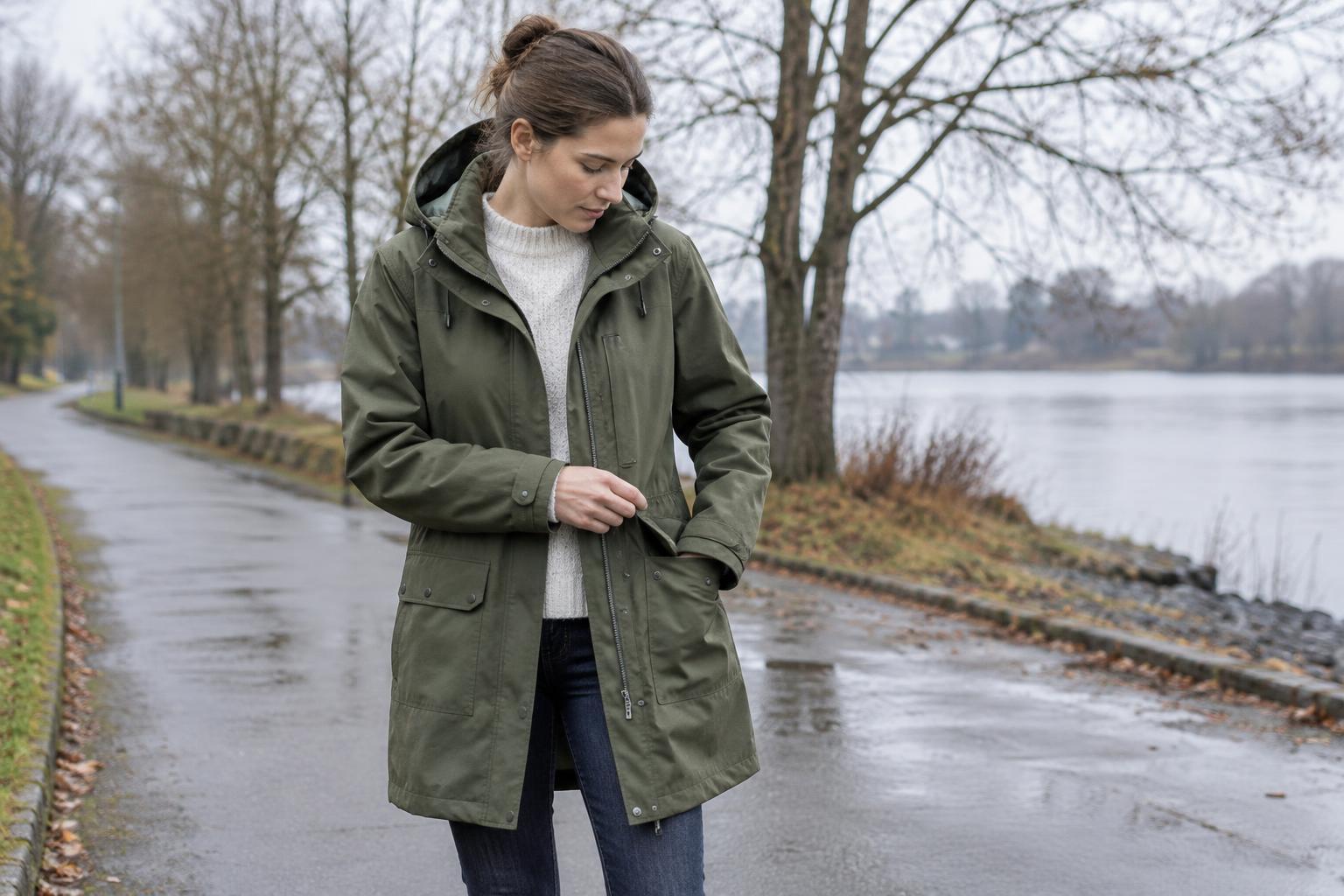
Start with the weather you dress for most often
An everyday coat does not need to handle every possible forecast. It needs to make your usual journeys comfortable. Think about the days when you reach for a coat most: Are they damp and windy, cold and dry, or mild with frequent temperature changes? Consider how long you spend outdoors, too. A short walk between buildings calls for a different coat than a long wait at a bus stop.
Write down the conditions that regularly cause problems with your current outerwear. Perhaps your shoulders get wet, your legs feel cold, or you overheat once you step indoors. These observations are more useful than choosing by appearance alone. If your weather changes sharply across seasons, one coat may not do every job well. A lighter outer layer and a warmer option can be more practical than a single coat that feels wrong for half the year.
Match the coat’s protection to your climate
For a wet, relatively mild climate, prioritise rain protection and coverage over heavy insulation. A coat with a hood, a secure front closure and enough length to cover the clothes you want to keep dry may serve you better than a thick wool coat. Check the garment description carefully: water-resistant fabric can handle some light moisture, but it is not necessarily intended for prolonged rain. Seams and closures matter as well as the outer fabric.
In a cold, dry climate, warmth and wind protection may matter more. Insulated coats are worth considering, especially if you spend time standing outside rather than walking briskly. Down can offer warmth without much bulk, but its performance can suffer when it gets wet unless the garment is designed to manage moisture. Synthetic insulation is another option, particularly where damp conditions are common. For changeable weather, a roomier coat worn over removable layers can give you more flexibility than a heavily insulated coat.
Try the fit with your real clothes
A coat should fit over the outfits you expect to wear beneath it. When trying one on, bring or wear a typical sweater or jacket. Fasten the coat, raise your arms, reach forward and sit down. It should let you move without pulling tightly across the shoulders or chest. At the same time, an excessively loose coat may feel draughty if the cuffs, collar and hem cannot close comfortably.
Length is both a weather and wardrobe decision. A shorter coat may be convenient for cycling or frequent car trips, while a longer one can provide more coverage when walking in wind or rain. Look at where the hem falls in relation to your usual tops and trousers. If you often wear longer layers, decide whether you like them showing below the coat. Leave enough room at the neck for a scarf if that is part of your cold-weather routine.
Check the details you will use every day
Small features can determine whether a coat is easy to live with. Test the zip or buttons rather than assuming they will be convenient. Check whether the pockets hold your phone, keys or gloves securely, and whether you can reach them while wearing a bag. A hood should stay in place when you turn your head; cuffs and a collar should help limit draughts without feeling restrictive.
Consider the coat alongside your everyday shoes, bags and clothes. A colour that works with several outfits may get more wear than one you only like with a single combination. Dark colours can make some marks less noticeable, while lighter colours may suit your wardrobe better; neither is automatically the practical choice. If you carry a shoulder bag regularly, think about how its strap will sit over the coat’s fabric and silhouette.
Choose something you can maintain
Before buying, read the care label and make sure its instructions fit your routine. Some coats can be washed at home; others call for more specialised cleaning. Waterproof coatings and insulated fillings may need particular care to keep performing well. A coat that is awkward or costly for you to maintain may be less useful than a simpler option, even if it looks ideal on the hanger.
Finally, judge the coat against your most common days rather than the most extreme day you can imagine. Think through one ordinary trip from getting dressed to coming home: what you wear underneath, how long you are outside, where you put your belongings and what happens if the weather changes. The right everyday coat should make that routine easier while still feeling like something you want to wear.