Start with how you will wear it
Clothing quality is not a single feature you can read from a price tag. A well-made coat may be worth little to you if it is uncomfortable on your usual commute; a simple T-shirt may be an excellent choice if it keeps its shape and fits easily into your wardrobe. Before inspecting a garment, picture when, where and how often you would wear it. That gives you a useful standard for judging it.
Consider the demands of the item. Everyday trousers need to let you sit and walk comfortably. A shirt you plan to wear under knitwear should not bunch at the shoulders. An occasional occasion piece may have different priorities from something you expect to wash every week. The best choice is one whose fabric, construction and upkeep suit its intended job.
Feel the fabric, then read the label
Handle the garment rather than judging it only on the hanger. Does the fabric feel pleasant against your skin? Does it drape as you expect, or cling and twist? Hold a section up to the light to check for unevenly thin areas, especially if you want an opaque garment. Gently stretch a small area and see whether it returns to shape. These checks cannot predict every aspect of wear, but they can reveal concerns before you buy.
The fibre label adds context, not a verdict. Cotton, wool, linen and synthetic fibres can all vary in feel and performance depending on the fabric and finish. A blend may be exactly right for a garment that needs some stretch or easier care. Likewise, a high percentage of a particular fibre does not automatically make an item durable. Judge the actual fabric against your preferences, including breathability, softness, weight and the amount of wrinkling you are willing to accept.
Inspect the details that take the strain
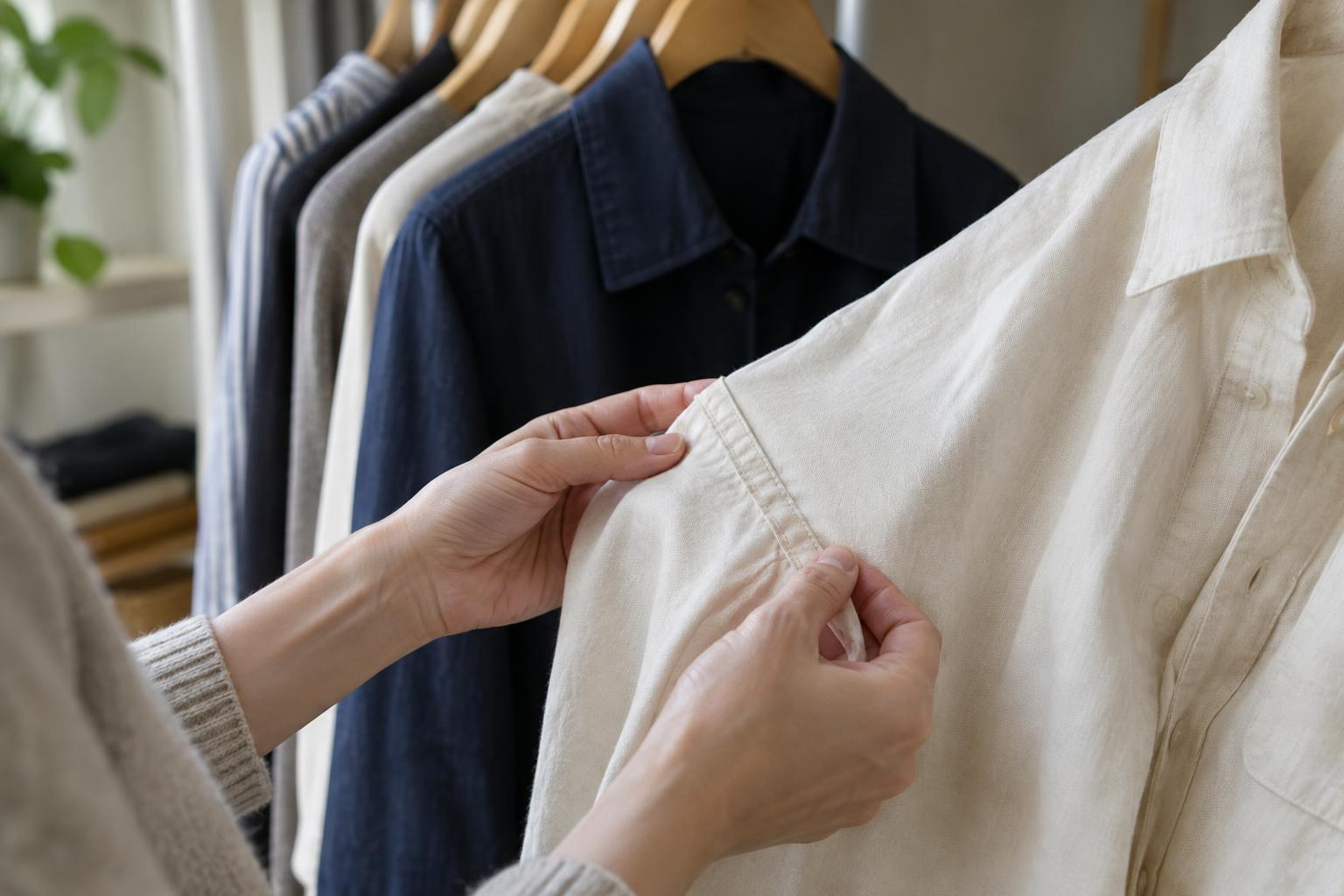
Look at seams inside and out. They should generally lie flat, with stitching that appears even and secure. A few loose thread ends may be easy to trim, but gaps in a seam or stitching that pulls apart with a gentle tug are more concerning. Check areas that work hardest in normal use: underarms, crotch seams, pockets and the points where straps or belt loops attach.
Try buttons, snaps and zips rather than assuming they work smoothly. Buttons should feel firmly attached, buttonholes should not be fraying, and a zip should move without catching the surrounding fabric. Check that pockets lie neatly and that any lining is attached without pulling the outer fabric out of shape. These details are small, but repairing them can become an unwelcome task on an otherwise useful piece.
For patterned items, notice where stripes or checks meet at visible seams. Alignment can show care in cutting, though it is not essential on every design. Focus first on construction that affects comfort and wear, rather than treating any one finishing detail as a universal quality test.
Check the fit in motion
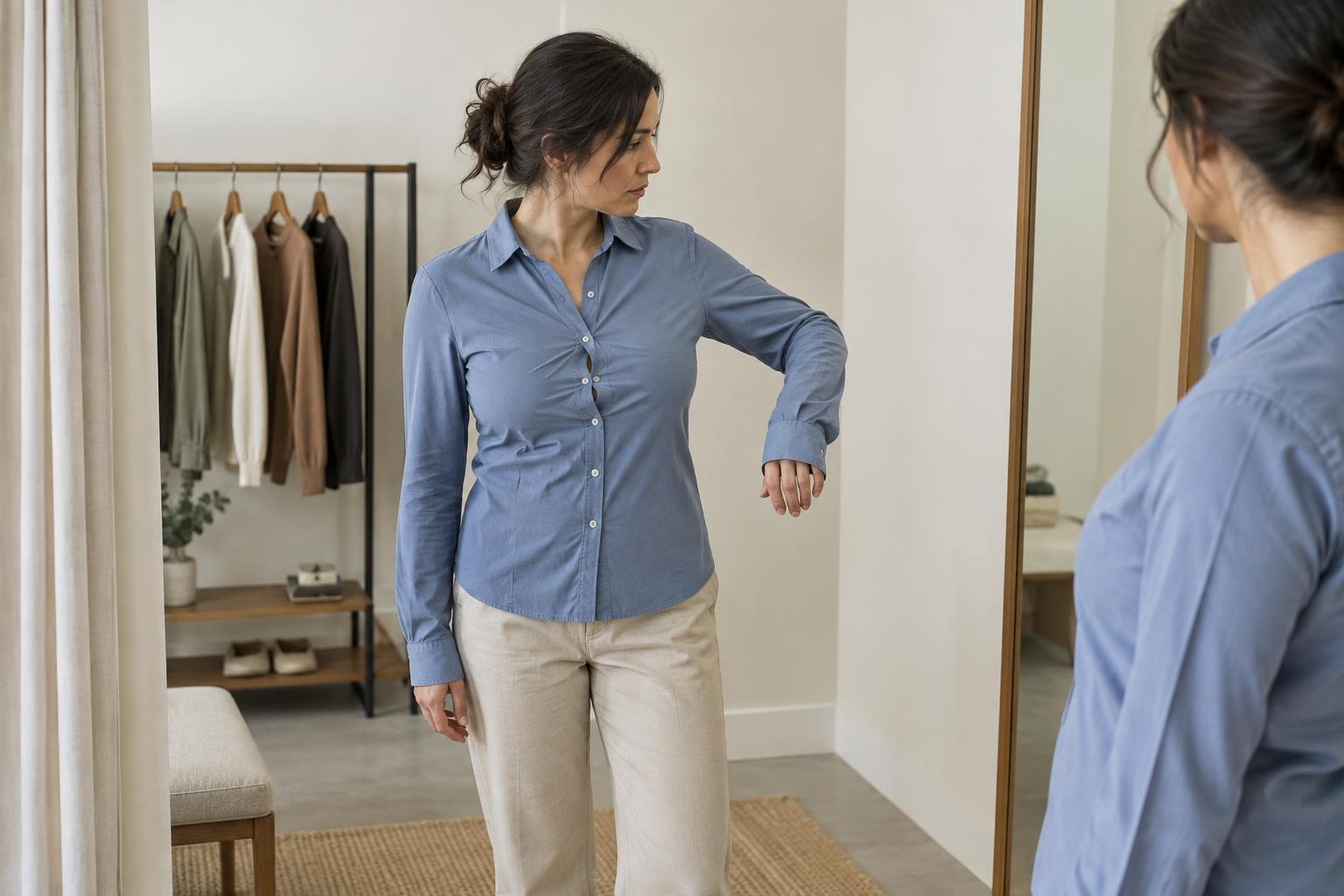
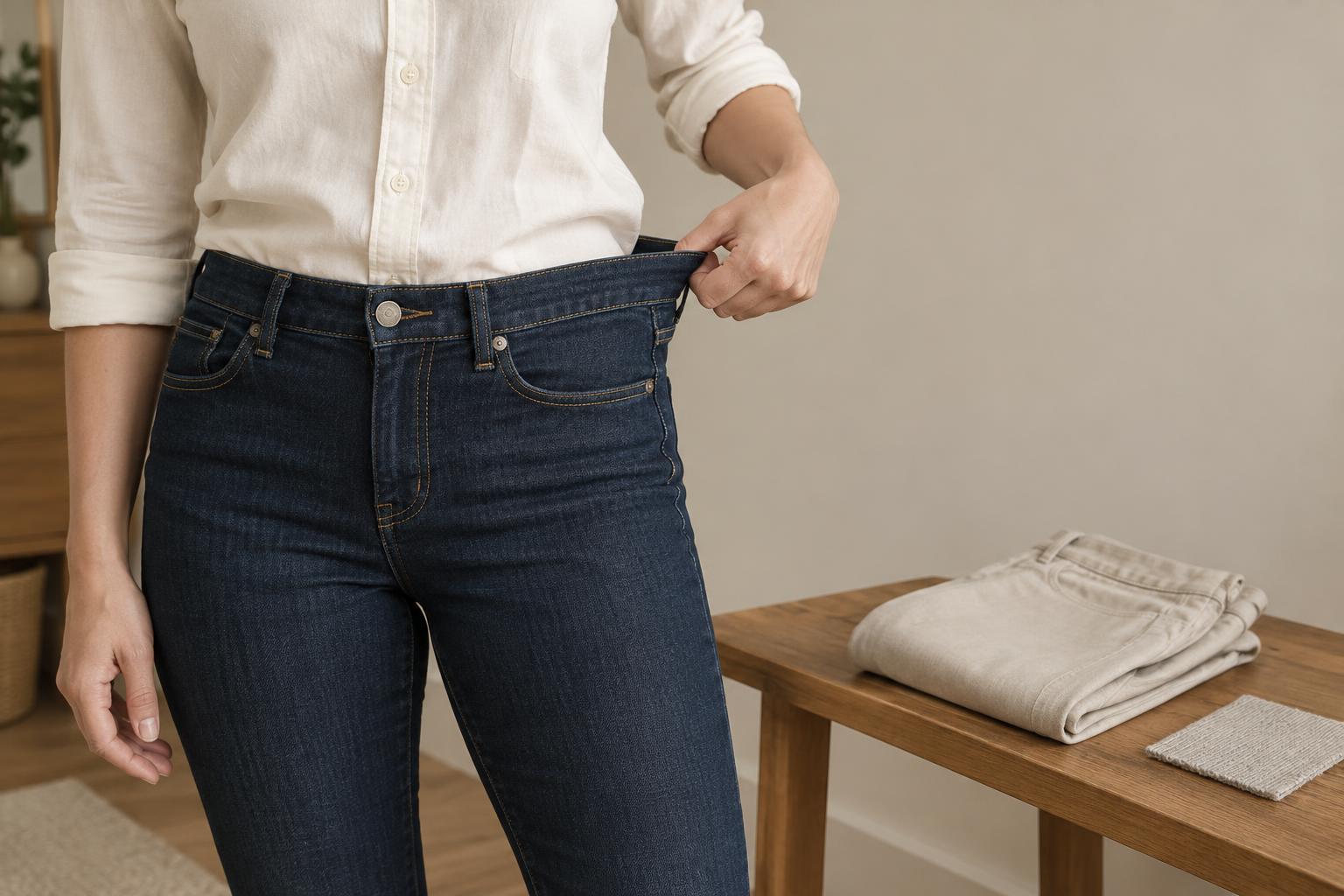
A garment can be carefully constructed and still be wrong for your body or habits. Try it on with the kind of layers and shoes you would normally wear. Raise your arms, sit down, bend and walk. Watch for buttons pulling open, waistbands digging in, hems shifting unexpectedly or fabric straining across joints. If you find yourself repeatedly adjusting an item in the fitting room, you may do the same all day.
Separate easy adjustments from fundamental fit problems. A trouser hem may be straightforward to alter, while shoulders that sit poorly or a cut that restricts movement can be harder to change. If an alteration is part of your plan, account for the extra time and effort before deciding. A garment that fits your real routine now is often more useful than one you hope will work after several fixes.
Make the care requirements part of the decision
Read the care label before committing. If an item needs a washing method, drying space or ironing time you are unlikely to give it, its apparent value may not translate into regular wear. Think about whether the fabric is suitable for your climate and whether you already have other clothes you can wash or care for alongside it.
Finally, ask whether you can imagine wearing the piece with several things you own. A lower-priced garment is not necessarily a bargain if it quickly loses its appeal or sits unused, and an expensive one is not automatically a sound choice. Quality means a garment meets your needs: it feels good, is put together securely, fits comfortably and can be cared for in a way that suits your life. Those checks give you a more reliable basis for choosing than price alone.