Stretch and fit are not the same thing
A garment that stretches can feel comfortable the moment you put it on. That does not always mean it fits well. Stretch gives fabric room to expand when you sit, bend or reach, while fit describes how the garment sits on your body when you are standing and moving. A stretchy waistband may feel forgiving, for example, but trousers can still pull across the hips or bunch at the knees.
It helps to notice where the stretch comes from. Knit fabrics usually stretch because of the way their loops are constructed. Woven fabrics can also stretch, often because they contain an elastic fibre, or offer a small amount of give through their weave. Some fabrics stretch in one direction; others stretch both across and along the garment. None of these qualities is automatically better. The useful question is whether the fabric gives where you need movement while keeping the shape you want.
When stretch makes clothes easier to wear
Stretch is particularly useful in close-fitting clothes and pieces you move in throughout the day. A little give across the shoulders can make a fitted top easier to reach in. Stretch in trousers may make sitting and walking more comfortable, especially when the cut follows the leg closely. In a knit dress or cardigan, flexibility can help the garment move with you rather than feeling restrictive.
Good stretch works alongside the cut. A garment should have enough room for ordinary movement without depending on the fabric being pulled tight at all times. Try the motions you expect to make while wearing it: sit down, raise your arms and take a few steps. If the garment moves comfortably and settles back into place, its stretch is doing useful work. If you have to tug it down or straighten it after every movement, the cut may not suit you, however soft the fabric feels.
When stretch hides a fit problem
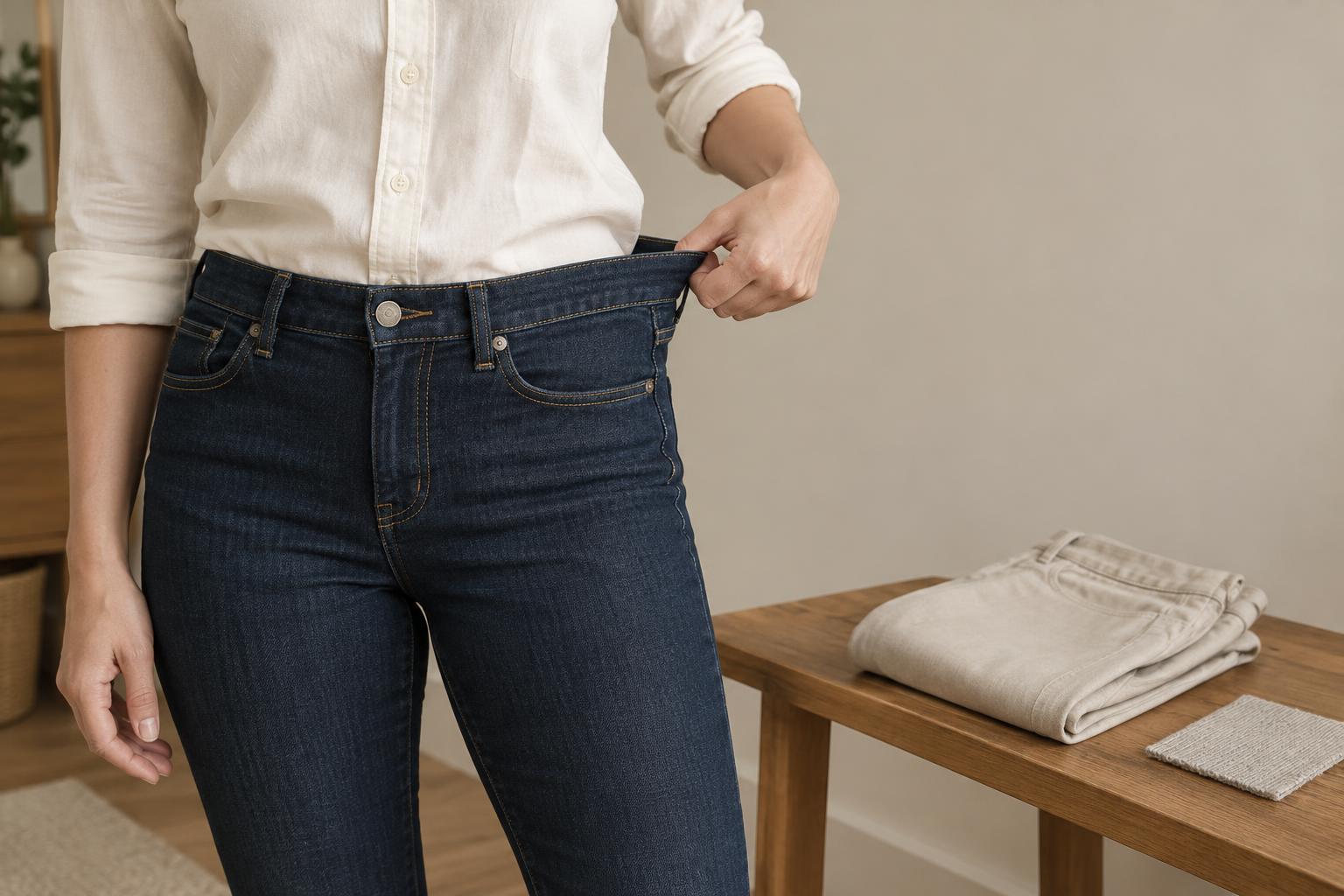
Because stretchy fabric can expand, it can make a too-small garment seem wearable. Look for signs that the material is working harder than intended: seams straining, pockets gaping, a waistband rolling, or fabric becoming noticeably more sheer when worn. Horizontal pulling lines may also suggest that a garment needs more room, though wrinkles can have several causes. Sizing up is worth trying, but a different cut may work better if the larger size becomes loose elsewhere.
Stretch can create problems in the other direction, too. A very stretchy garment may fit closely at first and then feel baggy after a few hours, particularly at elbows, knees or the seat. Fabric recovery—its ability to return toward its original shape—matters as much as how far it stretches. Gently pull a small area of the garment, release it and see whether it springs back. This quick check cannot predict every change after wear, but it can reveal fabric that already feels slow to recover.
Match the fabric to the shape you want
Think about the intended silhouette before choosing more or less stretch. A soft, stretchy top may be ideal for layering because it follows the body without adding much bulk. A structured shirt or jacket may benefit from firmer fabric that holds a crisp line. For wide-leg trousers, drape and weight may matter more than elasticity; for slim trousers, some give may be a priority.
Pay attention to details as well as the main fabric. A lining that does not stretch can restrict movement even when the outer layer does. Firm seams, narrow cuffs or a tight waistband can do the same. On the other hand, a waistband with give does not solve a rise that feels too short when you sit. Checking the whole garment helps you avoid judging fit by a single comfortable feature.
Choose and care for stretch with intention
When trying on clothes, start with your usual size but let the fit decide. Check how the garment looks at rest, then move in it. If you are choosing between sizes, consider whether you prefer a close or relaxed feel and whether the fabric is likely to relax during wear. You should be able to move without strain, while still liking the shape when the garment is not stretched.
At home, follow the care label, especially for garments that rely on elastic fibres to keep their shape. Excessive heat or rough handling may shorten the useful life of some stretchy fabrics. Letting a garment dry as directed and storing it so it does not hang under its own weight can also help it keep its intended shape. The aim is not to avoid stretch: it is to choose the amount and type that support the way you actually wear your clothes.