Start with the job your jacket needs to do
A casual jacket is often the piece you put on just before leaving home, so it needs to work with the clothes you already wear. Before choosing a style, think about when you would reach for it. Is it a light layer for mild days, something roomy enough for a sweater, or mainly a finishing touch for simple outfits? None of the three styles is a universal answer; each brings a different shape and feel.
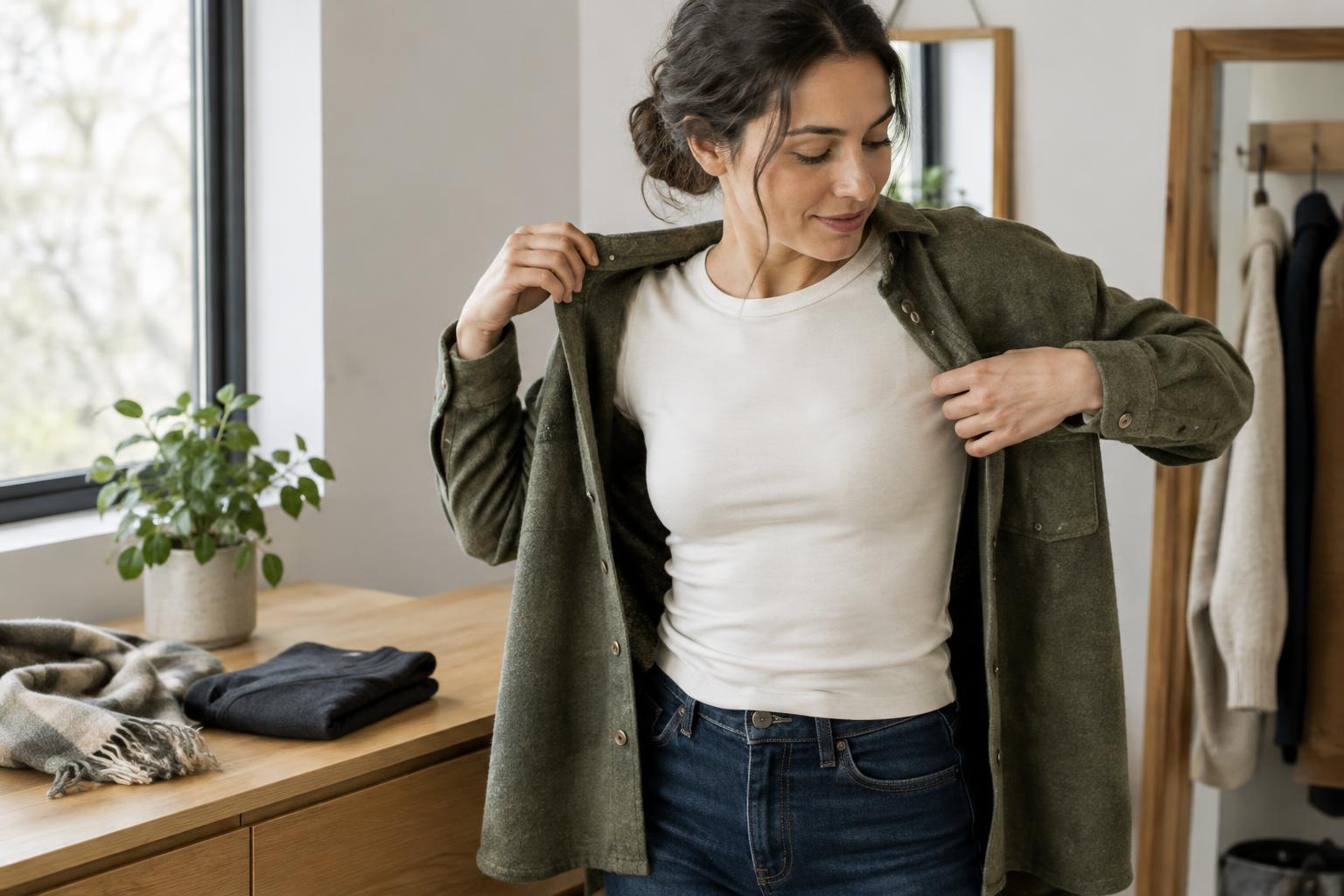
Try jackets over your usual layers rather than over a thin top chosen for the fitting room. Move your arms forward, sit down and check whether the hem stays where you want it. Look at the shoulder seams, sleeve length and room across the back. A jacket can be intentionally loose or close-fitting, but it should let you move comfortably and suit the proportions you enjoy wearing.
Denim: a familiar, structured layer
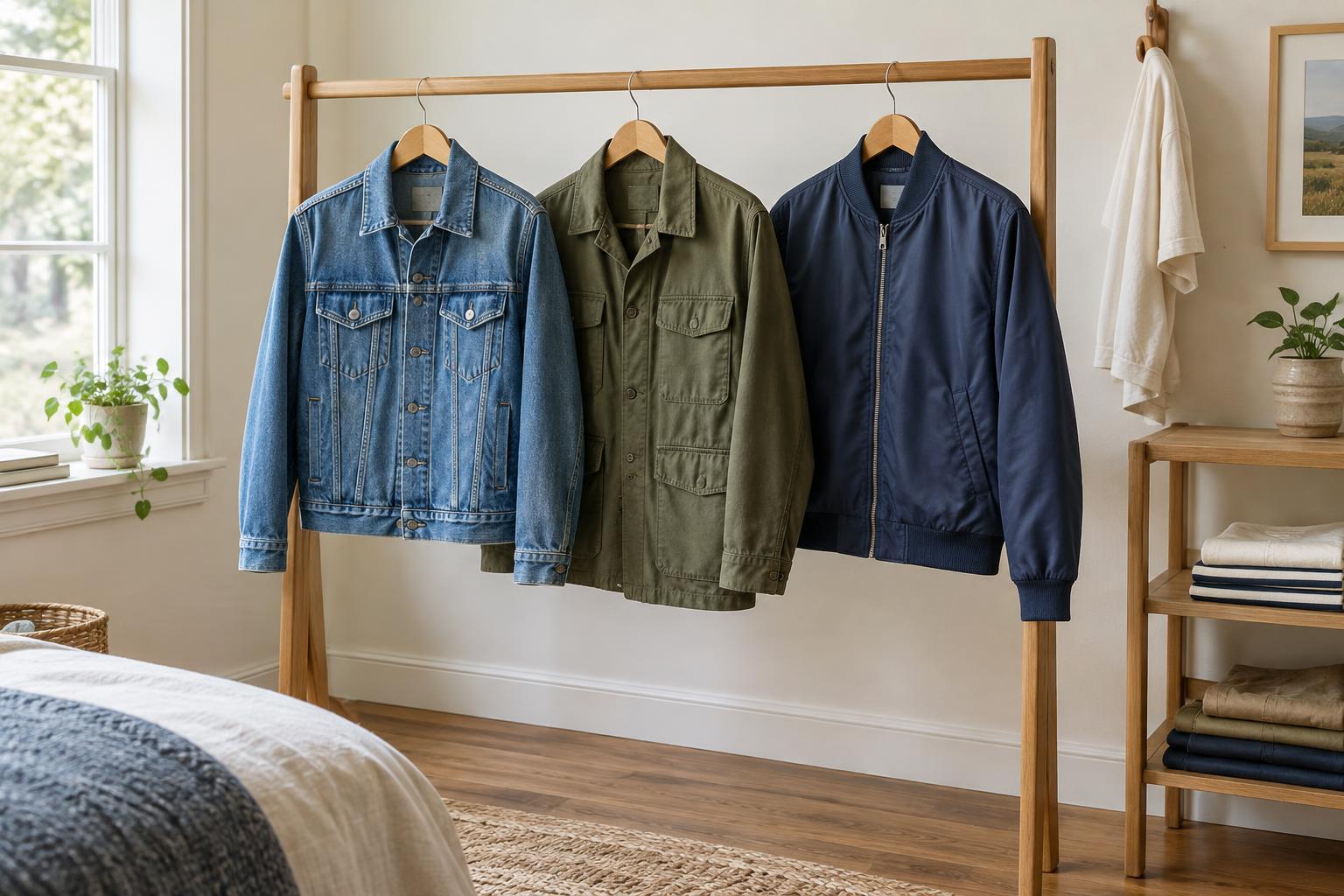
A denim jacket is a straightforward choice if you like a defined shoulder and a slightly sturdy feel. It pairs easily with casual trousers, dresses and skirts, and its visible seams and pockets add detail to a plain outfit. A shorter denim jacket can sit neatly above a high waist or the fuller shape of a dress. A longer, roomier cut may be easier to wear over an untucked shirt or light knit.
Consider the wash as well as the cut. Dark denim tends to look quieter, while a lighter or more faded wash can make an outfit feel relaxed. Wearing denim on top and bottom is also an option: if you want more contrast, choose noticeably different washes or break them up with a shirt or belt. Some denim feels stiff at first, so check that you can bend your arms and button the front without pulling. If layering is a priority, leave enough space for the layer you expect to wear underneath.
Utility: pockets and an easy, practical shape
Utility jackets usually have a straight or relaxed shape and visible pockets, making them useful when you want an unfussy outer layer. Designs vary: some are lightweight overshirts, while others are more substantial jackets. Pocket placement can change the look considerably. Large patch pockets add visual detail; simpler pockets give a cleaner finish. Check that the pockets are comfortable to use and do not sit awkwardly when filled.
This style works well with jeans, plain trousers and casual skirts. If the jacket has a boxy cut, try it with a narrower bottom or a top tucked in to create some definition, if that appeals to you. Fabric matters as much as styling. A soft fabric may drape and layer easily, while a firm one can hold a more angular shape. Check the weight and lining for the conditions in which you plan to wear it, rather than assuming the word “utility” means it will protect you from rain or cold.
Bomber: a softer outline with a fitted hem
A bomber jacket is recognizable by its ribbed or gathered hem and cuffs. Those details create a rounded shape, especially in a roomy cut. It can be a good choice if you prefer a jacket that feels less rigid than denim but still gives a simple outfit a clear silhouette. Try one with straight-leg trousers, a relaxed dress or a long skirt; the shorter hem can make it easy to see the shape of the clothes beneath it.
Pay attention to where the hem lands. If it pulls up or bunches when you sit, another size or cut may feel better. Also check the sleeve volume if you often wear sweaters. Bomber jackets come in very different fabrics, so do not choose by shape alone: a thin, unlined version serves a different purpose from a padded one. A plain fabric may be easiest to repeat across outfits, while a bold colour or sheen can make the jacket the focal point.
Choose for your wardrobe, then make it last
If you are deciding between the three, build two or three outfits from clothes you already own and picture each jacket with them. Denim brings structure and familiar texture; utility offers an easy shape and pockets; a bomber creates a softer, more rounded outline. Notice which choice works with your preferred shoes and bag as well as your tops and bottoms. A jacket you enjoy wearing repeatedly is more useful than one that only suits a single imagined outfit.
Before buying, inspect the closures, seams, pockets and care label. Make sure buttons or zips work smoothly and that you are comfortable with the cleaning instructions. Once the jacket is in your wardrobe, air it between wears when appropriate and treat small marks according to its fabric-care label. Store it so the shoulders and shape are supported. These simple checks help you choose a jacket for ordinary days, not just for how it looks on a hanger.