Start with shape, not a body-type rule
A skirt’s shape is the outline it makes from waist to hem. Fit is how that shape sits on you and behaves when you move. Keeping the two separate makes shopping easier: you might like the outline of a pencil skirt but prefer a roomier version, or enjoy a full skirt only when its waistband sits comfortably.
Length is another choice. Mini, knee-length, midi and maxi describe where the hem falls, not the skirt’s shape. A midi skirt, for example, can be straight, A-line or pleated. Before deciding whether a style works for you, consider the waistband, the amount of room through the hips and legs, and where the hem falls with the shoes you usually wear. There is no need to match a silhouette to a prescribed body type; comfort, proportion and personal preference are more useful guides.
Straight and pencil skirts
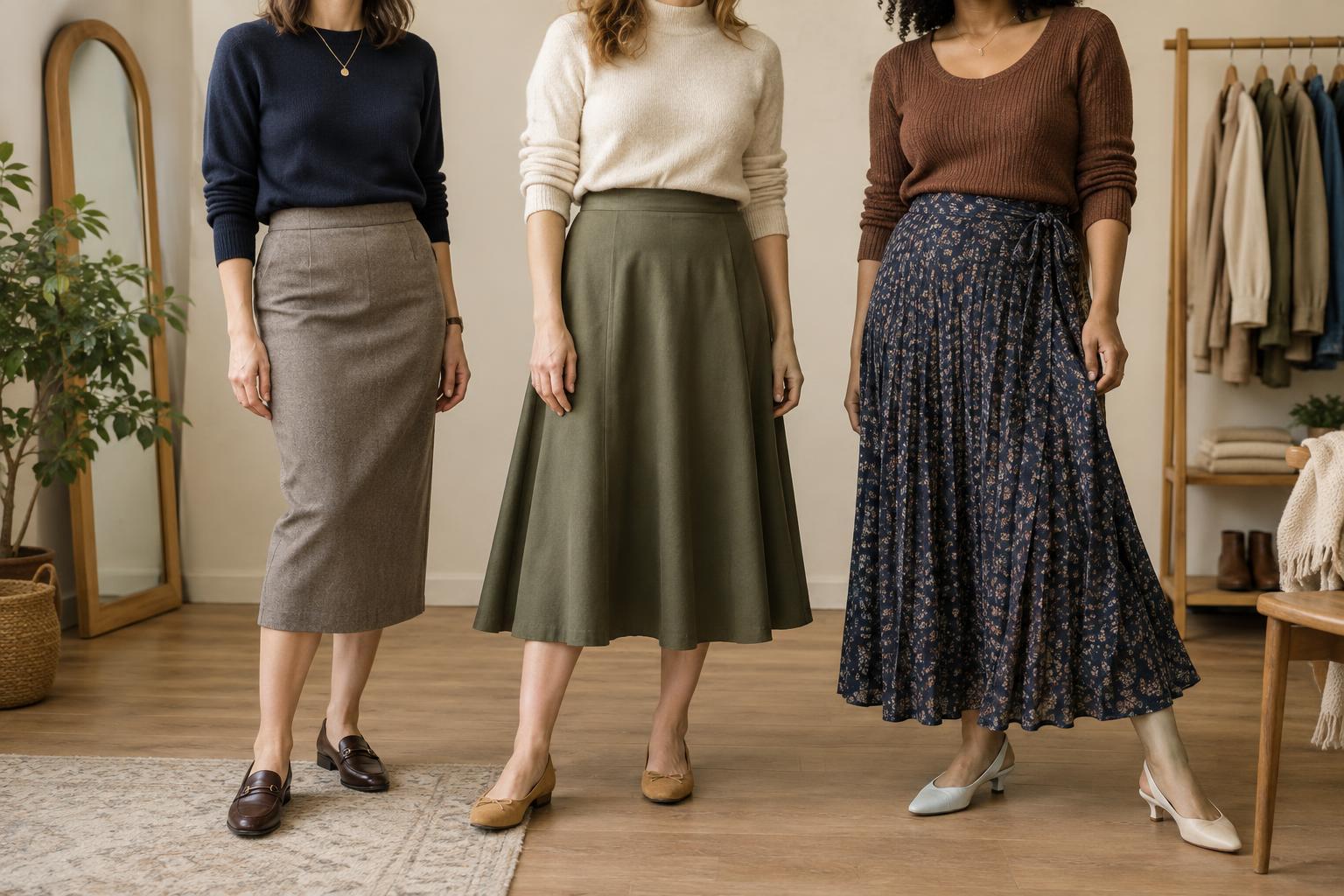
A straight skirt follows a fairly even line from hip to hem. It may skim the body or have a relaxed fit, depending on its cut and fabric. This simple outline is easy to pair with shirts, knitwear and casual tops because it does not add much volume below the waist.
A pencil skirt narrows toward the hem and usually sits closer to the hips and thighs. That taper gives it a distinct shape, but it can also limit your stride. When trying one on, walk and sit rather than judging it only in the mirror. A back vent, side slit or stretch in the fabric may make movement easier. Check that the skirt stays in place without pulling into pronounced horizontal lines or riding up as you walk. If you like the outline but want more freedom, try a straighter cut or a pencil skirt with more ease.
A-line, full and pleated skirts
An A-line skirt is narrower at the waist and widens toward the hem. The flare can be subtle or noticeable. A modest A-line shape often leaves space for walking while keeping a neat outline, making it a flexible choice for everyday outfits. Try it with a tucked or shorter top if you want the waistline to remain visible, or with a loose layer if that feels more like your style.
Full skirts use more fabric to create volume, sometimes through gathers, panels or a circular cut. Pleated skirts create folds that may be crisp or soft. Both can move beautifully, but their fit depends on where the volume begins. Gathers or pleats that start directly at the waistband can add fullness there; styles with a smoother upper section may sit flatter before opening out. Check how the fabric falls after you sit down and stand up, particularly if you want the pleats to keep their intended shape.
Wrap and bias-cut skirts
A wrap skirt overlaps at the front or side and fastens with a tie, button or other closure. Its adjustable-looking design can be useful, but not every wrap skirt offers much adjustment: some have fixed fastening points. Make sure the overlap stays secure when you sit, climb stairs and walk. If it gaps, a different size or a style with more overlap may be more comfortable than relying on constant readjustment.
A bias-cut skirt is made with the fabric cut diagonally across the weave, allowing it to drape and follow curves in a softer way than many straight-cut skirts. Bias describes the cut of the fabric rather than a single silhouette. These skirts can feel fluid, but they may also cling or shift depending on the material. Try one with the underwear and top you would normally wear, and allow it to settle before assessing the hem and fit.
Use fabric and movement to make the final choice
Two skirts with the same shape can look quite different. A structured fabric may hold an A-line or pleated outline away from the body, while a soft fabric may collapse into gentle folds. A heavy knit can skim differently from a light woven material. Look at the fabric as well as the label, especially when choosing a skirt to wear across several seasons or occasions.
For a practical fitting check, stand, sit and walk at your usual pace. Notice whether the waistband digs in or slips, whether the hips have enough room, and whether you keep tugging at the hem. Consider care, too: a skirt that needs frequent pressing may be less useful to you than one that is easy to maintain. The best shape is not necessarily the most flattering in a photograph; it is one you enjoy wearing with the tops, layers and shoes already in your wardrobe.