What separates a blouse from a shirt?
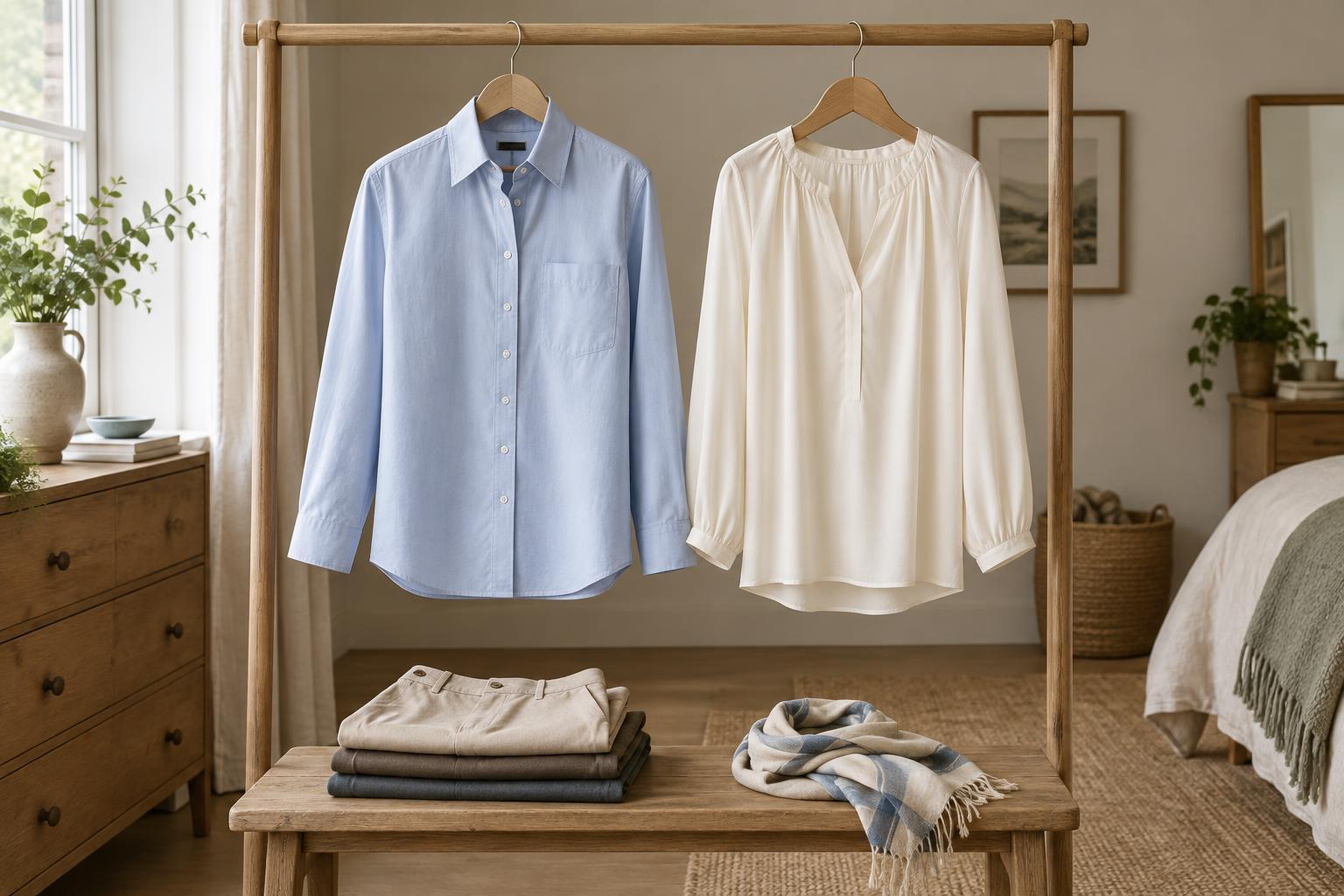
The names are useful shortcuts, not strict rules. A shirt usually has a defined collar, a front opening with buttons and a shape that takes its cues from classic shirting. A blouse may have a softer shape, a different neckline, gathering, drape or details such as a tie or fuller sleeve. Either can be plain or decorative, relaxed or polished. Some tops fit both descriptions, so the label matters less than how the garment works for you.
Start with the role you want the top to play. If you like a crisp layer that can sit open over a T-shirt or tuck neatly into trousers, a shirt may be the easier choice. If you want a top that feels complete without extra styling, a blouse with a distinctive neckline or sleeve may do that job. Neither is automatically more versatile; versatility depends on the rest of your wardrobe.
Compare the shape with your usual outfits
Think about the bottoms you wear most often. A straight or slightly loose shirt can balance wide-leg trousers when tucked at the waist, while an untucked shirt may pair easily with slim or straight-leg bottoms. A fluid blouse can soften jeans or tailored trousers. If the top has volume at the sleeves or hem, try it with your usual jacket before deciding: details that look appealing on their own may feel crowded under a layer.
Length changes how often a top gets worn. A longer shirt can be useful if you prefer an untucked look, but extra fabric may bunch when tucked. A shorter blouse may sit comfortably above a waistband yet leave less room for styling. Check the hem from the side as well as the front, especially when sitting or reaching. A good everyday choice should work in the positions you spend time in, not just when you stand still.
Let fabric guide the decision
Woven fabric does not usually stretch as freely as jersey, so its weight and movement make a noticeable difference. A crisp cotton shirt tends to hold a clear shape; a softer cotton or linen version may feel more relaxed. Blouses are often made in fabrics chosen for drape, though a blouse can also be structured. Instead of relying on the garment name, handle the fabric and notice whether it falls, stands away from the body or clings.
Consider the upkeep you will accept on an ordinary week. Some woven fabrics crease readily, while others may need gentler washing or careful drying. A light fabric may also need a layer underneath, depending on its colour and opacity. Read the care label before buying, and ask yourself whether the top will still appeal to you after a normal wash. The easiest top to wear regularly is often the one whose care fits your routine.
Check fit where it affects comfort
For a button-front shirt, pay particular attention to the shoulders, upper arms and space across the chest. Buttons should sit comfortably when you move, without pulling the fabric open. For a blouse, check whether the neckline stays where you want it and whether gathered seams or sleeve cuffs feel comfortable. A generous-looking top can still restrict movement if it is narrow in the wrong place.
Try on a woven top with the trousers, skirt or jacket you expect to wear with it. Raise your arms, sit down and make a few everyday movements. If you plan to tuck it, test that too: a top may fit well loose but shift or bunch at the waist. These small checks tell you more about its usefulness than the size on the label.
Choose for your wardrobe, not the category name
Before adding a top, picture at least two outfits using clothes you already own. A plain shirt might work buttoned with tailored trousers and worn open over a vest with jeans. A blouse might bring interest to simple bottoms and sit neatly under a cardigan. Both can be worn casually or dressed up; colour, fabric and styling will influence the result as much as the garment type.
If you are deciding between two similar tops, choose the one that fills a real gap. You may need a sturdy, easy-to-layer shirt, or you may already have several and want a softer blouse for days when you prefer less structure. The right everyday woven top is the one that feels comfortable, works with your existing clothes and does not demand more care or styling than you want to give it.