Start with what you already like wearing
A signature look is often described as one memorable outfit, but it is more useful to think of it as a pattern of preferences. You might favour relaxed trousers, tidy collars and understated jewellery. Someone else might reach for soft layers, strong colours and practical shoes. Neither approach requires wearing identical pieces every day. The aim is to recognise the choices that make an outfit feel comfortable and recognisably yours.
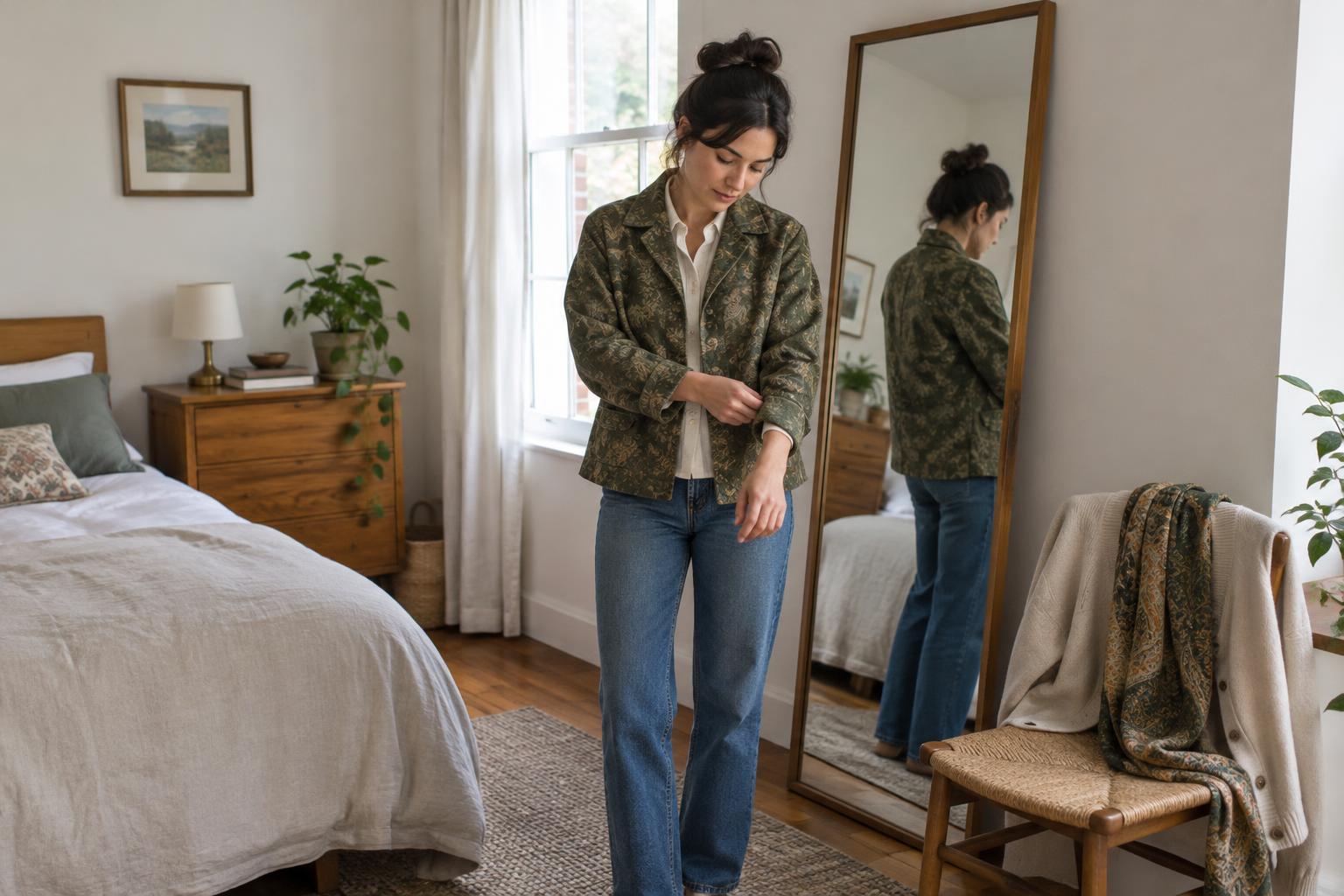
Begin with clothes you actually wear, rather than an imagined ideal wardrobe. Set aside a few outfits you enjoy and ask what they have in common. Look beyond colour: notice proportions, fabric weight, how close garments fit, and whether the overall impression is crisp, relaxed or playful. Also consider what makes an outfit workable for your day. A preference is more useful when it suits your routine as well as your eye.
Choose a few recurring elements
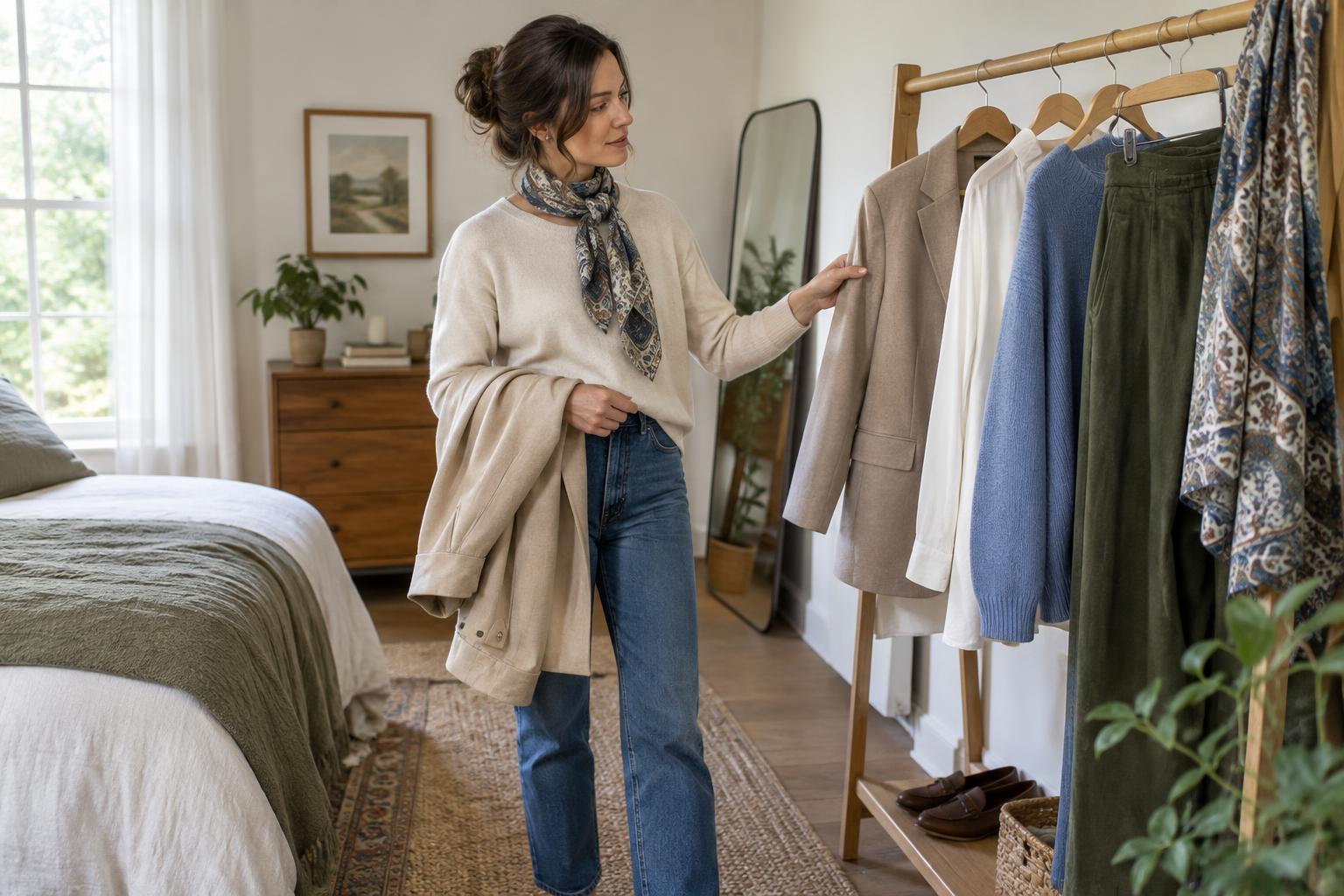
Once you see a pattern, pick two or three elements to carry through different outfits. These could be a consistent silhouette, a small colour palette, a type of accessory or a preferred level of polish. For example, straight-leg bottoms, a softly structured top and a scarf can create continuity even when every individual garment changes. Keeping the list short gives you a clear starting point without turning personal style into a set of rules.
Your recurring elements need not be conspicuous. A preference for rolled sleeves, tonal colours or shoes with a simple shape can be just as distinctive as a bright print. Be specific enough to help yourself make choices: “I like contrast between a loose top and a neat bottom” is more actionable than “I like effortless style.” Treat these observations as guides, not obligations. If a favourite dress breaks the pattern, you can still wear it.
Build outfit formulas, not a uniform
An outfit formula describes how pieces work together without prescribing the exact pieces. One formula might be relaxed trousers, a fitted knit, comfortable shoes and one noticeable accessory. Another could be a simple dress, a light layer and a bag with some texture. These combinations reduce the effort of starting from scratch, while leaving room to change the mood, colour and level of formality.
Make two or three formulas for the situations you dress for most often. Check that each works with clothes you own and allows for the weather and your daily activities. If a formula looks good on paper but needs constant adjusting when you move, revise it. A practical signature look should help you get dressed, not make you feel that you are maintaining a costume.
Vary one thing at a time
Consistency becomes more interesting when you know what to change. Keep your favourite silhouette and swap the colour combination: try a light top with dark trousers one day, then similar shapes in closer tones the next. Keep a familiar palette but change texture, pairing a smooth shirt with denim instead of a soft knit. You can also change the emphasis of an outfit by wearing a scarf at the neck, tying it to a bag or leaving it out altogether.
Small changes often have a clearer effect than replacing everything at once. If you enjoy a simple base of trousers and a top, choose a different outer layer, shoe shape or accessory to shift its character. On days when you want less visual variety, repeat a combination you know you like. Repetition is not a failure of creativity; it gives your more experimental choices a dependable foundation.
Let your look evolve with your life
A signature look should be recognisable to you, not fixed forever. Your schedule, comfort needs and tastes may change, so check in with your wardrobe from time to time. Notice which outfits you reach for without hesitation and which pieces remain unworn despite fitting your supposed aesthetic. That gap can reveal whether an idea is appealing in theory but less useful in practice.
Before buying something to complete a look, try styling what you own in a new combination. A different tuck, layer or accessory may give a familiar piece a fresh role. If you do add an item, consider whether it works with several of your existing formulas rather than only one imagined outfit. The most useful signature style is one you can return to, adjust and enjoy on ordinary days.