Start with the shirt you intend to wear
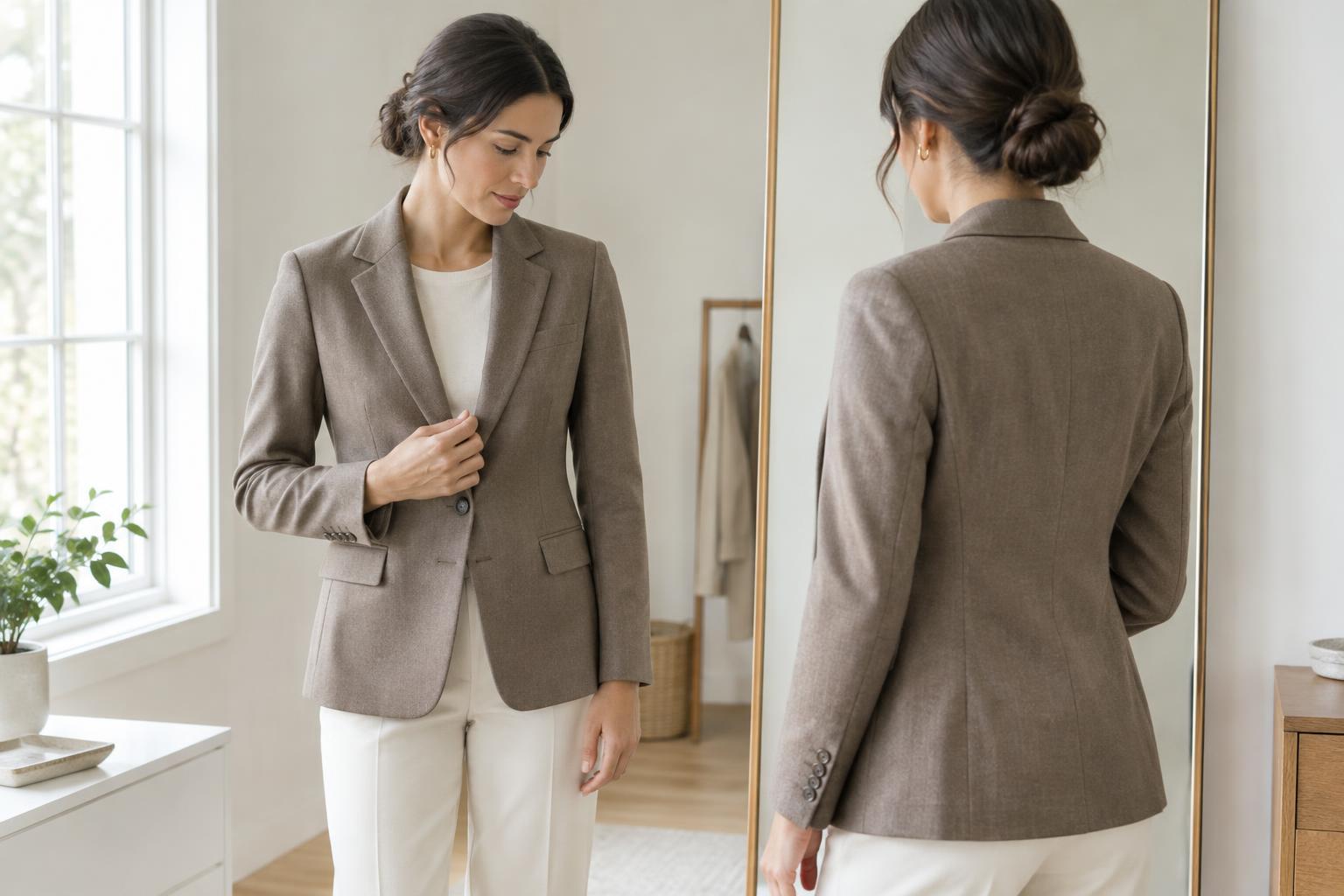
A useful fit check begins with how you will actually wear the shirt. If you usually leave it untucked over a T-shirt, try it that way. If it is mainly for tucking into trousers, tuck it in during the fitting. Button the shirt to the point you would normally wear it, then look at it from the front, side and back. A mirror helps, but comfort matters just as much as appearance.
Different cuts are meant to create different outlines. A relaxed shirt will have more room than a close-fitting one; extra fabric is not automatically a flaw. The aim is for the shirt to sit as intended without pulling, twisting or restricting ordinary movement. Check the fit while standing naturally before you start adjusting the fabric with your hands.
Check where the shoulders sit
On a conventional fitted shirt, the seam joining the sleeve to the body should sit near the outer edge of your shoulder. If it lands well inside that point, the shirt may feel tight across the upper back or lift when you raise your arms. If it falls far down the upper arm, the shoulder may look droopy and leave excess fabric near the underarm.
This guideline changes for shirts designed with dropped shoulders. In that case, compare the shirt with its intended relaxed shape rather than trying to make its seams line up like those of a tailored shirt. Either way, reach forward as if picking something up, then lift your arms. Notice whether the back pulls sharply, the collar shifts or the whole shirt rises more than you are comfortable with.
Shoulders are worth getting right at the start. Taking in a side seam may be relatively straightforward for a tailor, but changing the shoulder structure is usually a more involved alteration. If the shoulder fit is clearly wrong, trying another size or cut is often the more practical choice.
Look for comfortable room across the chest
Fasten the shirt and let your arms rest at your sides. The fabric should lie reasonably smoothly across the chest without the buttons straining or gaps opening between them. Some folds are normal, especially in soft or roomy shirts. Horizontal pulling lines or a front placket that bows outward, however, suggest that you may need more room.
Now sit down and reach both arms forward. These positions reveal tightness that can be easy to miss while standing still. The shirt should allow you to breathe and move comfortably, and the buttons should remain secure. If the shoulders fit but the front pulls, look for a roomier cut rather than assuming that every part of the shirt needs to be larger.
A shirt can also be too roomy for the look you want. If large amounts of fabric bunch at the sides or balloon when tucked in, consider a less generous cut. Leave enough ease to move, though: pinching away every fold while standing can produce a shirt that feels restrictive as soon as you sit or reach.
Test sleeve length and shape
With your arms relaxed, check where the cuffs fall. For a long-sleeved shirt worn on its own, the cuff should generally reach around the wrist rather than stopping well above it or covering much of the hand. Your preferred point may vary with the cuff style and whether you plan to roll the sleeves. Fasten the cuffs before judging length; an open cuff can hang differently.
Bend your elbows and reach forward. Sleeves that seem long enough at rest may pull noticeably up the forearm in motion. Also check the upper arms and elbows for tightness. You should be able to bend and extend your arms without feeling that the sleeve is gripping you or tugging the shirt across your back.
If the shoulders and body fit well but the sleeves are too long, shortening them may be worth considering. Sleeves that are too short offer less flexibility. Before deciding, think about how you care for the shirt: follow its care label, and avoid relying on a hoped-for change in length after washing.
Make the final decision in motion
Do one last everyday test: sit, stand, reach forward and tuck or untuck the shirt as you normally would. A good choice is not necessarily the one with the fewest wrinkles in a mirror. It is the one whose shoulders sit comfortably, whose chest stays closed without strain, and whose sleeves work for the way you move and wear them.
If one area is wrong, identify it before changing size. Sizing up may solve chest pulling but leave the shoulders too wide; sizing down may tidy excess fabric but shorten the sleeves. Comparing cuts, not just sizes, gives you a better chance of finding a shirt that feels easy to wear throughout the day.