What makes a cardigan useful?
A cardigan is a knit layer that opens at the front, making it easy to put on, take off or wear open as an outfit changes through the day. Unlike a pullover, it can reveal more of the shirt or top underneath. Unlike a structured jacket, it usually has a softer outline. Those differences make cardigans useful for everyday dressing, but they also mean that two cardigans in the same colour can serve quite different purposes.
When choosing one, start with the role you want it to play. A fine, close-fitting cardigan can sit under a coat or add a tidy layer over a shirt. A roomy, substantial one can be the outer layer in mild conditions. Think about where its hem falls, whether you want to fasten it and how much space it needs over your usual tops. Those questions are often more helpful than deciding by colour alone.
Short, hip-length and long cardigans
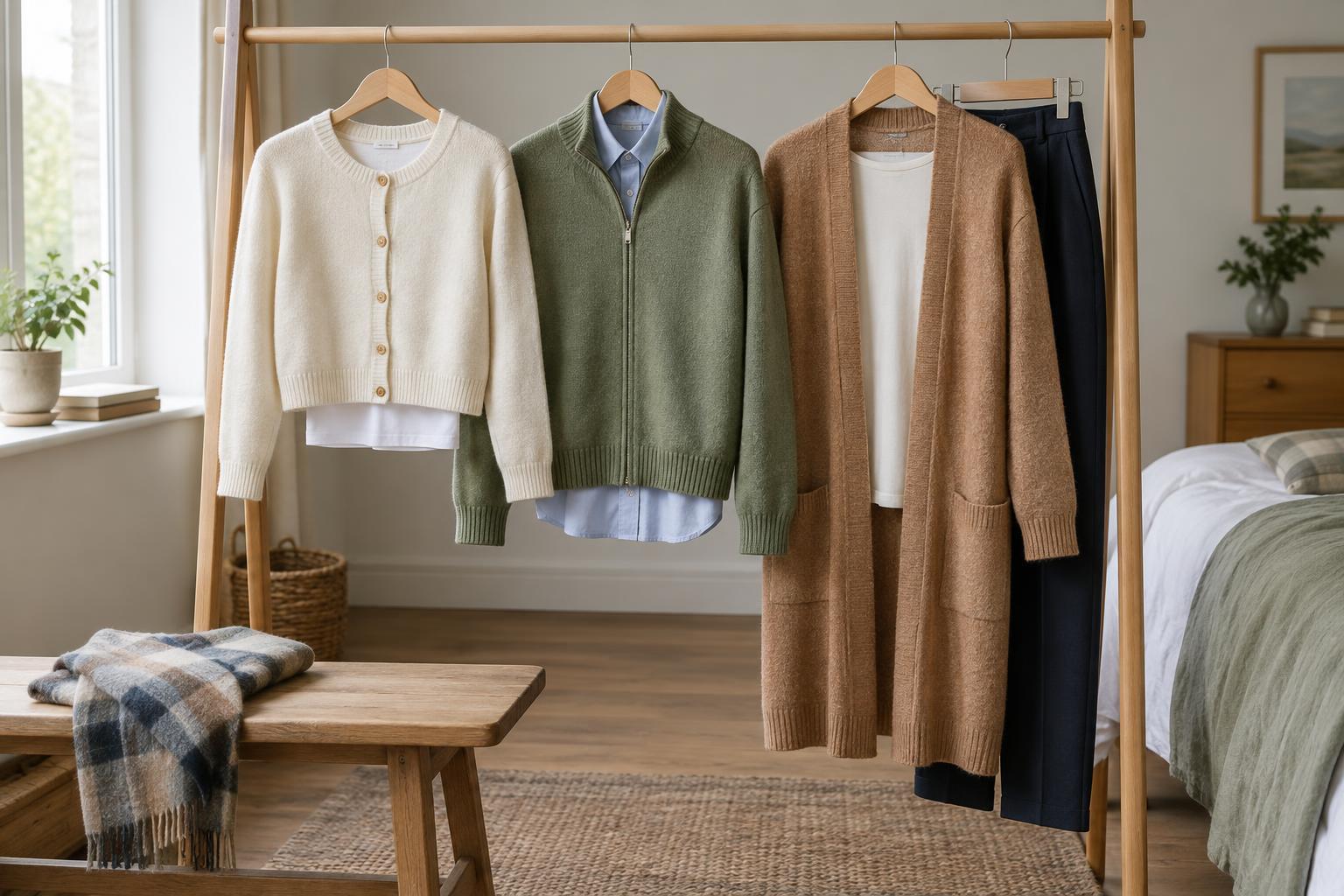
A cropped cardigan ends near the waist and keeps the lower half of an outfit visible. It can work well with high-rise trousers, skirts or dresses, especially when you want to show the waistline rather than cover it. Check where the hem lands when you move: a short cardigan may feel balanced over a fitted top but ride up over a thicker shirt.
A hip-length cardigan is a flexible starting point. It can cover the waistband of trousers without adding much fabric around the legs, and it is usually straightforward to wear under a coat. If you intend to button it, make sure the front lies comfortably across your torso and does not pull at the fastening points.
A longer cardigan creates a more continuous line over an outfit and can be useful over a dress or a simple top-and-trouser combination. Length also affects movement. Try sitting, walking and reaching while wearing it; a long, heavy knit that looks appealing on a hanger may feel cumbersome in daily use. With wider trousers or a full skirt, a long cardigan can add a lot of volume, so consider a lighter knit or wear it open if you prefer a less enveloping shape.
Buttons, zips and open fronts
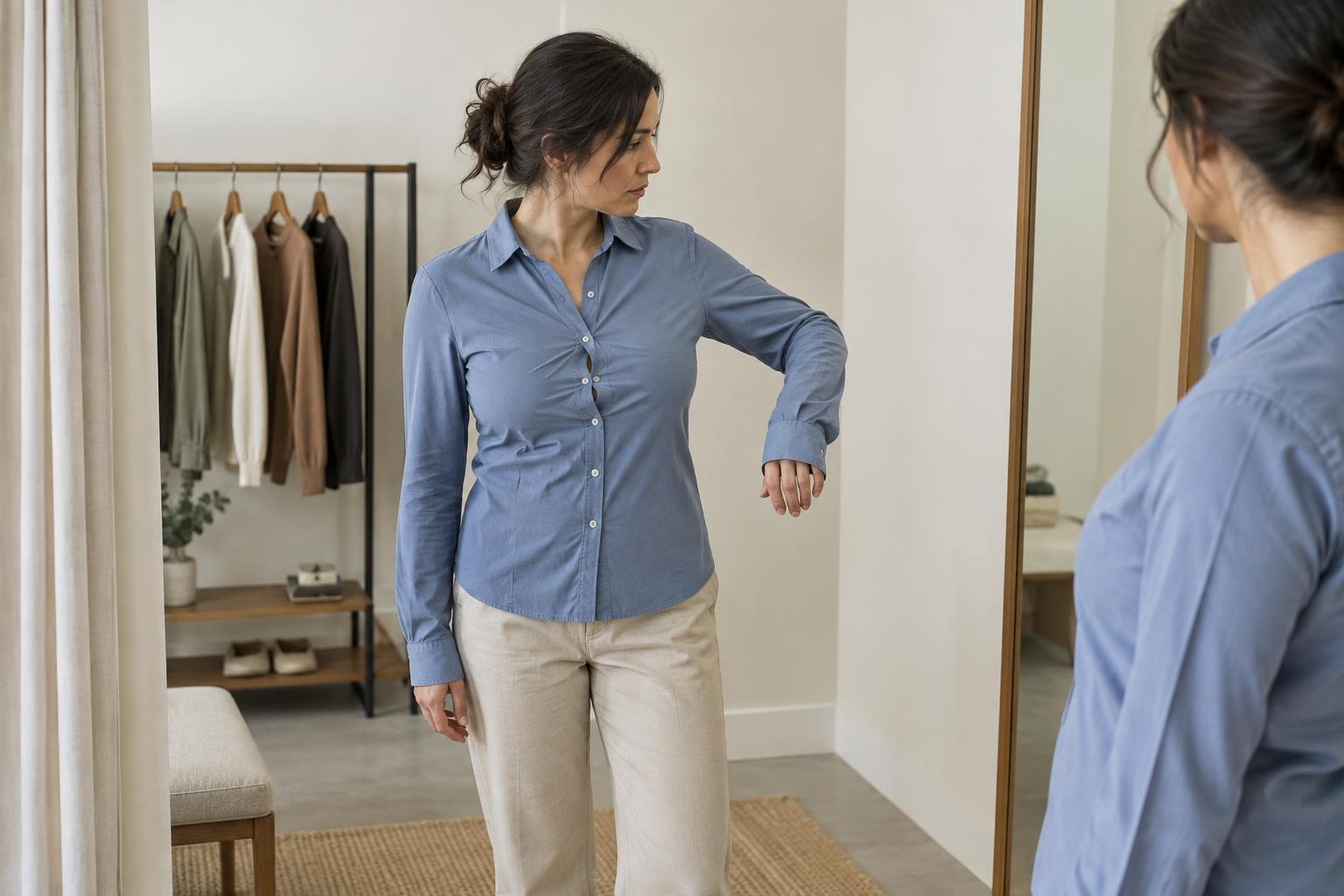
Buttons offer the most flexibility in how much of the layer you close. Fastening every button gives a cardigan a pullover-like shape; fastening only a few can leave space around the neckline or hem. The size and spacing of the buttons affect the look as well. Small, unobtrusive buttons tend to blend into a neat outfit, while larger ones become part of its design. If the fabric gaps between buttons, a different size or a cardigan intended to be worn open may be more comfortable.
A zip makes closing a cardigan quick and gives its front a straighter edge. It can suit casual outfits, though the zip may feel less flexible than buttons when you want to close only part of the middle. An open-front cardigan has no fastening to manage and falls naturally over the layers beneath it. Because it cannot be secured in place, pay particular attention to how its front edges hang and whether you will be comfortable wearing it open throughout the day.
Choosing a fit for the layers underneath
Try a cardigan over the kind of top you will actually wear with it. A slim cardigan may sit smoothly over a lightweight T-shirt but feel restrictive over a collared shirt. A loose cardigan can accommodate thicker layers, yet too much extra fabric at the shoulders or sleeves may make it difficult to fit beneath a coat. Look at the shoulder seam, lift your arms and check that the sleeves do not bunch uncomfortably.
The knit matters as much as the size. A fine knit tends to lie flatter and can make a useful indoor layer. A chunky knit adds warmth and texture but takes up more space. Fabric composition and construction vary, so use the garment’s feel, weight and care label to judge whether it suits your routine. If you often carry a bag, also consider how the knit feels beneath its strap and whether you would be happy wearing it that way regularly.
Putting a cardigan into an everyday outfit
For a simple outfit, let the cardigan provide either contrast or continuity. A cardigan close in colour to your top creates a quieter transition; one in a different colour or texture makes the layer more noticeable. Over a patterned shirt or dress, a plain cardigan can give the eye a place to rest. There is no need to match every item exactly: repeating one colour from a pattern or choosing colours you enjoy together is enough to make an outfit feel considered.
Before buying another cardigan, picture two or three specific outfits you could make with it. Ask whether its length works with your usual waistlines, whether you would wear it fastened and whether it fits under the outerwear you own. Once you have one you like, follow its care label, allow it to dry in a way that preserves its shape and store it folded if hanging stretches the knit. A cardigan earns its place in a wardrobe when it is comfortable to wear, easy to pair with existing clothes and simple enough to care for that you reach for it often.