Start with the parts that touch your skin
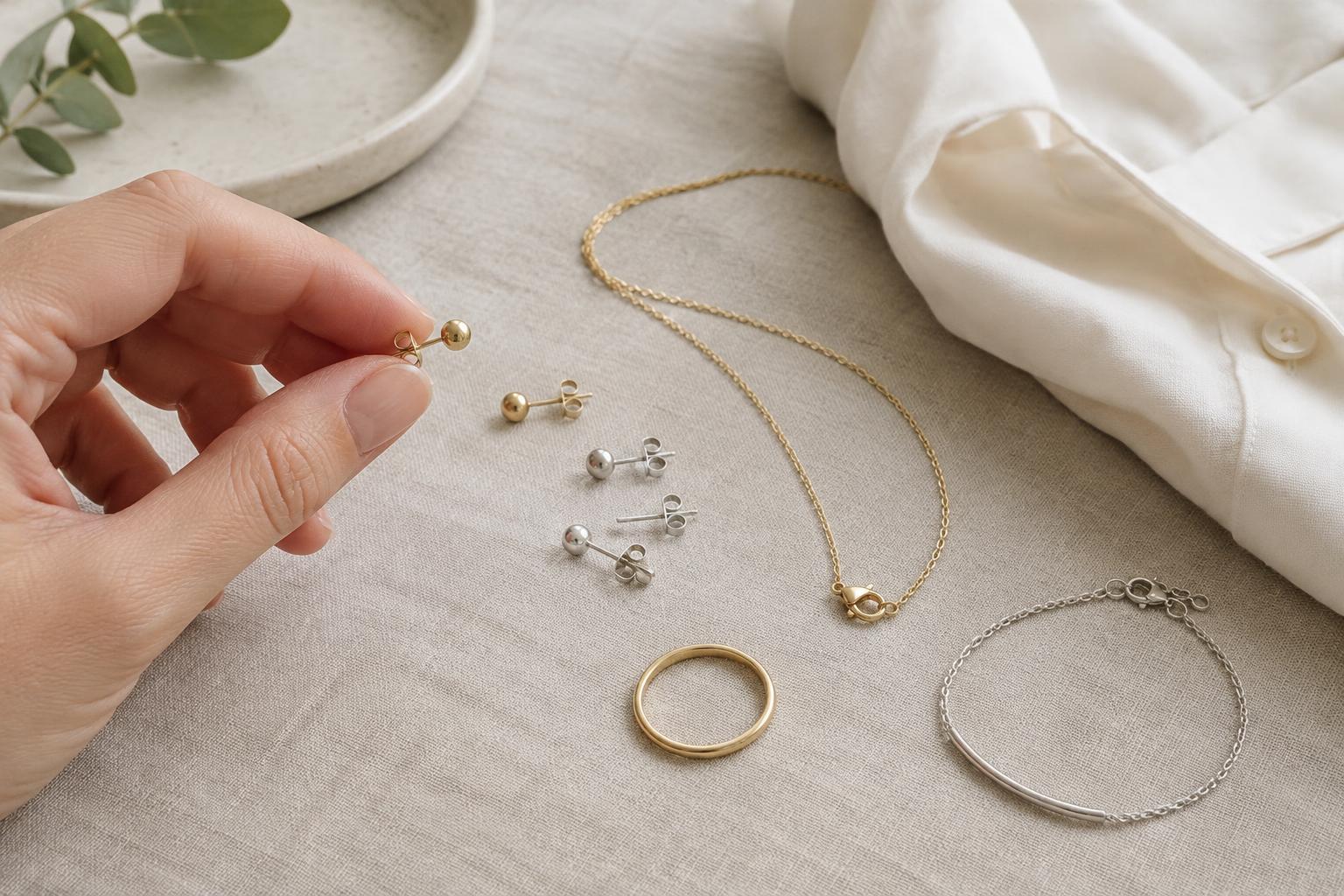
A pair of earrings can look simple and still contain several materials: a decorative front, a post, a backing and perhaps a coating. A necklace may have a different metal in its clasp than in its chain. If jewellery tends to bother your skin, checking only the material named on the product label may not be enough. Ask what the posts, backs, clasps and other skin-contact parts are made from.
Nickel is a common concern for people who react to jewellery, but discomfort can have other explanations. Friction, trapped moisture and residues from skincare products can also make a piece unpleasant to wear. A description such as “hypoallergenic” is a useful prompt to look closer, not a guarantee that an item will suit everyone. If you have a known sensitivity, a clear material description is more helpful than a broad comfort claim.
Know what common metal names do—and do not—tell you
Titanium and niobium are options worth considering for earring posts and other pieces worn close to the skin. Look for a seller who identifies the actual material used in every relevant component, rather than describing the whole item by its most visible part. Even a well-chosen post is less useful if its backing is made from a metal you avoid.
Stainless steel can be durable and easy to care for, but the name covers different alloys; some contain nickel. “Surgical steel” on its own does not tell you exactly which alloy is present or whether it will be comfortable for you. Similarly, sterling silver describes a silver alloy, not a promise about every added finding or fastening. If you already know which metals cause you trouble, ask about the full piece rather than assuming a familiar label settles the question.
Gold jewellery also varies. Higher- and lower-karat pieces use different proportions of other metals, and those alloy ingredients can differ between items. If you are considering gold for everyday wear, request details about the alloy and any solder, posts or clasps. The colour of a piece—yellow, white or rose—cannot by itself confirm that it will be comfortable.
Treat plating as a surface, not the whole story
Gold-plated and silver-plated pieces can offer a look you like at a lower cost than solid versions, but their surface layers may wear with use. Once the coating thins, the metal underneath may contact your skin. That matters particularly for rings and bracelets, which regularly rub against other surfaces, and for jewellery worn during washing or exercise. If the base metal is not specified, you have less information about how the piece might feel over time.
Terms such as gold-filled and vermeil describe particular constructions, but neither replaces a complete materials list. For example, a vermeil pendant may still hang from a chain with a separate clasp. When shopping, check both the decorative piece and every part that touches you. A modest collection of well-described, comfortable items may be more useful for daily dressing than many pieces you can wear only briefly.
Choose with your routine in mind
Before buying, think about where and how long you plan to wear the piece. Earrings worn throughout the day put different demands on comfort than a pendant worn over a shirt. A smooth edge, secure fastening and manageable weight can matter as much as the metal. For a necklace you want to wear often, consider whether its length keeps the chain against bare skin or over clothing; for rings, allow for how often your hands get wet during a normal day.
A simple approach is to build from pieces whose materials and construction you can identify. You might begin with one pair of comfortable earrings or one reliable chain, then add interchangeable accents that work with your clothes. Neutral metal finishes can blend into many outfits, while a pendant or colourful charm can provide variety without changing the skin-contact component. Your own experience with a material is useful when planning future purchases, though it does not guarantee that every differently made piece will feel the same.
Care for pieces and respond to discomfort
Keep jewellery clean and dry according to its maker’s care instructions. Wipe away moisture and product residue after wear, and store pieces separately to reduce rubbing that may damage delicate coatings. It can help to put jewellery on after lotions or fragrances have settled and to remove pieces before activities that leave them wet or subject them to repeated friction. These habits support the condition of the jewellery, although they cannot make an unsuitable material suitable.
If a piece causes itching, redness or discomfort, take it off rather than trying to wear through the reaction. Note which part touched the affected area and what the seller says it contains; those details can guide your next purchase. If symptoms persist, worsen or repeatedly occur, a qualified healthcare professional can help you understand what is happening. The goal is not to find a material that works for everyone, but to make informed choices for jewellery you can enjoy wearing.