Start with your everyday needs
A useful pair of trousers should suit the way you spend your day, not just the way it looks on a hanger. Before comparing fits, think about where you will wear the pair most often. Do you need room to sit and move, a neat shape for work, or something that goes with several pairs of shoes? Your answers will help narrow the choice more than a rule about which silhouette is most flattering.
Look at the tops and layers you already reach for. A trouser that works with two or three familiar outfits is likely to be easier to wear regularly than one that needs a new set of clothes around it. Straight, wide and tapered cuts can each do that job; the difference lies in how they distribute volume from hip to hem.
Straight trousers: a steady starting point
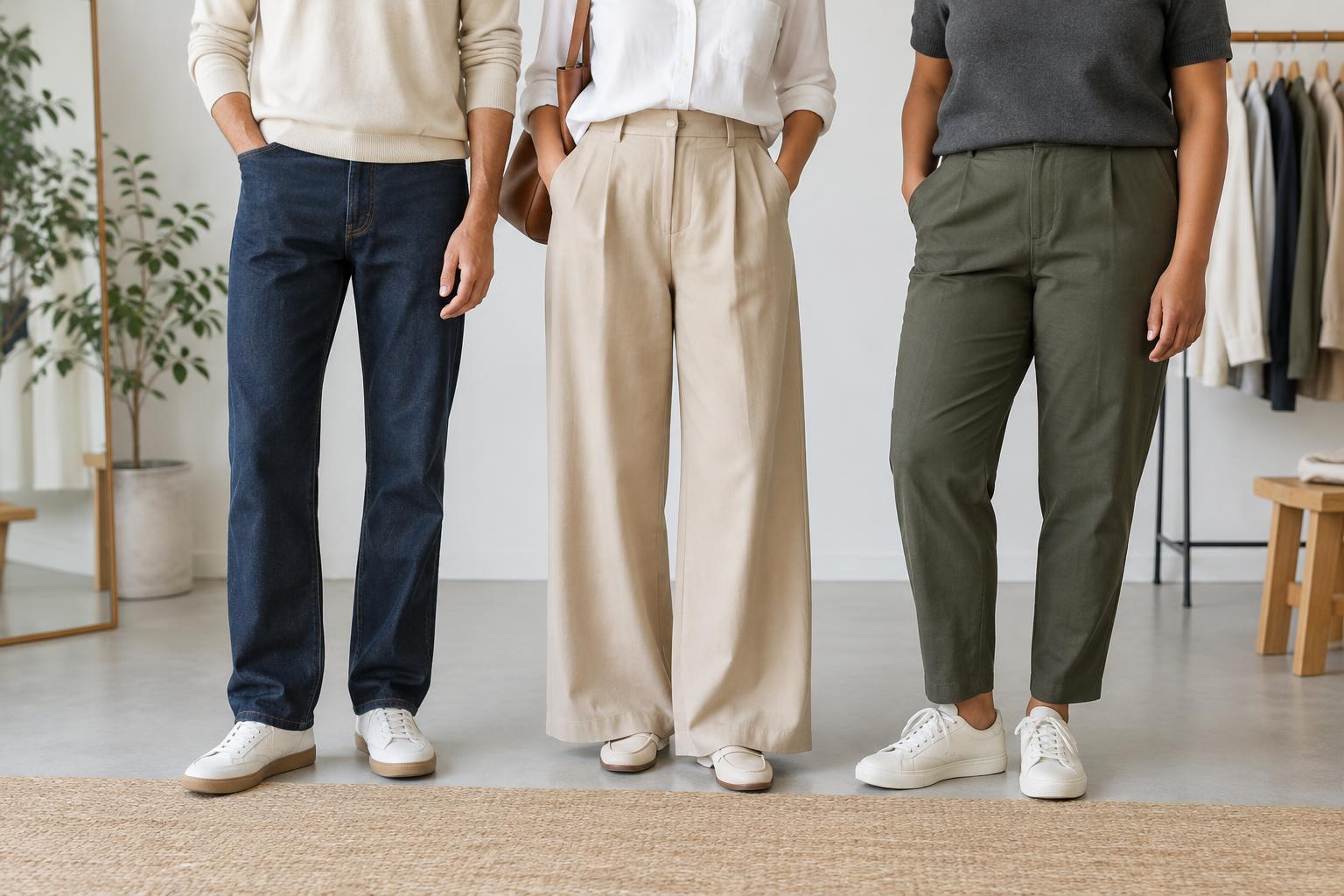
Straight trousers follow a fairly consistent line through the leg rather than narrowing sharply at the ankle or widening toward the floor. They are a practical starting point if you want a shape that sits comfortably alongside fitted shirts, loose knits, simple T-shirts and structured jackets. The cut can look relaxed or polished depending on the fabric and details.
Check that the legs fall cleanly when you stand and do not pull across the thighs or knees when you sit. A little ease is useful, but too much extra fabric may make the pair feel bulkier than you intended. Length matters, too: a hem that rests lightly on your shoe gives a different effect from a cropped hem that shows the ankle. Neither is automatically better. Try both with footwear you actually use.
Wide trousers: room to move and a clear silhouette
Wide trousers offer more space through the leg, though the amount varies considerably between pairs. Some widen gently from the hip; others have a fuller shape from the waist down. They can be especially comfortable if you prefer fabric that does not cling around the legs. Because the shape is a noticeable part of an outfit, it is worth checking how it works with your usual tops rather than assuming you must always wear something fitted.
A tucked or shorter top can make the waistband visible, while a longer shirt or knit creates a softer, looser outline. Try both and keep the combination that feels like you. Pay close attention to fabric: a fluid material tends to move and drape, while a firmer one holds a more defined shape. If the hems are long, walk around in your intended shoes to make sure the fabric does not catch underfoot or drag on the ground.
Tapered trousers: ease above, a narrower finish below
Tapered trousers have more room higher up the leg and become narrower toward the ankle. They can be a useful option if you want ease at the hips or thighs without the volume of a wide hem. The narrower lower leg also makes footwear more visible, whether you prefer trainers, loafers or ankle boots.
The key is to distinguish a comfortable taper from a pair that simply feels tight at the calf. Sit down, take a few steps and check whether the fabric pulls at the knee or rides up and stays there. Consider where the hem ends: a cropped taper can look intentional with a visible sock or ankle, while a slightly longer one may sit better over certain shoes. Small changes in length can make the same basic cut feel quite different.
Make the final choice by trying the whole outfit
Fit names are useful guides, not guarantees. Two pairs labelled “straight” may differ in rise, waistband shape and leg width. When trying trousers on, check the waist without relying on a belt to fix a large gap, then sit, bend and walk. Notice whether you keep adjusting the pair. If you do, another size, cut or fabric may serve you better.
Bring the decision back to your wardrobe. Picture each pair with a favourite top, a regular layer and your most-worn shoes. Check the care instructions as well: trousers that fit your laundry habits are easier to keep in rotation. If you are choosing just one pair, the best option is not necessarily the most versatile cut in theory. It is the pair that feels comfortable, works with clothes you own and makes getting dressed simpler.