Mistake 1: Using too many colours at equal strength
A colourful outfit can be appealing, but several bold colours competing for attention can make it hard to see where to look first. This often happens when a bright top, vivid trousers, colourful shoes and a patterned bag each feel like the main feature. The problem is not the number of colours alone; it is that none has a supporting role.
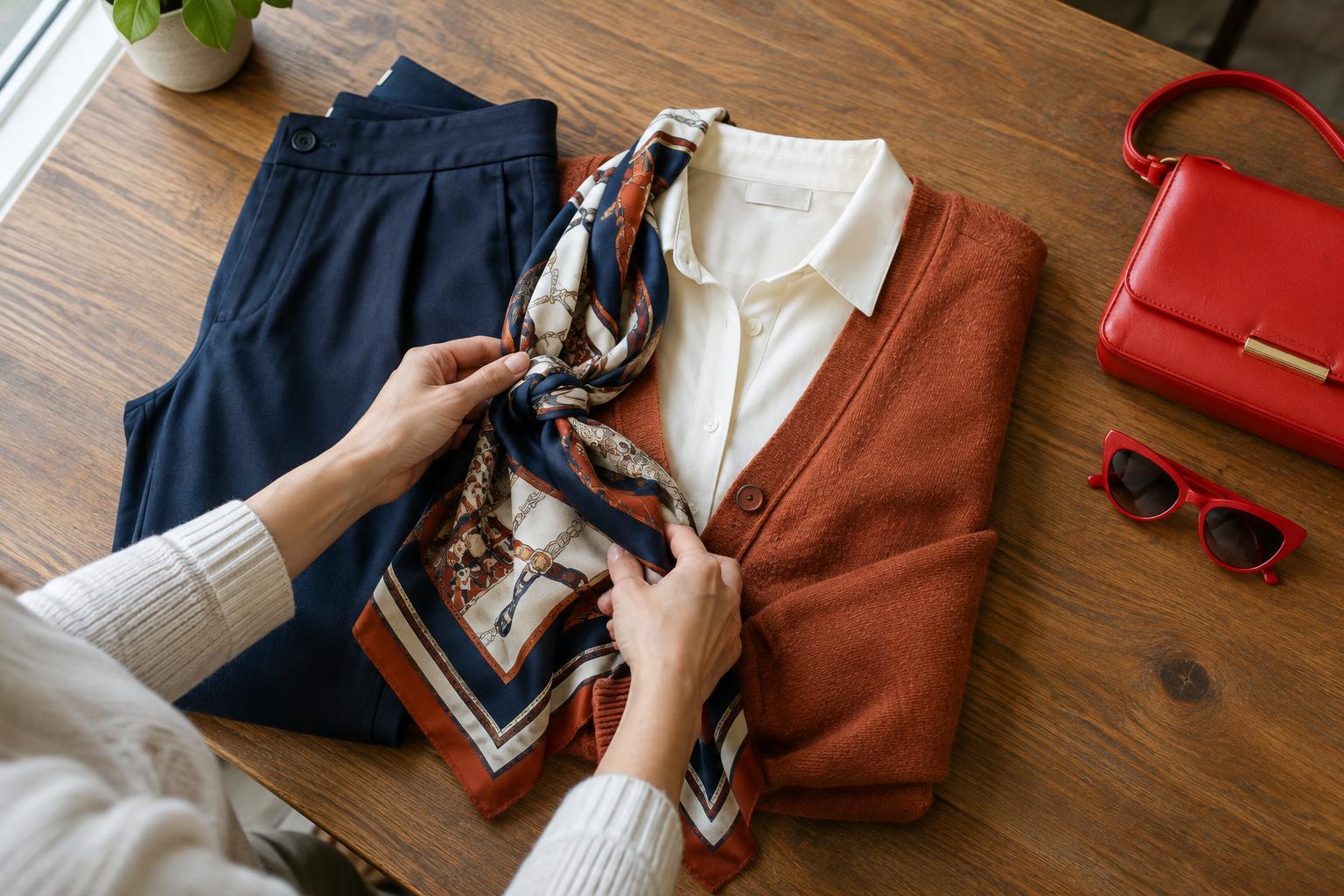
Try choosing one colour to lead, then let the others appear in smaller amounts or quieter shades. For example, keep the bright trousers and pair them with a subdued top, or repeat one colour from a printed scarf in a small accessory. If you enjoy maximalist dressing, you do not have to remove every extra colour. Varying the size and intensity of each colour can give the outfit a clearer rhythm while keeping its personality.
Mistake 2: Assuming a neutral will automatically tie everything together
Black, white, grey, navy and beige are useful wardrobe tools, but adding a neutral does not always settle an outfit. A very stark white top, for instance, may stand out sharply beside soft, muted colours. Two items described as beige might also look noticeably different when worn next to each other.
Look at the whole combination rather than relying on colour names. If a neutral feels disconnected, try a softer or deeper version, or choose one that echoes another item in the outfit. A cream shirt might sit more comfortably with warm, dusty colours than a brilliant white one. You can also make a mismatch look intentional by repeating each shade elsewhere, such as pairing a darker belt with darker shoes.
Mistake 3: Overlooking light and dark contrast
Two garments can be different colours yet have a similar lightness or darkness. Worn together, they may blend more than you expected. The opposite can happen too: a very light item beside a very dark one may create a stronger break than you want. Neither effect is inherently wrong, but it helps to notice which one your outfit is creating.
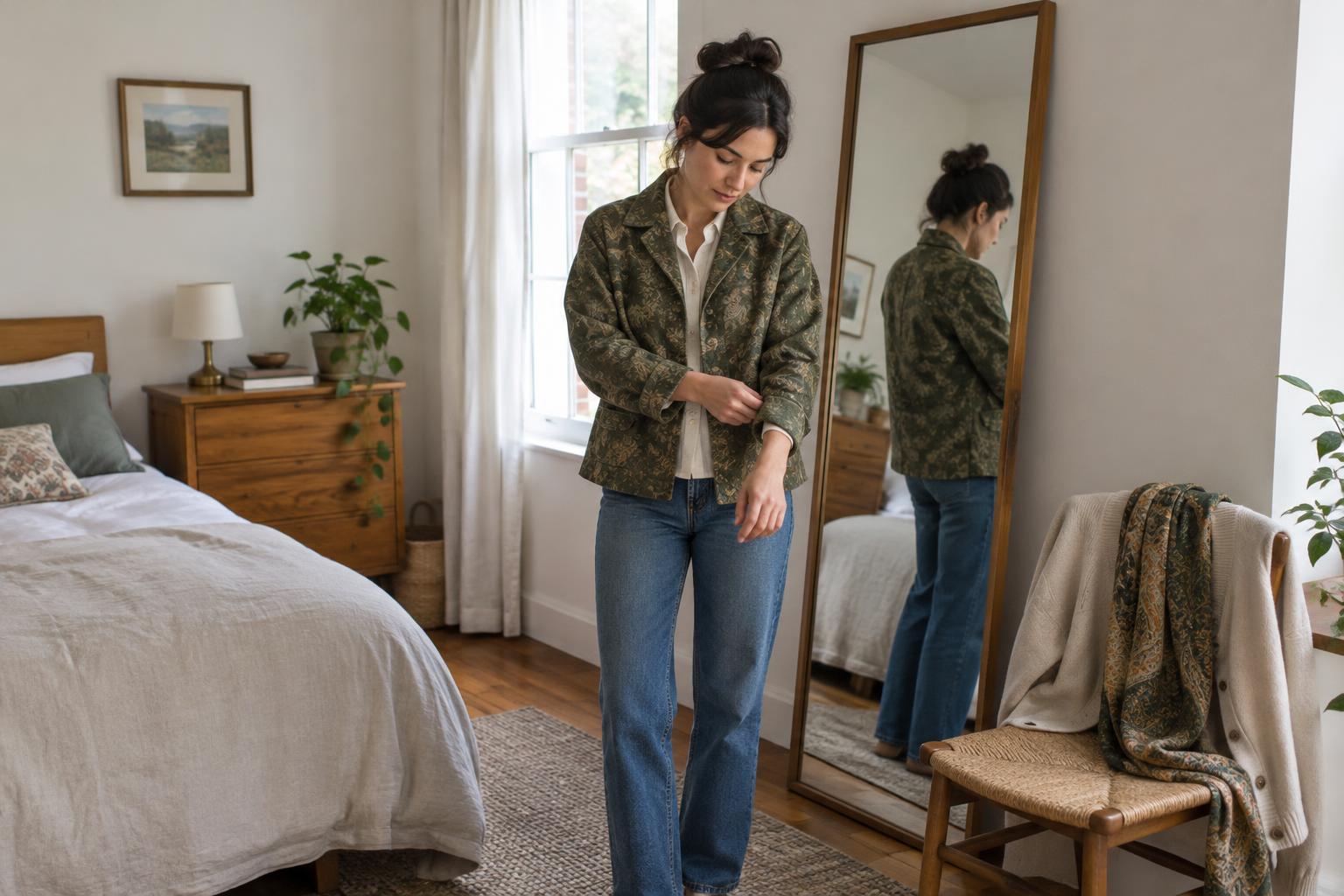
To check, step back from the mirror or take a quick photo and look at the outfit without focusing on the colour names. If the pieces merge, introduce a lighter or darker layer, belt or accessory to create definition. If the contrast feels abrupt, add a middle shade between the two, or repeat the light and dark tones in another part of the outfit. This can make a combination feel connected without replacing its main pieces.
Mistake 4: Treating undertones as unbreakable rules
Advice about keeping all warm colours together or all cool colours together can be a useful starting point, but it is not a requirement. A cool blue and a warm rust may look lively together. Trouble is more likely when two nearly matching shades seem accidental, such as a pink shirt and scarf that are close in colour but noticeably different in tone.
If a near-match bothers you, create some space between the items. Place a neutral jacket between the shirt and scarf, choose a scarf with a more distinct shade, or use a pattern that contains both colours. Check combinations in the lighting where you expect to wear them when practical: colours that look similar indoors may appear more different in daylight. Keep the pairing if you like it, even if it breaks a familiar colour rule.
Mistake 5: Choosing colours one item at a time
It is easy to fall for an individual piece and only later wonder how to wear it. A colour that looks wonderful on a hanger may be difficult to combine with what you reach for most often. Before buying or planning around a striking item, picture two or three outfits using clothes you already own. Think about shoes, outerwear and bags as well as tops and bottoms.
When getting dressed, start with the piece you most want to wear and build outward. Lay likely companions beside it, then change one item at a time if the combination feels busy or flat. A scarf can introduce a new colour in a small, manageable amount; shoes can repeat a colour already present. The goal is not a perfect formula, but a set of combinations you enjoy wearing and can put together without starting from scratch each morning.