Mistaking the pieces for the whole outfit
Seeing an outfit you love can give you a clear place to start. The mistake is assuming that buying or wearing the same pieces will recreate the same effect. An outfit is also shaped by how each garment fits, where it ends, how it is styled and how the wearer moves in it. A white shirt and jeans, for example, can look crisp, relaxed or deliberately oversized depending on those details.
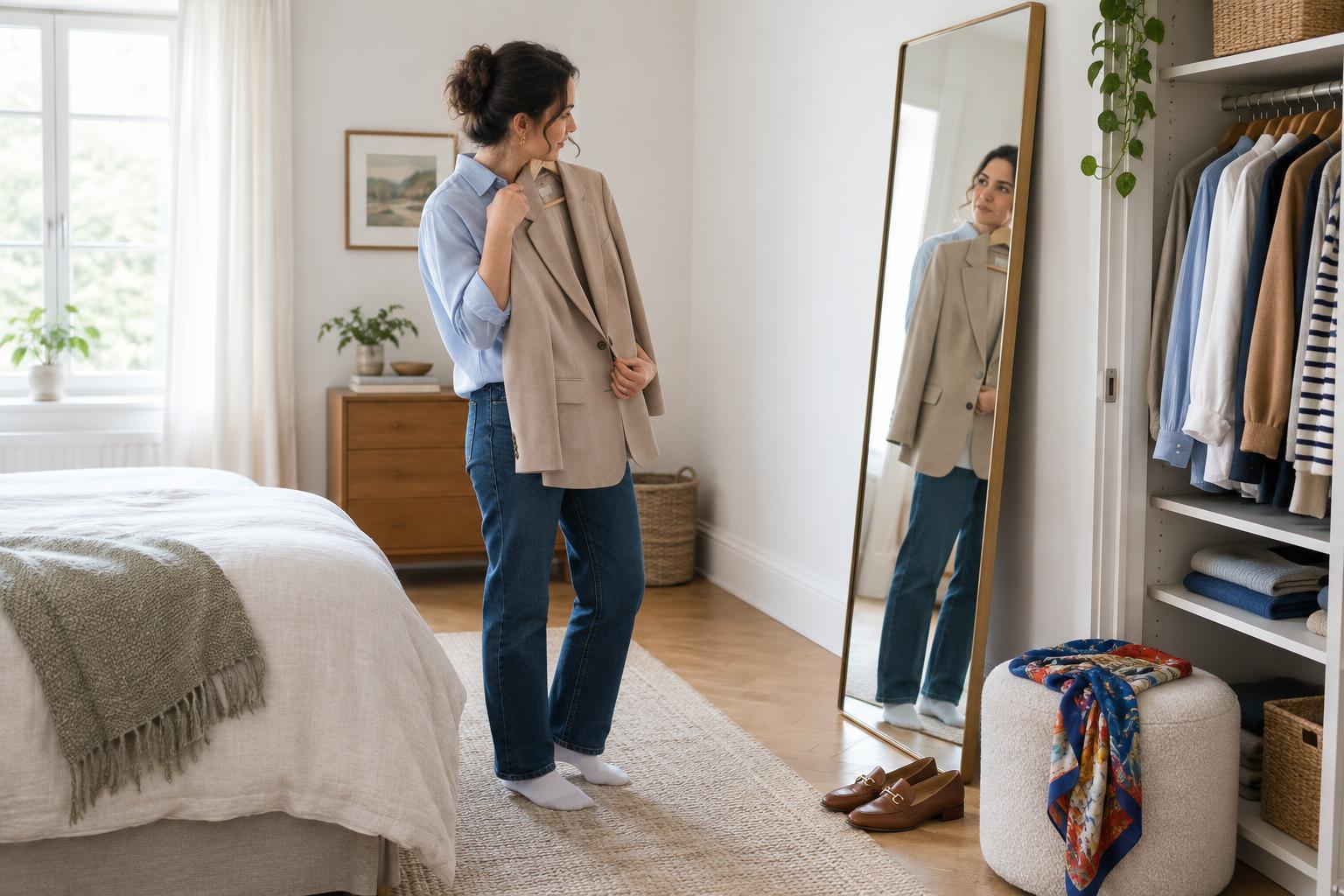
Before trying to copy a look, describe what appeals to you without naming the clothes. Is it the contrast between a neat top and loose trousers? The soft colours? A simple outfit made interesting by one scarf? Identifying the effect gives you more options. You may already own different pieces that achieve it better than an exact copy would.
Ignoring fit and proportion
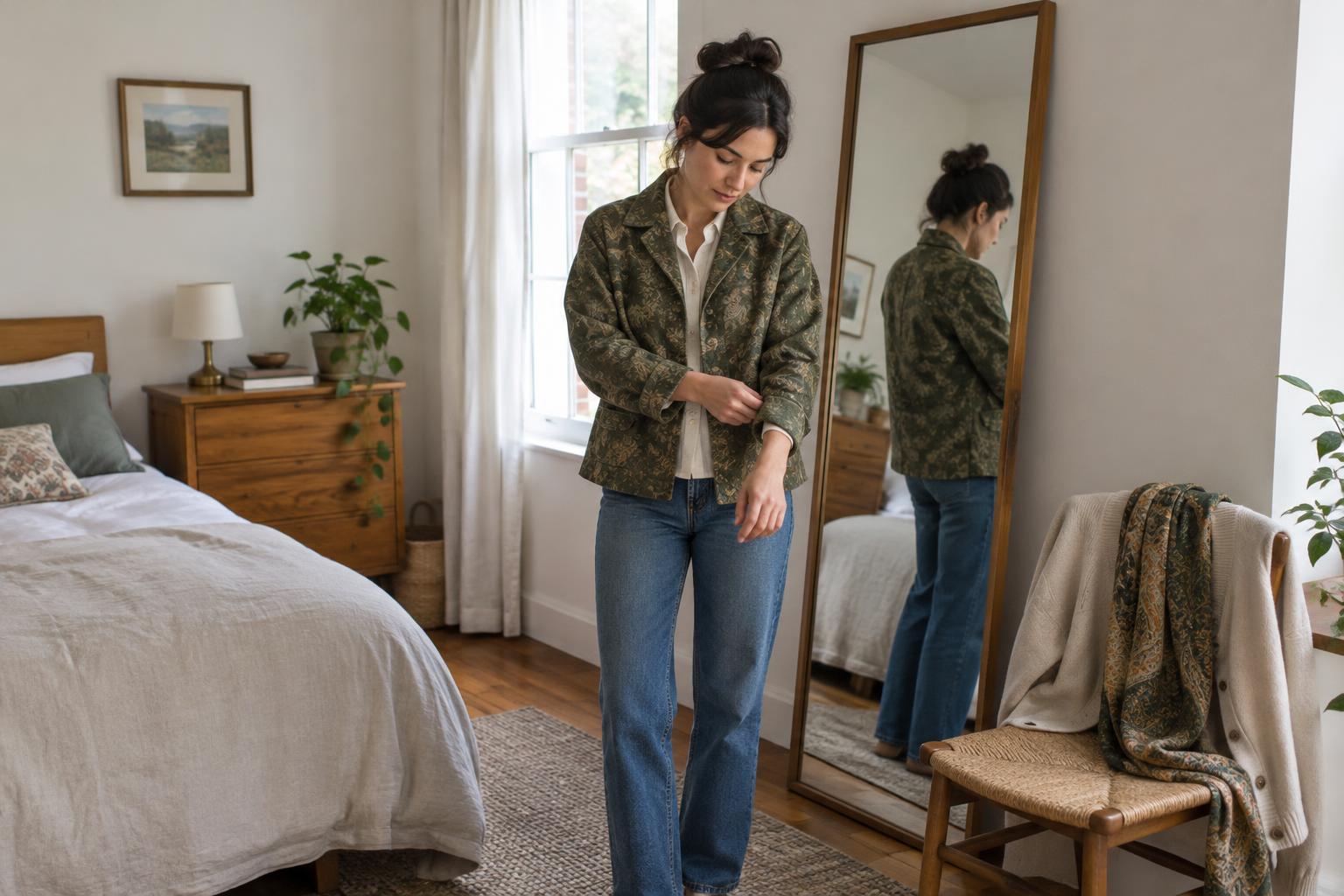
A common copying mistake is matching the garment type while overlooking its shape. Two jackets called “boxy” may sit very differently at the shoulders or end at different points on the hip. The length of a top can change how trousers appear, while the width of a trouser leg can change the balance of the entire outfit. None of these differences means one body is better suited to personal style; they mean clothes need to be assessed on the person wearing them.
Try the outfit on and look at its overall outline rather than judging each item separately. If everything feels loose, you might leave one layer open, tuck part of a top or choose a more defined shoe. If a copied look feels too fitted, give yourself room in one piece. Small adjustments often preserve the idea of the outfit without requiring a new wardrobe.
Copying an outfit that does not suit your day
An appealing outfit may have been put together for a different setting, season or level of activity. Shoes that work for a short outing may be uncomfortable on a day spent walking. Delicate layers may not suit a commute or a changeable temperature. Copying the look without considering your routine can leave you with clothes you admire but rarely reach for.
Keep the part you like and replace the part that gets in your way. A polished coat-and-trouser combination might work with comfortable shoes you already rely on. If you like the look of layered shirts but find them restrictive, try a lighter shirt or fewer layers. Practical substitutions are not failures to follow the inspiration; they are what make it wearable.
Forcing unfamiliar colours and finishing touches
Colour is another detail that can be easy to copy too literally. A combination may catch your eye because its shades are close together, because one bright colour stands out against neutrals or because the materials add contrast. You do not need identical colours to use that idea. If the original palette feels unlike you, try the same relationship between colours using shades you enjoy wearing.
Accessories can also change how closely an outfit matches your preferences. A belt, scarf, jewellery or a particular way of rolling sleeves may be doing more work than you first notice. Rather than collecting every finishing touch in the reference look, choose one that serves a purpose in your outfit. A scarf you like wearing may bring colour near your face; a belt may give a loose outfit more definition. Leave out details that feel distracting or uncomfortable.
Turning inspiration into a personal outfit
The most useful way to borrow an outfit is to treat it as a prompt, not a shopping list. Pick one feature to test: perhaps the proportions, the colour balance or the mix of casual and polished pieces. Build around clothes you own, then notice what you want to change. If the result feels unlike you, that is useful information about your preferences, not a reason to give up on the idea.
It can help to ask three questions after wearing the outfit: Was I comfortable through the day? Did it suit what I needed to do? Which part would I wear again? Your answers may lead to a version that looks quite different from the original. That is the point of personal style: inspiration helps you see possibilities, while your choices make the outfit your own.