Start with the plans you actually have
An outfit that moves from daytime to evening works best when it is planned for both, rather than dressed up at the last minute. Consider where you will spend the day, where you are going later, and whether you will have a place to change or store anything. An evening meal with friends may call for less of a shift than an event with a stated dress code. Let the occasion guide the changes instead of assuming that evening always means formal.
Choose a comfortable base that feels appropriate in both settings: well-fitting trousers and a simple top, a skirt with a knit, or a dress that works with different layers. Pay attention to how the clothes feel after several hours of sitting, walking or commuting. If an item is already awkward in the morning, a different accessory is unlikely to fix it by evening.
Use colour to change the mood
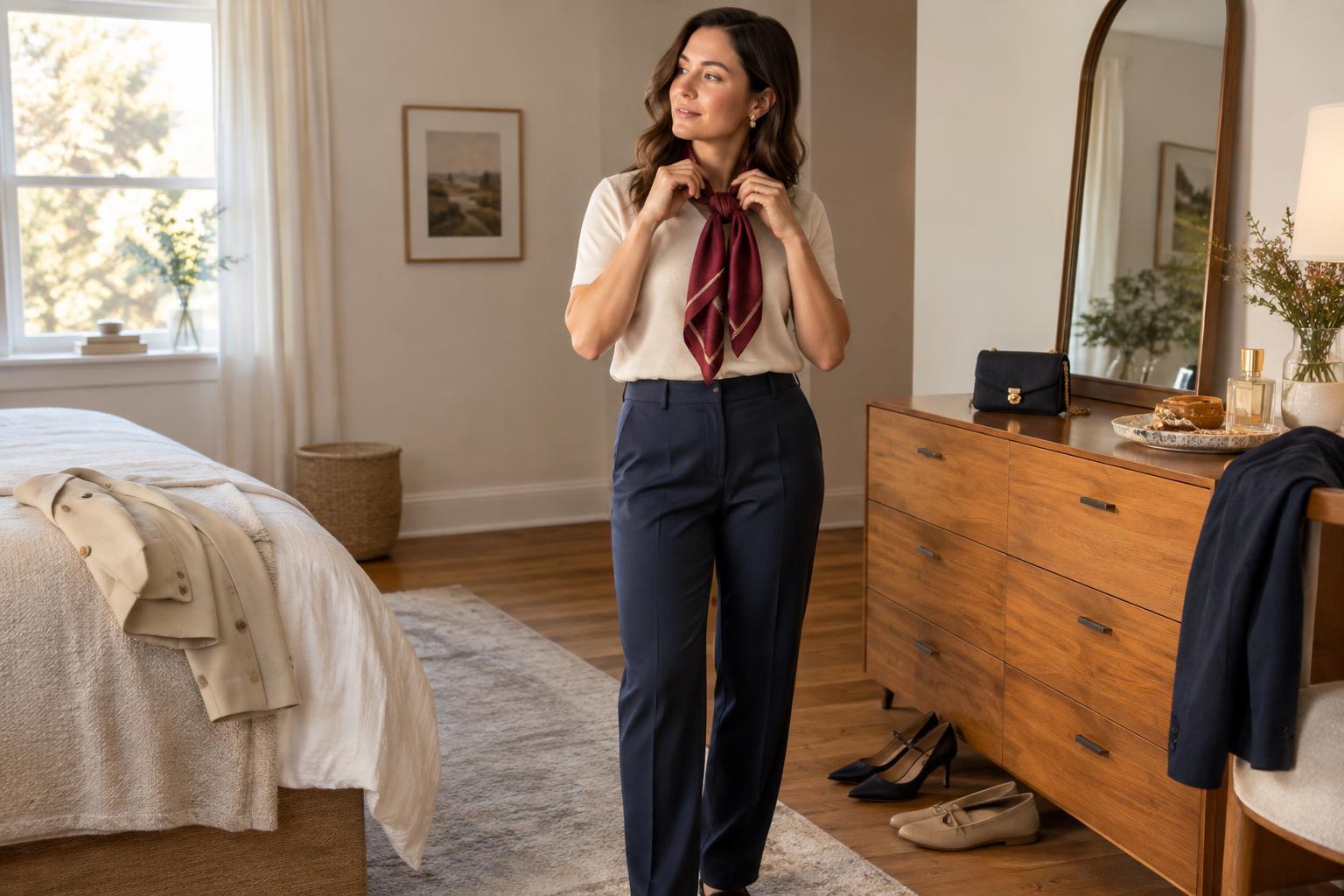
Colour is a useful way to shift an outfit without replacing its main pieces. A base in colours you enjoy wearing can stay the same all day, while one accent changes. For example, a daytime outfit of navy trousers and a pale top might feel different with a richly coloured scarf in the evening. If you prefer brighter clothing, keep that colour as the focus and adjust the surrounding pieces rather than hiding it.
Think about contrast as well as colour. A tonal combination, such as several shades of brown, can look relaxed and cohesive during the day. Adding a darker outer layer or a small, brighter accessory may give it more definition for later. There is no need to follow a rule that evening colours must be dark; the aim is to make a deliberate change that suits your plans and preferences.
Let one or two details do the work
Accessories make an easy transition because they are usually simpler to carry than a second outfit. You could exchange a practical daytime bag for a smaller one, add a scarf, or put on a piece of jewellery you would rather not wear while running errands. Try changing one or two visible details before adding more. That gives each choice room to stand out and keeps the outfit feeling like your own.
Shoes can make a noticeable difference, but they should still suit the journey and the venue. Clean, comfortable flats or boots may work for both parts of the day. If you want to change shoes, check that the alternative works with the length and shape of your trousers, skirt or dress. Carrying a pair you cannot comfortably wear for the evening is rarely worth the space.
Adjust layers and the finish
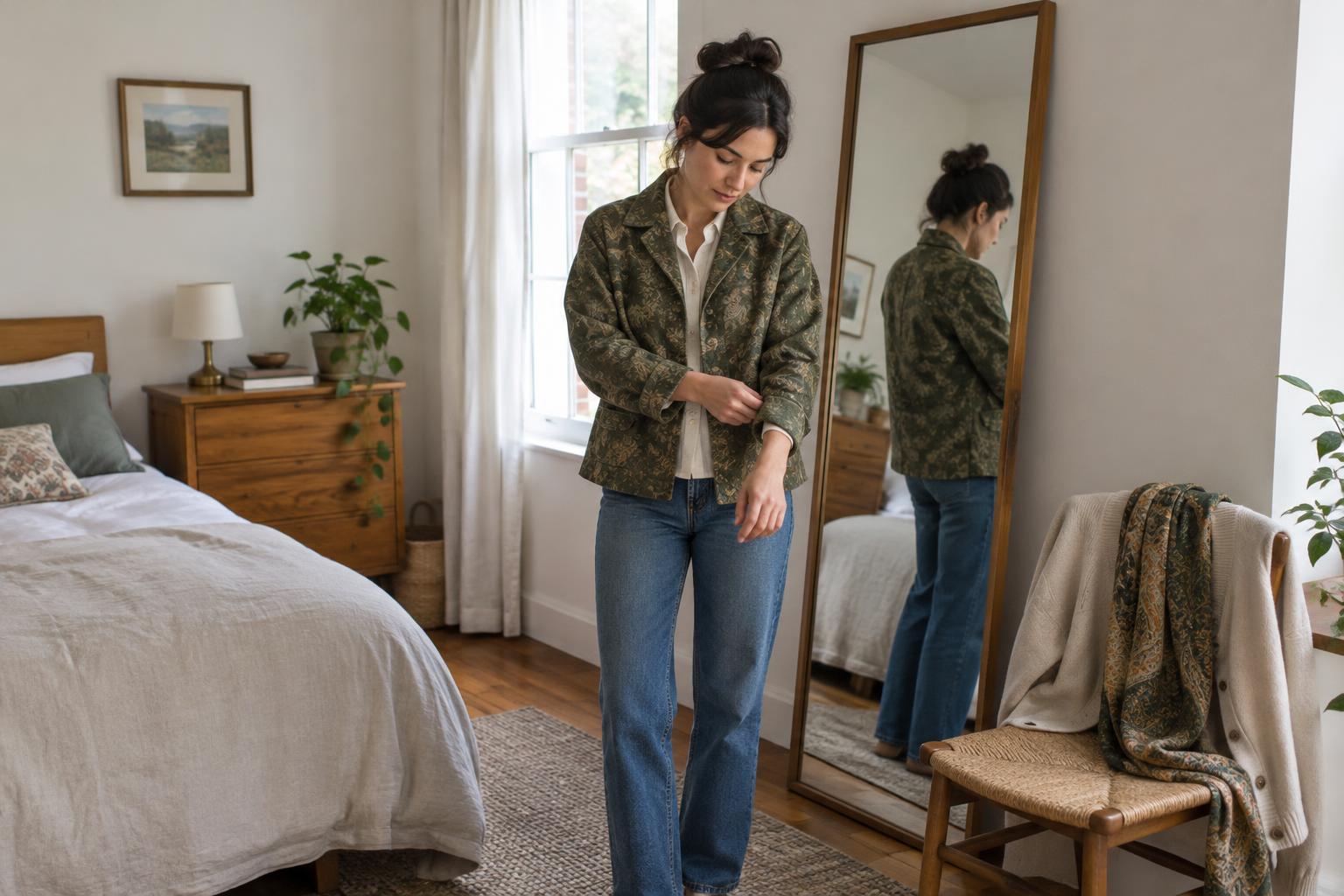
Layers help an outfit respond to different temperatures and settings. A jacket worn for daytime travel can remain part of the evening look if its shape works with the base outfit. Alternatively, you might remove a casual outer layer to reveal a top with an interesting neckline, texture or cut. Try both versions at home so you know how the outfit looks when a layer comes off.
Small care steps can have as much effect as a new accessory. Smooth a rumpled shirt, remove lint from a jacket and check that hems and collars sit as intended. If you will be away from home, a compact brush or lint remover may be more useful than several extra accessories. The goal is not a flawless finish; it is to feel comfortable stepping into the next part of your day.
Plan a change you can carry
A practical day-to-evening plan should fit your schedule and your bag. Lay out the full daytime outfit, then identify the smallest change that makes it suitable for the later occasion. That might be a scarf and earrings, a different layer, or no clothing change at all. Pack only what you expect to use, and give any delicate pieces a pouch so they are easy to find and less likely to get tangled.
Before leaving, check the outfit as a whole: colour, proportions, comfort and the weather you expect to encounter. If the evening plan is uncertain, favour a base that can lean casual or polished with a minor adjustment. Over time, noticing which combinations work for a full day will make planning easier. The most useful formula is one you can repeat with clothes you already like wearing.