Start with laundry that is clean and well rinsed
Fresh-smelling indoor drying begins before anything reaches the rack. Clothes that spend a long time damp in the washing machine may already smell stale when you take them out. Try to hang a load soon after the cycle finishes. If it has sat for hours and has developed an odour, washing it again is usually more effective than trying to cover the smell while it dries.
Use an appropriate amount of detergent for the load and follow the product and machine guidance. Too much detergent can be difficult to rinse away; too little may not clean a heavily soiled load well. Avoid packing the drum so tightly that clothes cannot move freely. For items that regularly retain odours, check their care labels and wash them in a way suited to the fabric.
Remove as much water as the fabric allows
The less water a garment holds when it leaves the machine, the less it has to release into your room. A suitable spin cycle can make a noticeable difference, especially for towels, jeans and cotton basics. Check garment labels before using a faster spin: delicate fabrics, fine knits and pieces that crease easily may need gentler handling.
For a hand-washed item, press out water rather than twisting it. You can roll it in a clean, dry towel and press the roll to absorb more moisture before laying or hanging the item to dry. Heavy knits often keep their shape better when dried flat, while shirts and lighter garments can usually hang. The care label should guide your choice.
Give every item space and airflow
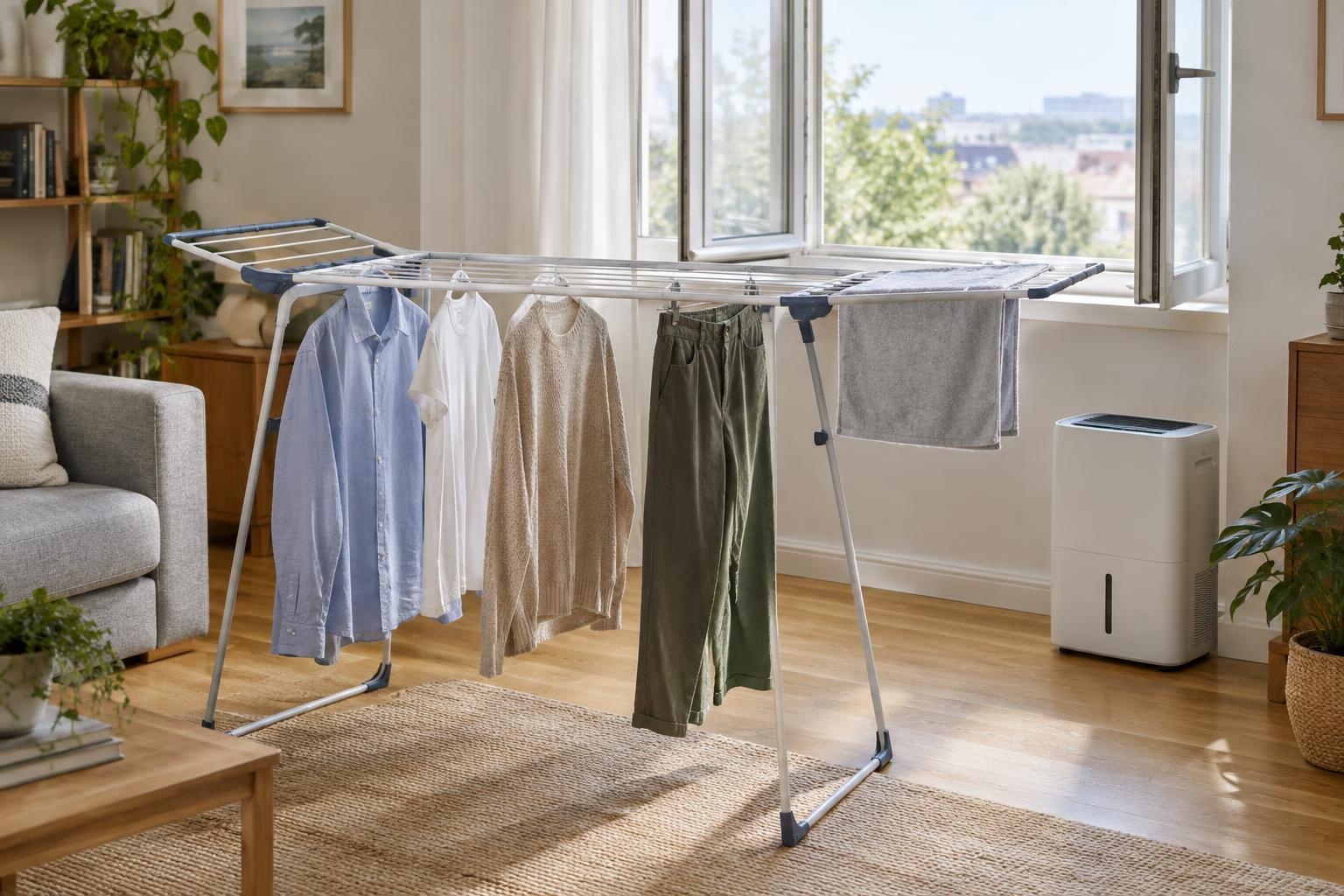
A crowded rack slows drying because damp surfaces touch and air cannot move between them. Spread garments across the rails instead of folding them into thick layers. Leave a gap between larger pieces where possible, and open up sleeves, cuffs, pockets and waistbands. If a rack is full, drying a smaller load may work better than squeezing one more towel onto it.
Choose a spot where air can circulate around the rack, rather than pushing it tightly against a wall or into a closed cupboard. A brief period of ventilation, when practical, can help moist air leave the room. A fan can also help move air past the clothes; it does not need to point directly at them. Keep electrical equipment away from drips and follow its safety instructions.
Turn over flat-drying items and reposition thick pieces if one side stays damp. Before putting laundry away, feel areas that dry slowly, such as seams, collars and the centre of waistbands. A garment that seems dry on the outside can still carry enough moisture in those areas to develop a stale smell in a drawer.
Manage moisture in the room
Air-drying releases water into the surrounding air. If the room stays humid, clothes can take longer to dry and nearby surfaces may become damp. Use a room with some ventilation if you can, and avoid making a small, closed space the regular drying spot for large loads. If condensation appears on windows or walls, treat it as a sign to improve airflow or reduce the amount of laundry drying there.
A dehumidifier may be useful in a room that regularly feels damp, provided you use and maintain it according to its instructions. You can also split a large wash into smaller loads or dry bulky items separately. Do not drape clothes over a heater or block a heat source: this can be unsafe and may damage fabrics. A drying rack placed at a safe distance from a heat source is a better option if the room is comfortably warm.
Deal with persistent smells rather than masking them
If clothes still smell musty after drying, first work out when the smell appears. Laundry that smells stale straight from the washer may need a prompt rewash and attention to the machine. Check the machine’s cleaning guidance, and leave its door or drawer open between uses if the manufacturer recommends it. If items smell fine when hung but stale after storage, make sure they are completely dry and that the storage space itself is dry and clean.
Fragrance products can add a scent, but they do not replace cleaning and thorough drying. A simple routine is often enough: wash an uncrowded load, remove excess water, hang it promptly with space between pieces, let moist air escape, and check the slow-drying areas before folding. That routine helps everyday clothes stay pleasant to wear without making indoor laundry complicated.