Decide what coverage you want
Opacity is not a simple measure of quality. A sheer blouse might be exactly what you want for layering, while trousers that reveal pocket outlines may be frustrating if you expected a smooth, covered look. Before judging a fabric, think about how and where you plan to wear the garment. Will it sit over a camisole, bare skin or a contrasting layer? Are you comfortable with a visible outline, or do you want the fabric to conceal both colour and detail underneath?
Colour alone is an unreliable guide. White, cream and pale pastels often show contrast underneath, but a dark fabric can also be sheer when it is thin or loosely woven. Prints may disguise what is underneath without making the fabric more opaque. Decide on the effect you want, then test for that effect rather than relying on a label such as “lightweight” or “premium.”
Use light and contrast in the fitting room
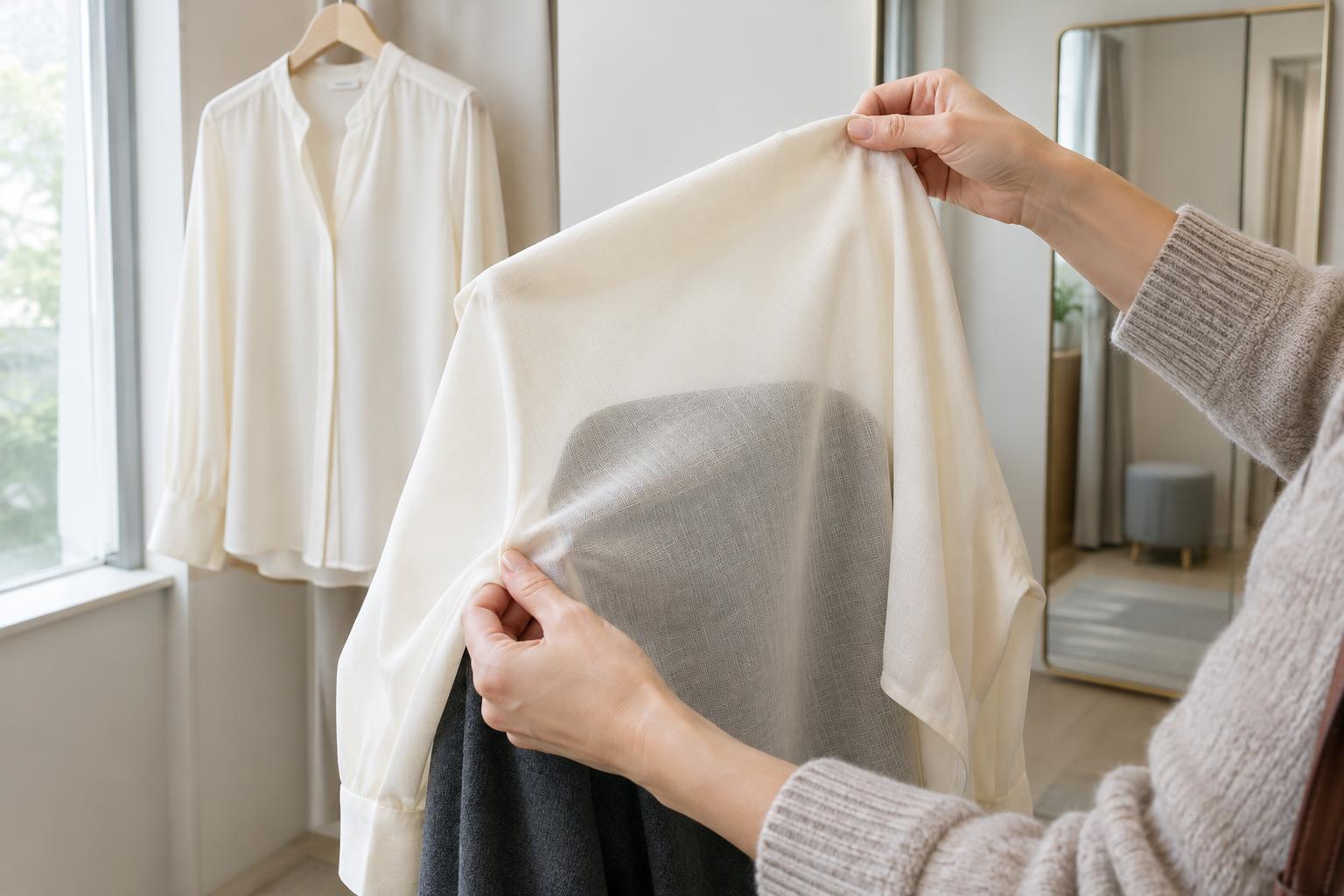
Start by holding a single layer of fabric in front of a light source. If you can clearly make out your fingers or objects behind it, the garment may show skin or underlayers when worn. Do not judge it while the fabric is folded: two layers can make a sheer material appear solid. Check several areas, including the body, sleeves and any panels that use a different fabric.
Next, place the material over something that contrasts with it. Your hand can work for a quick check, but a dark top under a pale shirt, or a pale layer under dark clothing, makes the result easier to see. Look for both colour showing through and the outlines of details such as pockets or seams. A fitting room gives you the best chance to assess the garment on your body: stand normally, sit down if appropriate and look at it from the back as well as the front.
Lighting changes what you notice. A softly lit fitting room may conceal transparency that is more obvious near a window or under bright overhead lights. If possible, view the garment in more than one part of the shop. You do not need to find the harshest possible lighting; the aim is to see whether it works in the ordinary settings where you will wear it.
Check what happens when the fabric moves
Fabric can become less opaque when it stretches. Gently pull a small section across your hand and compare it with the same fabric at rest. Pay particular attention to fitted areas: a knit top across the chest, leggings across the hips, or trousers over the thighs. A garment that looks sufficiently covered on the hanger may behave differently once it is on.
Fit matters as much as fabric. If a garment is strained across a particular area, sizing up or trying a different cut may improve both coverage and comfort. Movement can also shift layers out of place. Walk, bend and sit in the garment when you can, checking whether a lining stays put and whether a skirt or dress becomes more revealing as it moves. Avoid pulling delicate fabric hard; a light test is enough to show whether tension changes its appearance.
Look beyond the outer fabric
A lining can provide coverage, but check its length and placement. A dress may be lined through the body but not the sleeves; a skirt lining may end well above the hem. Some garments have attached slips or double-layered panels only in selected areas. Notice where each layer begins and ends, and whether seams, pockets or labels remain visible from the outside.
Fabric descriptions can offer clues without settling the question. A loosely woven linen, fine jersey or delicate knit may let light through, while a denser construction may offer more coverage. Thickness and opacity are related but not identical: a fabric can feel substantial yet reveal shapes when stretched. Inspect the actual garment whenever possible, particularly if you are choosing it for a specific outfit.
Make a careful choice when shopping online
Product photos are a starting point, not a definitive test. Look at close-ups, back views and images of the garment in different poses. Check whether the description mentions a lining, a sheer finish or recommended layering. Note how the item fits the model: fabric that hangs loosely in a photograph may become more transparent if it fits tightly on you.
If opacity is essential, consider whether you can check the garment at home and return it if it does not suit you. Once it arrives, try it on with the underlayers you would normally wear and view it in daylight as well as indoor light, while keeping it in returnable condition. The useful question is not whether a fabric is universally opaque, but whether the whole garment gives you the coverage you want in the outfits you plan to make.