Think about the whole silhouette
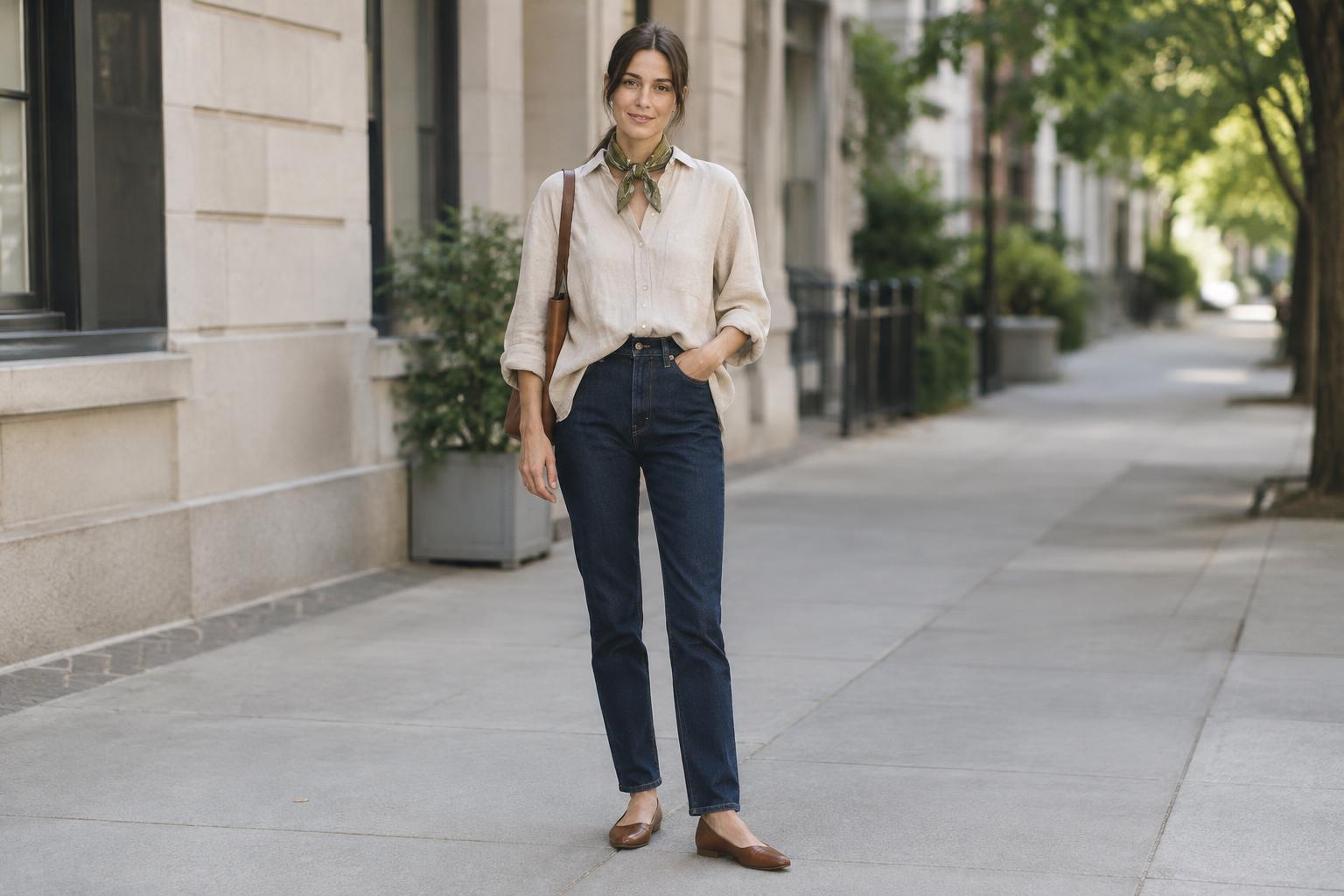
Balancing loose and fitted pieces is less about following a rule than noticing the shape an outfit creates. A roomy garment adds volume where it hangs away from the body; a closer-fitting one can make that volume feel more deliberate. Neither needs to be tight or oversized. A relaxed shirt with straight trousers, for example, may offer enough contrast without a dramatic difference between the two pieces.
Start by looking at the outfit from head to toe rather than judging each item separately. Where does the fabric gather? Where can you see the line of a sleeve, waist or leg? If you like the overall shape and can move comfortably, the combination is doing its job. Balance is a useful tool for getting dressed, not a requirement to make every outfit look symmetrical.
Let one piece set the direction
Choose the item you most want to wear and build around it. With wide-leg trousers, you might try a top that follows your shape more closely, such as a simple knit or a shirt tucked in at the front. This gives the trousers room to stand out. If you prefer a loose tunic or boxy sweater, narrower trousers can provide a clear line below it.
These are starting points, not fixed pairings. A loose shirt and relaxed trousers can work together, especially if one piece has a shorter hem or a softer drape. Likewise, a fitted top and fitted bottom may suit the day. Try changing just one item before changing the entire outfit: swapping a long sweater for a shorter one can make more difference than replacing your trousers, shoes and accessories at once.
Pay attention to hems and visible lines
The point where a garment ends often matters as much as its width. A long, untucked top can cover the upper part of roomy trousers, making both pieces read as one continuous shape. A partial tuck, a cropped layer or an open shirt over a closer-fitting top can reveal a break between them. Choose whichever version feels natural; there is no need to tuck a garment that pulls, bunches or will not stay put.
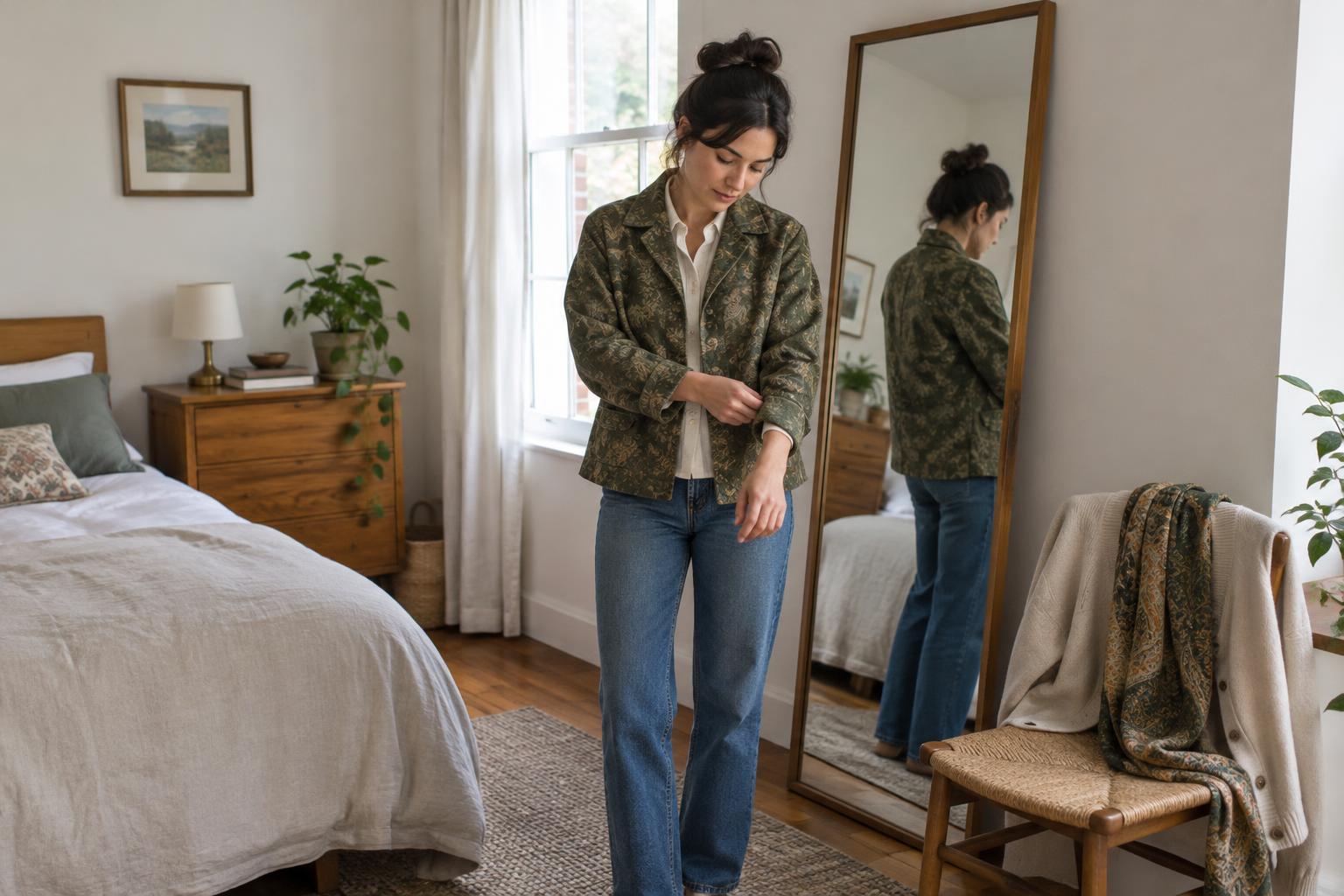
Sleeves and trouser hems offer smaller adjustments. Rolling a loose sleeve can show the wrist and keep fabric out of the way. A trouser hem that sits clear of the shoe can make the shape of a wide leg easier to see. Before altering or buying anything, test these simple changes in a mirror and walk around. An outfit should still feel right when you sit down, carry a bag or put on a coat.
Use fabric and layers to control volume
Two garments with the same cut can create very different silhouettes. A soft, fluid shirt tends to fall closer to the body than a crisp shirt with a similar amount of fabric. A heavy knit may hold its shape, while a fine one may follow the lines underneath. When an outfit feels bulkier than you intended, check the fabric before assuming the fit is wrong.
Layers add another decision. A structured jacket over a loose top can give the outfit an outline, but it should leave enough space for the sleeves and shoulders beneath it. An open cardigan or overshirt creates a vertical opening that can break up a broad area of fabric. If layering feels crowded, try a thinner base layer or remove one piece. The aim is a combination you can wear comfortably, not a particular effect at any cost.
Adjust the details to suit your day
Shoes and accessories can help an outfit feel finished without changing its basic proportions. Sleek shoes may provide a quiet contrast to wide trousers; substantial shoes can feel more in keeping with a generous coat. A scarf can add softness to a close-fitting top or introduce colour to a simple loose layer. Choose details that support what you are wearing rather than trying to correct it.
It can help to keep a few combinations in mind: a roomy sweater with straighter trousers, a fitted tee under an open overshirt, or wide trousers with a neatly shaped top. Adapt them to the weather, the clothes you own and your preferences. The best balance is the one that lets you enjoy the silhouette while dressing for the actual day ahead.