Start with the clothes you already reach for
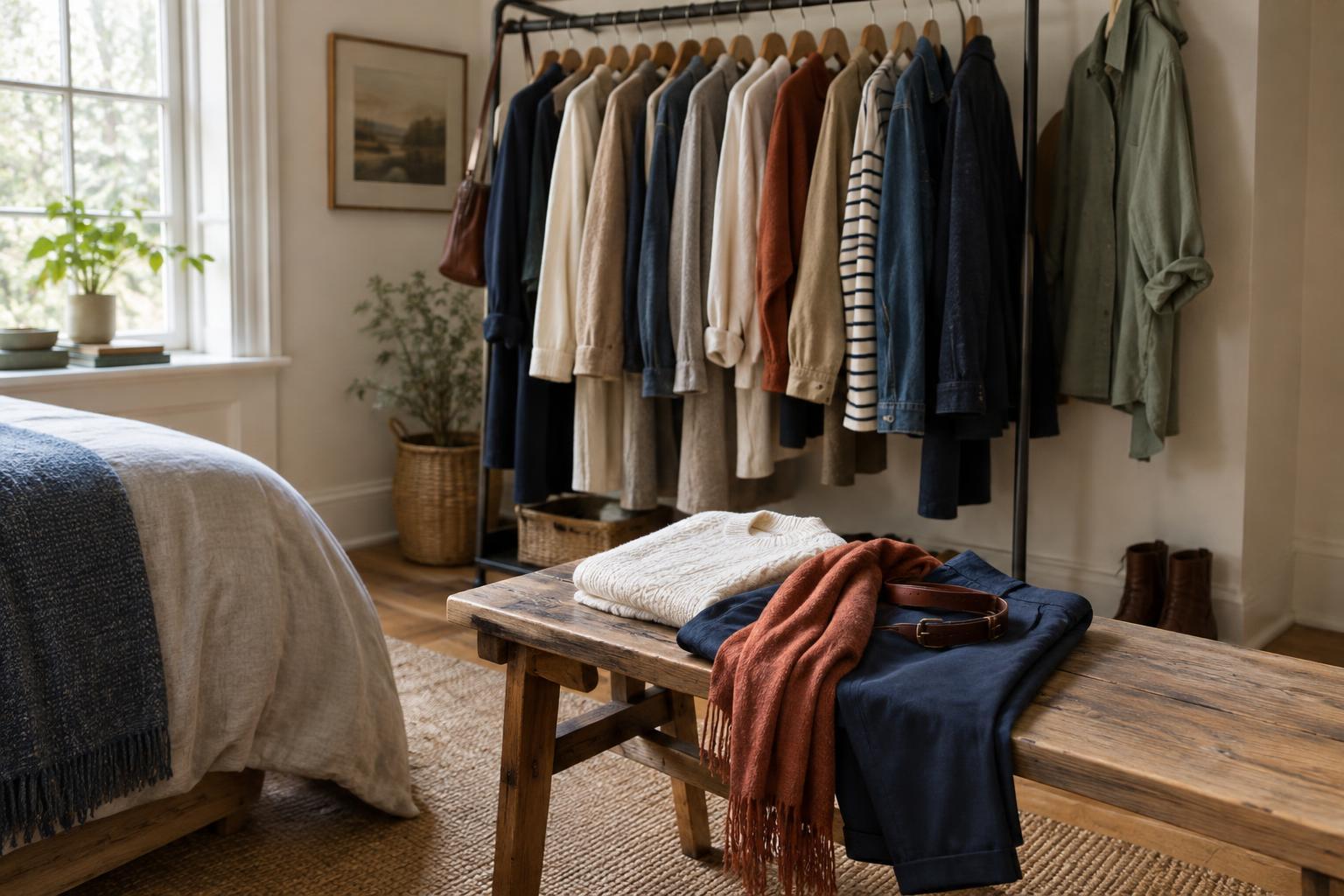
Before choosing a palette, look at what you actually wear over an ordinary couple of weeks. Set aside a few outfits that feel comfortable and like you, including shoes, coats and bags. Note which colours appear repeatedly and which combinations you enjoy. A favourite blue jumper you wear every week is more useful evidence than a colour you admire in a shop but never choose in the morning.
Look at the items you avoid, too. You might like a bright shade but find it difficult to pair with your trousers, or own several pale tops that do not suit your usual activities. The aim is not to eliminate those colours automatically. It is to understand what makes a garment easy or hard to wear in your life. Your most useful palette will support your habits, climate, laundry routine and preferred level of contrast.
Choose a few dependable base colours
Pick two or three colours for the pieces that do the most work in your wardrobe: trousers, skirts, jackets, coats or everyday shoes. These are your base colours. Navy, charcoal, black, brown, olive, cream and denim blue are common options, but none is compulsory. If you often wear burgundy trousers or a green jacket, either could be a base colour for you.
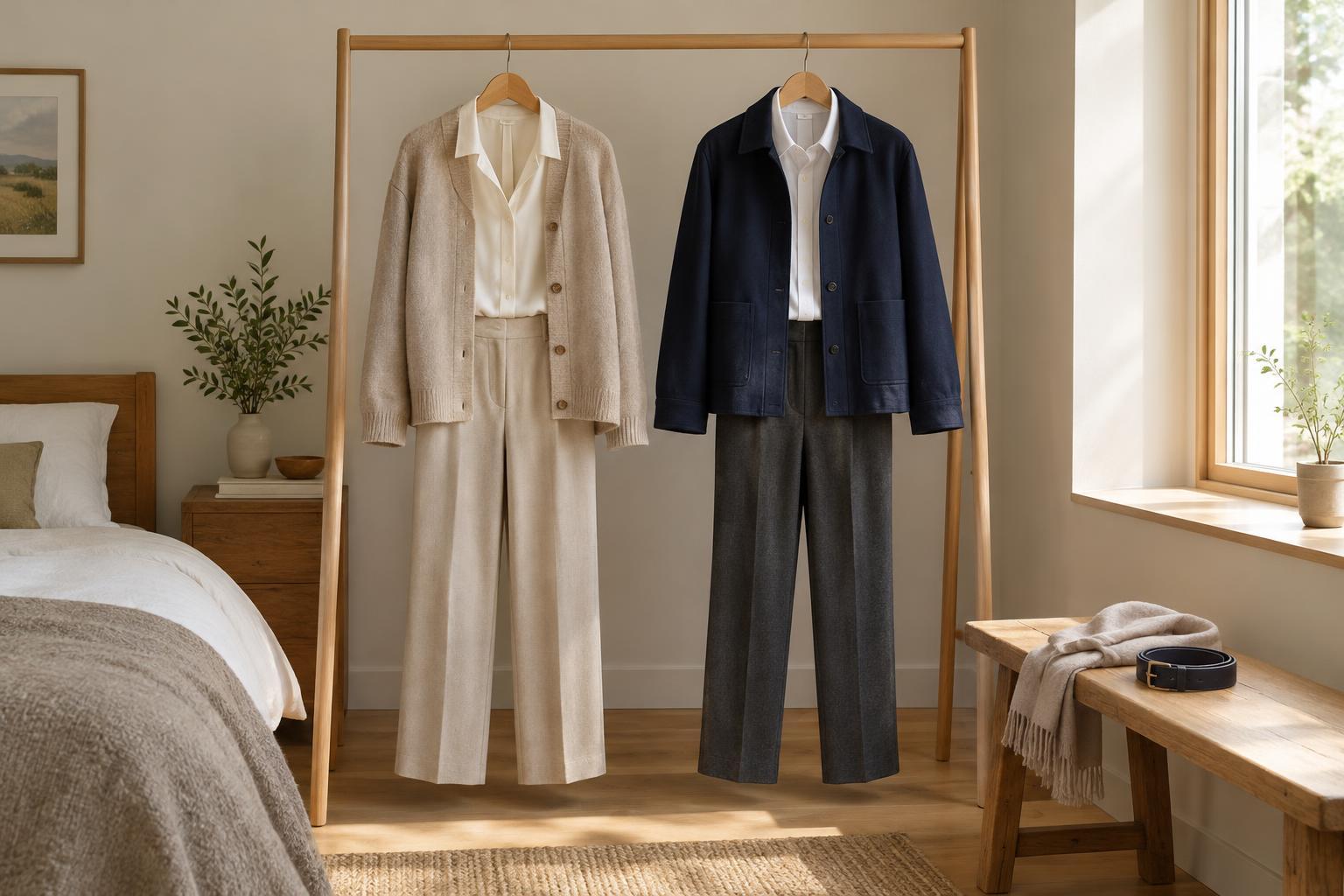
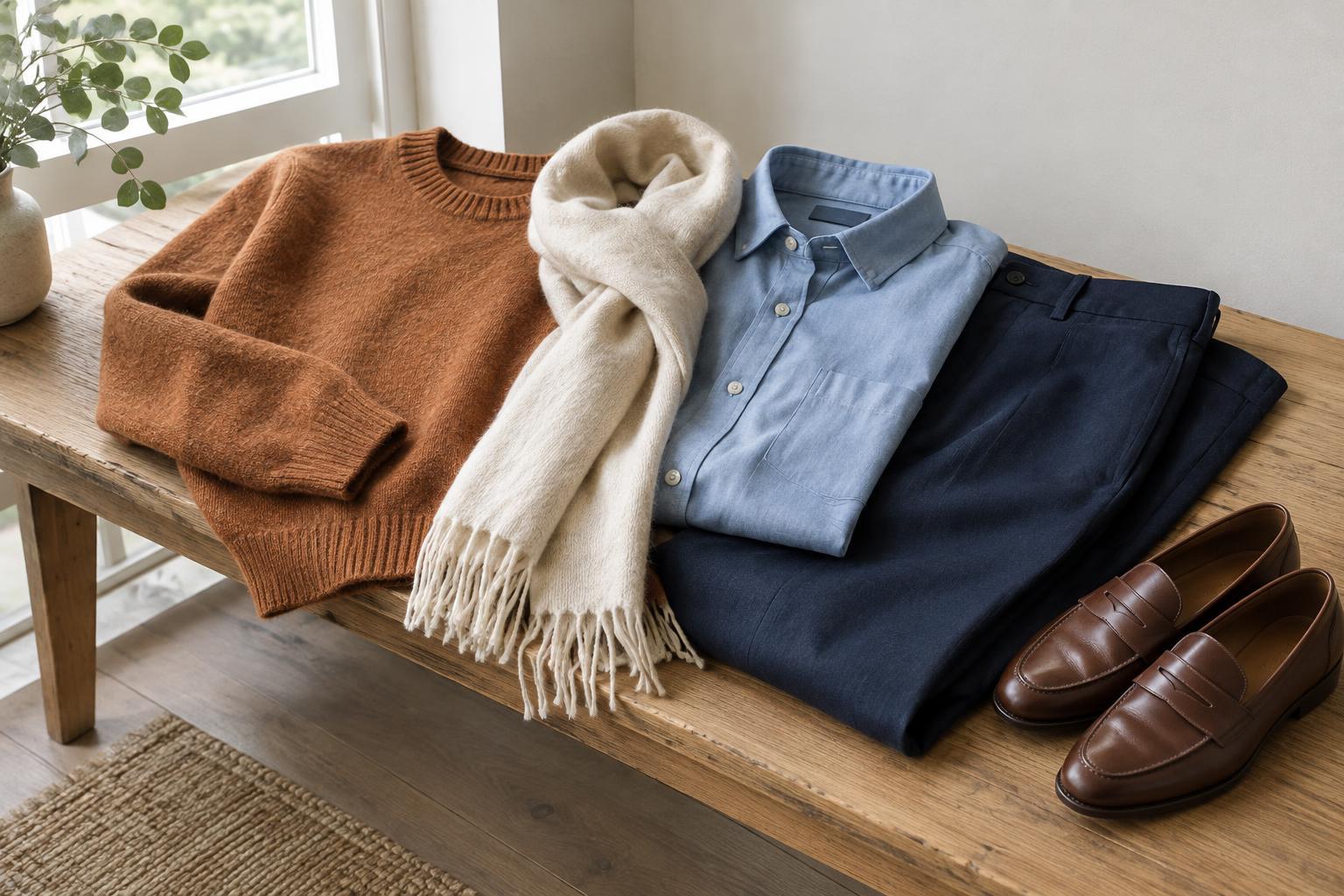
Your base colours do not all need to match perfectly; they need to give you enough combinations you would happily wear. Lay a few garments together and try building outfits with two base colours at a time. For example, navy and cream create a different feel from brown and olive. If one pairing never appeals to you, you do not need to keep it simply because it looks coordinated on paper.
Add colours that make the outfits feel like yours
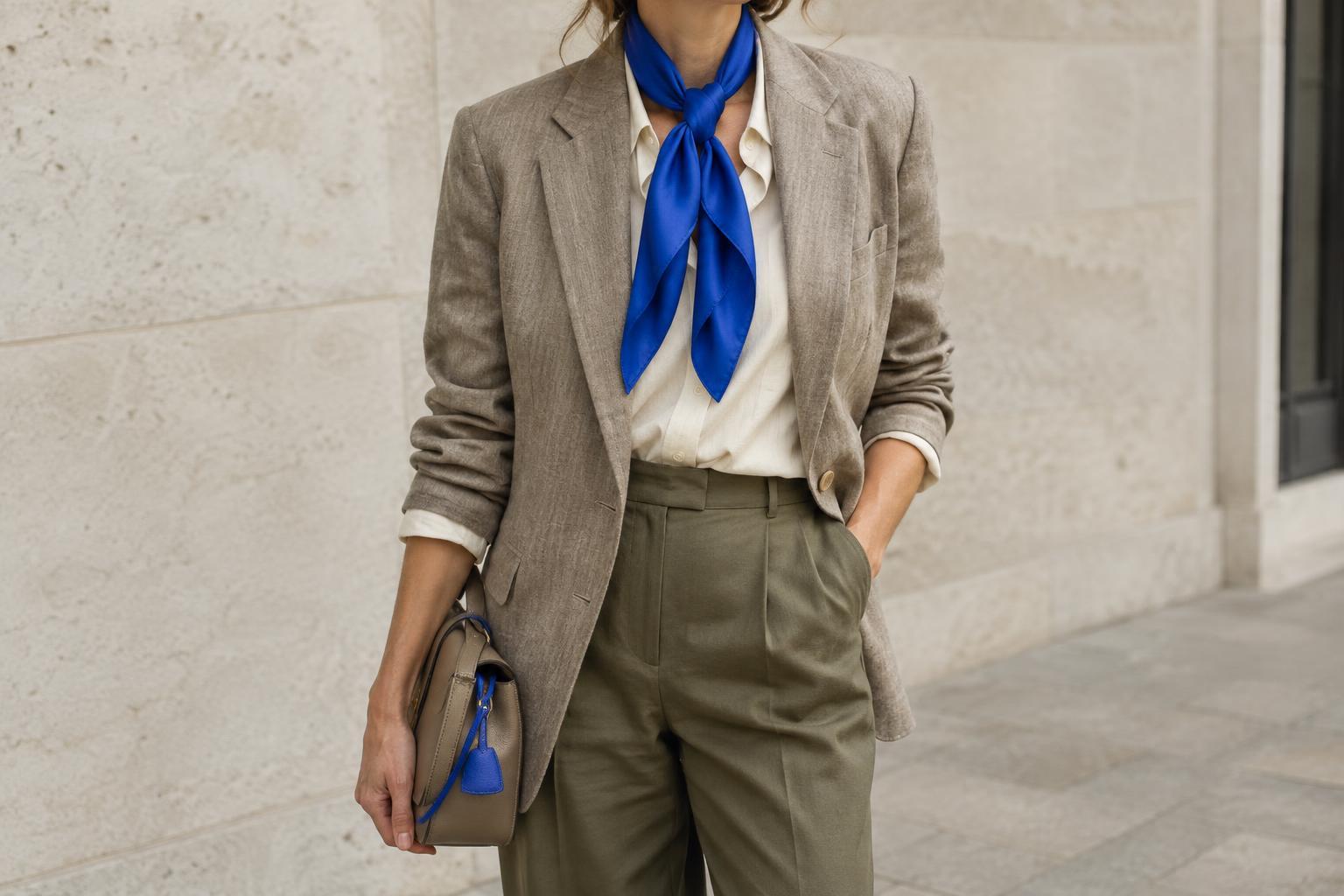
Next, choose one or two accent colours that you genuinely enjoy wearing. An accent can be a scarf, knit, shirt, pair of socks or bag. It does not have to suit every base colour, but it should work with several pieces you own. If you love rust but rarely wear it near your face, try it in a belt or bag. If you want colour close to your face, a scarf or top offers an easy place to start.
Remember that a palette can include different versions of a colour. A muted blue and a vivid blue will behave differently in an outfit. You may prefer soft contrasts, such as olive with cream, or stronger ones, such as cobalt with black. Rather than following a fixed rule about which colours should go together, compare garments side by side and notice which pairings feel right to you.
Test the palette with real outfits
Make at least five outfits using clothes you already own, including the outer layer and shoes you would actually wear. This reveals gaps that a list of colour names can hide. Perhaps your accent tops work with one pair of trousers but not with your everyday jacket. Perhaps two base colours look good together until you add your only winter coat. Adjust the palette around those findings instead of buying something immediately.
Try the outfits in the light and setting where you usually get dressed. Colours can look different in a shop, a photograph and daylight, while fabric texture can change how a pairing feels. Take a quick photo if it helps you remember combinations. You do not need every item to work with every other item; a small wardrobe just benefits from enough reliable combinations to avoid depending on one perfect outfit.
Use your palette as a guide, not a restriction
When shopping, bring a photo of a few frequently worn pieces or make a short note of your base and accent colours. Ask where a new item fits: can you name two outfits you would wear with it? This question is especially helpful for larger purchases, such as a coat or pair of shoes. For a scarf or other small accessory, you might be happy with fewer combinations if you wear and enjoy them often.
Let the palette change when your preferences or routines change. You can add an unexpected colour, retire one that no longer appeals, or keep a special piece that sits outside the plan. The purpose of a small palette is to make getting dressed simpler, not to make your wardrobe uniform. If its colours help you put together outfits you feel good wearing, it is doing its job.