Start by finding out what is stopping the zip
A zip that will not move can have several causes: fabric caught in the slider, dirt between the teeth, teeth that are out of line, or a worn slider. The first step is to stop pulling. Force can tighten a fabric snag, bend teeth or damage the stitching that holds the zip in place.
Lay the garment on a flat surface with good light. Check both sides of the slider and the length of the zip. If the garment is being worn, take it off if you can; it is easier to work gently when the fabric is not under tension. Hold the zip tape—the fabric strips beside the teeth—rather than tugging on the garment.
Free fabric caught in the slider
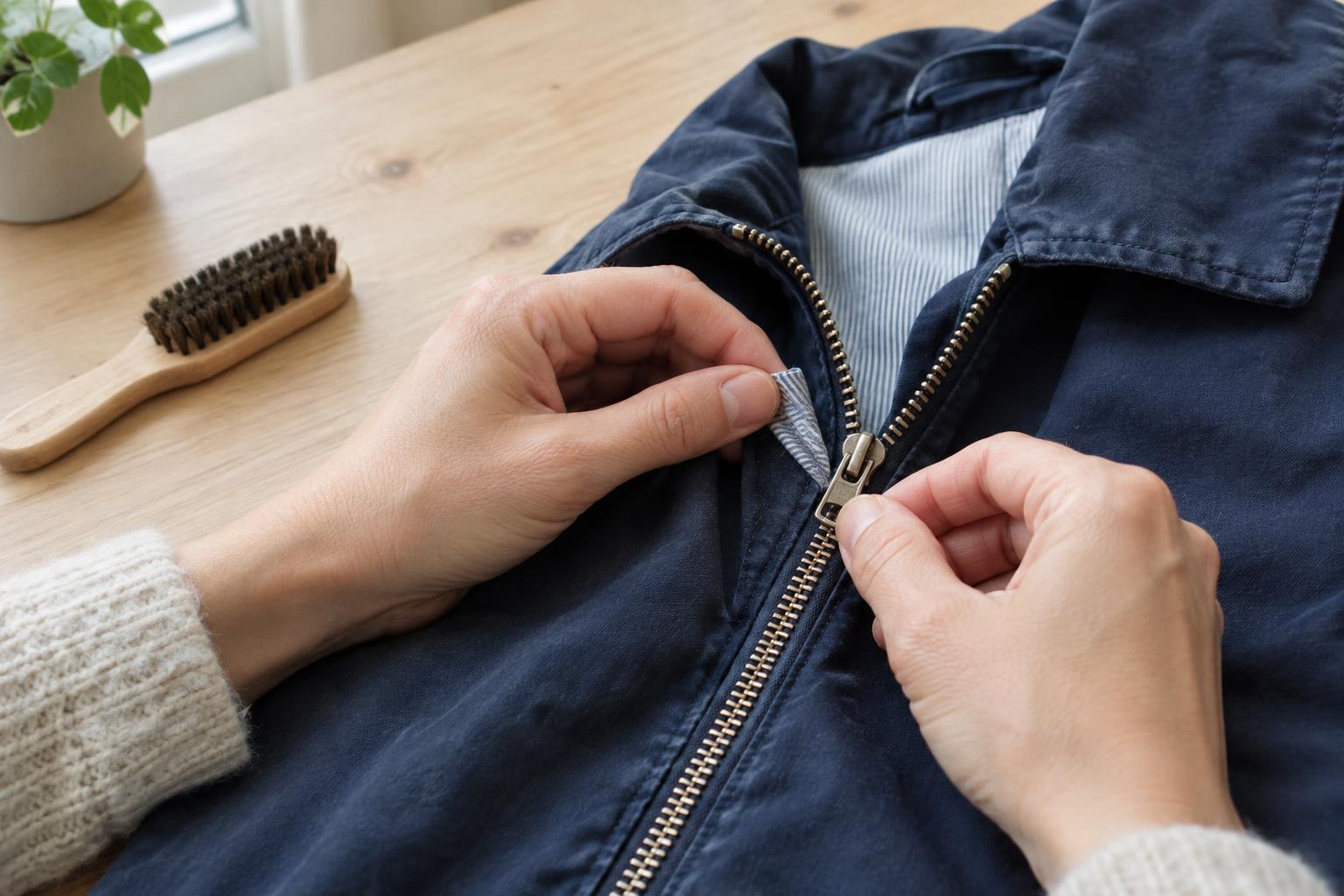
If lining, a pocket edge or a loose thread is trapped, move the slider slightly back toward the direction it came from. At the same time, ease the fabric away from the teeth with your fingers. Use small movements rather than trying to pull the slider through the snag. A pair of blunt tweezers may help you lift a thread you can clearly see, but keep sharp tools away from the zip and surrounding fabric.
Once the material is free, smooth it out and test the zip slowly. If the same section catches again, look for a frayed seam allowance or lining that sits too close to the teeth. Trimming a loose thread may solve a simple snag, but do not cut fabric or stitching that holds the garment together. A recurring catch is a good reason to have the lining or seam secured.
Clean a zip that feels stiff
A zip can become hard to move when lint, dust or dried residue collects around its teeth. With the garment laid flat, use a soft, dry toothbrush to brush along both sides of the zip. Work gently around the slider, then try opening and closing it without forcing it. For washable garments, a slightly damp cloth can help remove visible grime; let the area dry before testing the zip again.
If a clean zip still feels stiff, use only a small amount of a product intended for zippers, following its directions and testing first where it will not show. Keep any product off delicate fabric when possible. Cooking oil and other greasy household products are best avoided because they may stain clothing and attract more dirt.
Know when a repair needs more than a gentle fix
Check whether the teeth meet evenly as the slider moves. If they separate behind it, the slider may be worn or the teeth may be damaged. On a jacket, also check that the bottom pin is fully seated in its box before pulling the slider up. If it is not aligned, release it and insert it again rather than pulling harder.
Stop if you see missing or bent teeth, a cracked slider, or zip tape pulling away from the garment. Squeezing a slider with pliers can make it worse if the pressure is uneven. A tailor or clothing-repair service can help you decide whether the slider alone can be replaced or the whole zip needs attention. This is often worth considering for a garment you wear regularly.
Build small zipper checks into garment care
When putting on a garment, line up both sides of the zip and pull steadily while keeping nearby fabric clear. Avoid using the zip to draw together clothing that is under strong tension; easing that tension first makes it less likely that the teeth or stitching will be strained. If a zip catches repeatedly, address the snag before it becomes harder to free.
Before washing, close zippers unless the garment care instructions say otherwise. This can help keep the teeth from catching on other items. Check the care label for washing and drying guidance, and give the zip a quick brush if you notice lint collecting around it. These habits take little time and make it easier to spot a developing problem while the fix is still simple.