Start with when and how you will wear it
The best scarf fabric is not necessarily the warmest one. A scarf worn on a cold walk has a different job from one worn on a crowded train or in a cool office. Before choosing a material, think about how long you will wear it, whether you need to remove it easily, and how much fabric feels comfortable around your neck.
A close, thick wrap can help block cold air, but it may feel too warm indoors. A lighter scarf is easier to adjust as conditions change. If you often move between indoors and outdoors, look for a scarf you can loop loosely, open up or fold away without fuss. Your sensitivity to texture matters just as much as the temperature: a fabric that feels pleasant on your hand may still irritate your neck after an hour.
Wool and other animal fibres for colder days
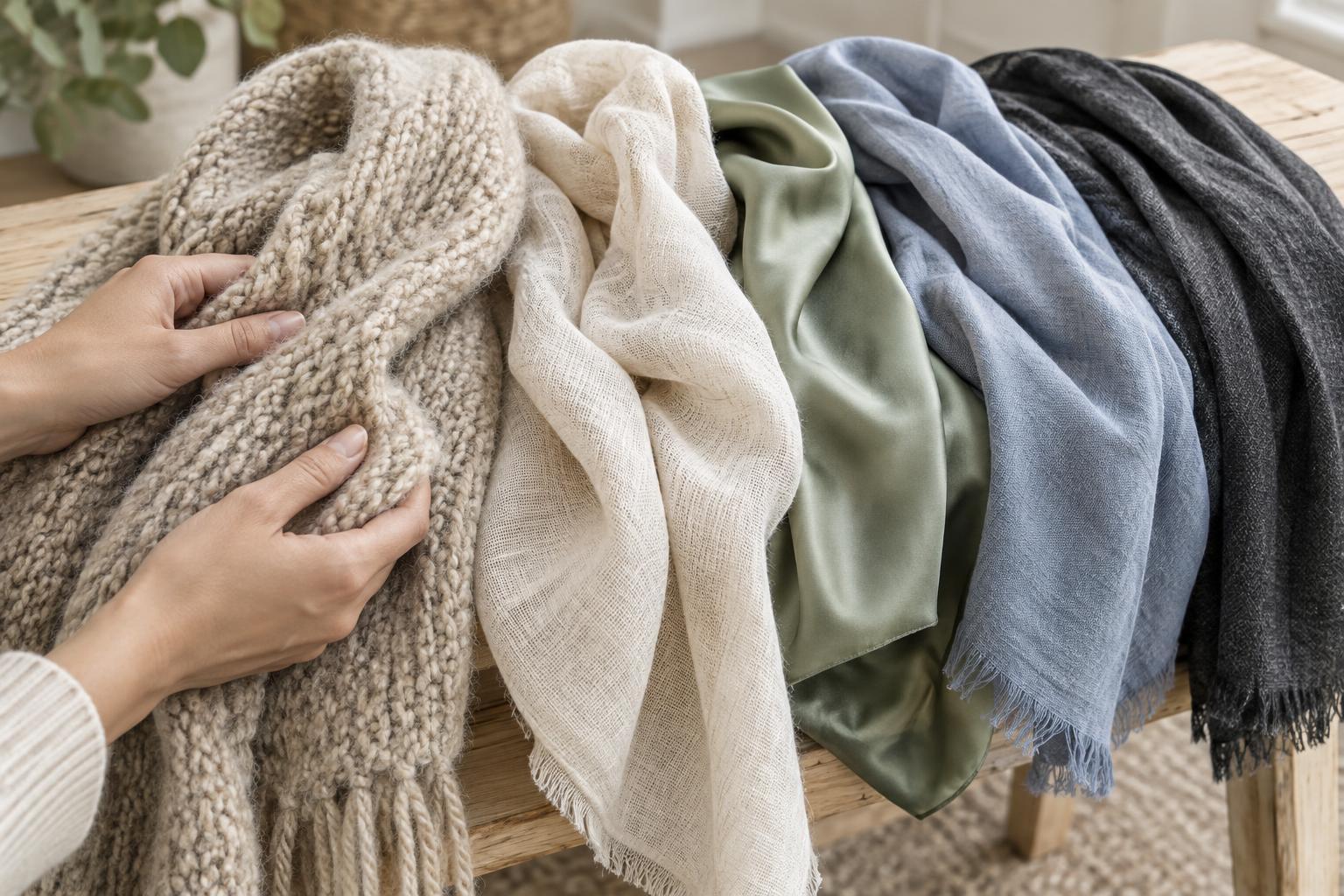
Wool is a useful starting point for a winter scarf because it can provide warmth without requiring a very bulky knit. Merino wool often feels finer and softer than coarser wools, though the feel varies by scarf. Cashmere can be light and soft, but a delicate cashmere scarf may need gentler handling. Alpaca can also be warm, yet its texture and weight differ from one scarf to another. If you find wool itchy, do not assume every wool scarf will feel the same—or that a premium fibre will automatically suit your skin.
Construction changes how these fibres perform. A dense weave may do a better job of keeping out a breeze than an open knit, even when both are labelled wool. A loosely knitted scarf may feel cosy but allow more air through. Check the fabric against your neck, especially along edges and seams, and consider whether it feels too heavy when doubled. For everyday use, the most valuable winter scarf may be the one you can wear comfortably for the whole journey.
Cotton, linen and silk for lighter layers
Cotton scarves are often comfortable for mild weather and for people who prefer a familiar, easygoing feel. A thin cotton scarf can add a layer without the weight of a winter knit, while a thicker cotton scarf may feel substantial but less suited to damp, chilly conditions. Cotton can hold on to moisture, so it is worth considering how the scarf feels when you are walking briskly or caught in light rain.
Linen suits an airy, relaxed scarf. It can feel crisp at first and often softens with wear and washing, depending on the fabric. Its natural creases are part of its casual appearance, which may be a benefit or a drawback for your style. Silk, meanwhile, is useful when you want a smooth, light layer or a little colour near your face. It can add comfort in a cool room, but a thin silk square is not a substitute for a substantial cold-weather scarf. With all three fabrics, the size and weave affect how much coverage you get.
Synthetic fabrics and blends: read beyond the label
Acrylic, polyester and fleece scarves can offer softness and warmth at a range of weights. Some are easy to wash and practical for frequent wear. Others may feel less comfortable if you become warm while wearing them, particularly when the fabric is thick or closely wrapped. Rather than judging a scarf by its fibre name alone, notice whether air passes through it, how it feels against your skin and whether it builds up static with your usual coat.
Blends can combine different qualities. A wool blend, for example, may feel different from a scarf made entirely of wool, but the result depends on the proportions and construction. Read the full fibre label if you have a strong preference or sensitivity. It is also worth checking the care label before buying: a scarf that fits your routine is more likely to become a regular part of your wardrobe.
Make the final choice by touch, fit and care
When comparing scarves, try a simple wear test if you can. Place the fabric against your neck, wrap it the way you normally would and notice any scratchiness, tightness or excess bulk. Check whether the length gives you enough coverage without long ends getting in your way. A wide scarf can double as a loose wrap, while a narrower one may sit more neatly beneath a coat.
Finally, choose a fabric you are willing to care for. Follow its care label, avoid storing it while damp and give delicate knits room so they do not stretch or snag. If you need one scarf for many situations, a comfortable medium-weight option in a colour you often wear may be more useful than an exceptionally warm or decorative scarf. The right fabric is the one that meets your usual conditions and still feels good at the end of the day.