Start with when and where you will wear it
Before comparing necklines or colours, picture a normal day in the sweater. Will you wear it indoors, under a coat, on a chilly walk or in a room where the temperature changes? A sweater that feels ideal outside may be too warm at a desk. If you want one you can wear often, choose for the setting you encounter most and plan to add or remove a layer when needed.
Think about what the sweater needs to go with, too. A neat knit may be easier to wear under a jacket, while a roomy one can be the main layer over a shirt or T-shirt. Looking at the trousers, skirts and coats you already wear will help you choose a shape you can use, rather than one that only works in a single imagined outfit.
Understand knit weight and warmth
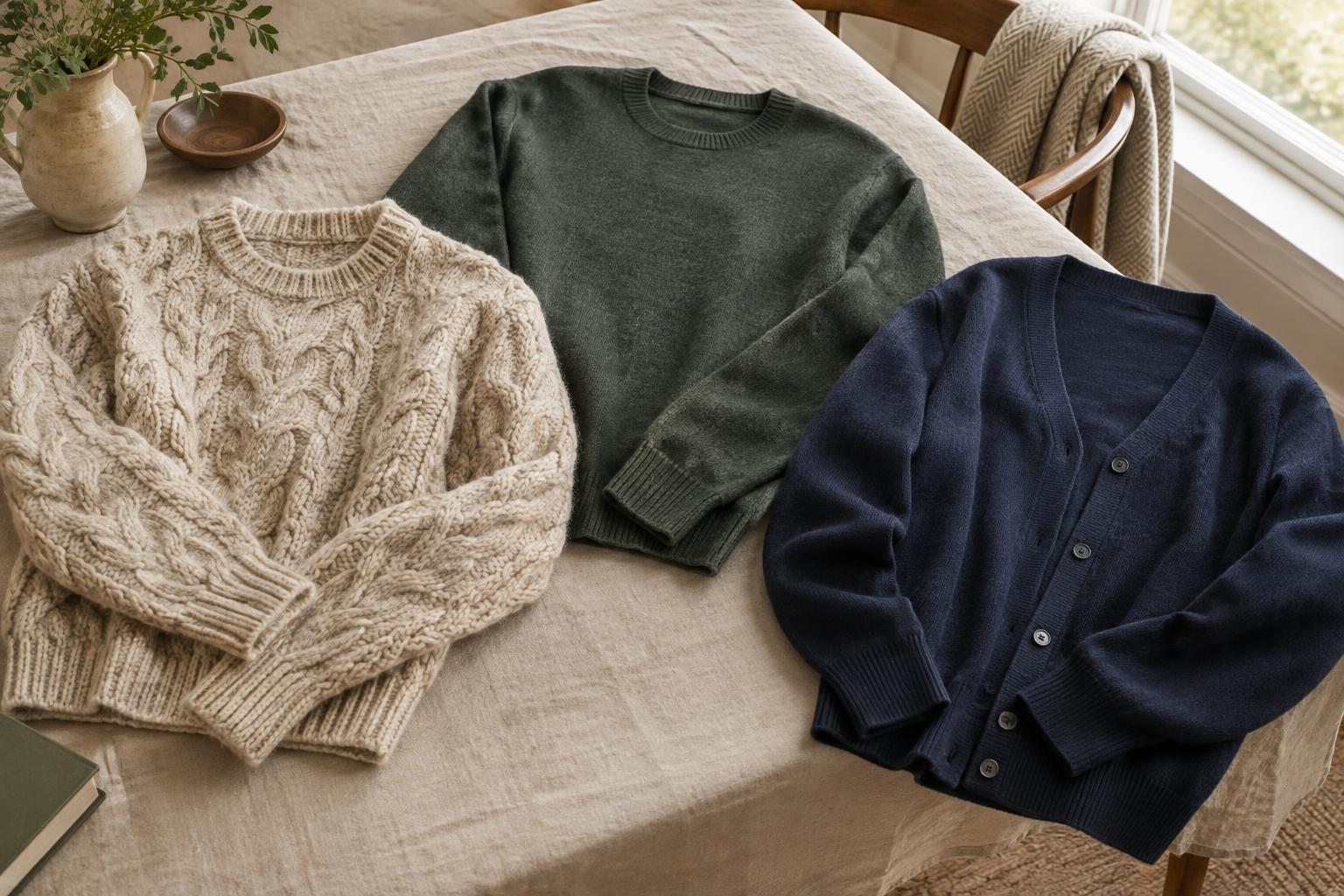
Knit weight describes how substantial a sweater feels, but thickness alone does not tell you exactly how warm it will be. Fibre, stitch structure, fit and the layers worn with it all matter. A fine knit is usually easier to tuck in or layer beneath a coat. A chunky knit has more visual volume and may feel cosy on its own, but it can be awkward under close-fitting outerwear.
Hold a sweater up and gently stretch a small area to see how open the knit is. A loose, airy stitch may let more breeze through than a compact one of similar thickness. Also consider how much room the sweater leaves around your body. A little space can make layering comfortable; too much bulk under a tight coat can restrict movement. For a versatile choice, a medium-weight knit often offers a useful balance between warmth and easy layering.
Choose fibre for the comfort you want
The label is a helpful starting point, but the feel of the finished sweater matters just as much. Wool can offer warmth without requiring a very thick knit, although some people find certain wools irritating against bare skin. Cotton often feels comfortable for milder conditions but can feel heavy in a thick knit. Synthetic fibres and blends vary widely: they may add durability or make care simpler, depending on the garment.
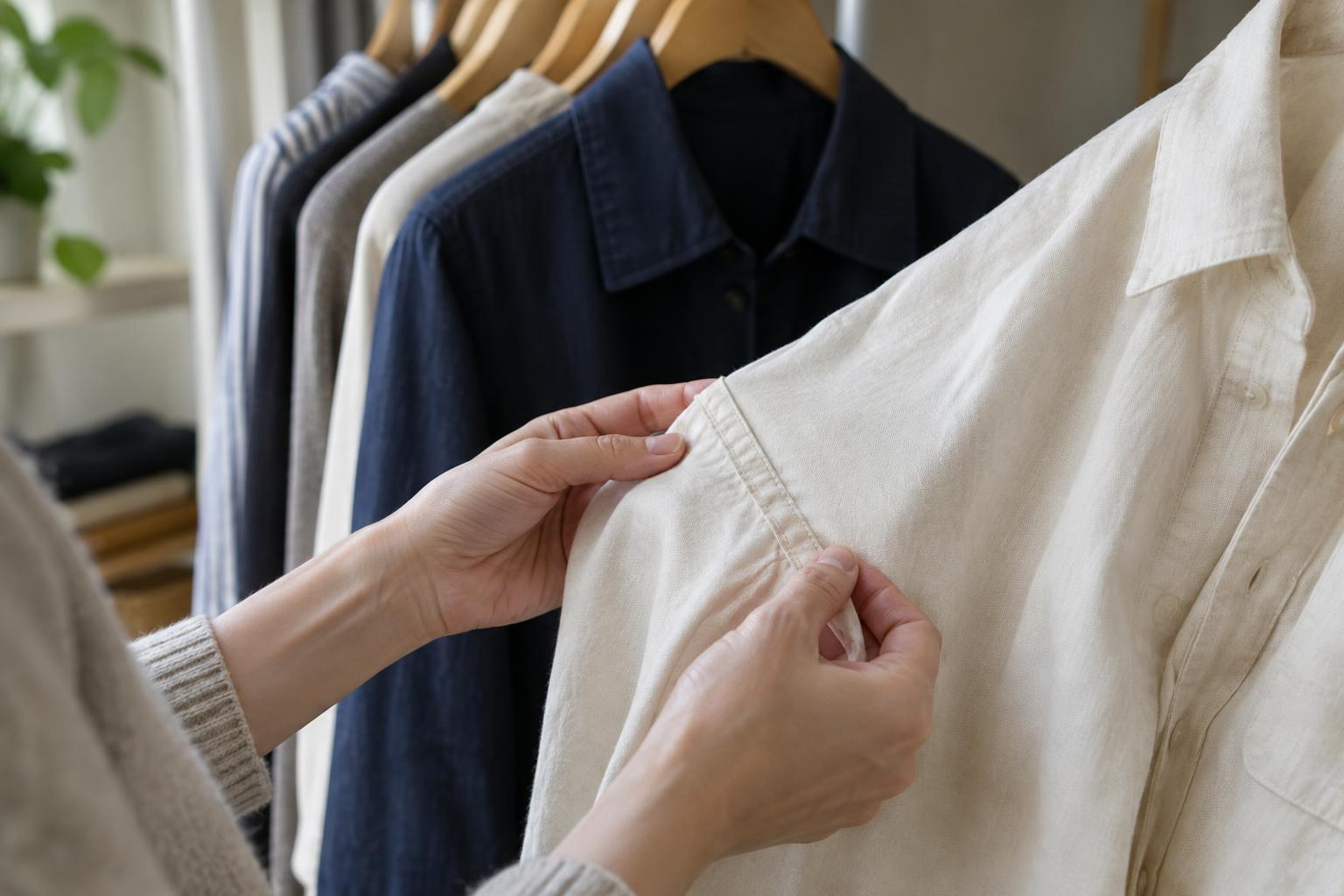
If possible, feel the inside of the neckline and cuffs, where fabric is likely to touch your skin. If a sweater feels scratchy in the shop, consider whether you would reliably wear a layer underneath it. Check the care label at the same time. A sweater that needs a routine you will not follow is unlikely to become an everyday favourite, however good it looks.
Find a shape that fits your outfits
A crew neck is straightforward to wear alone or over a collared shirt. A V-neck leaves more space around the neckline and can show a shirt, T-shirt or scarf. A cardigan gives you an adjustable layer that is easy to take off indoors. None is the universal best choice; the useful one is the shape that works with your preferred outfits and the amount of coverage you like.
Look beyond the size on the label. Check where the shoulder seam sits, whether the sleeves let you move freely and how the hem falls over your usual bottoms. A cropped sweater can pair well with higher waistlines, while a longer one may work better worn untucked. If you plan to layer, try it over the kind of top you would normally wear. Then check that your coat still closes comfortably over it.
Inspect the details before deciding
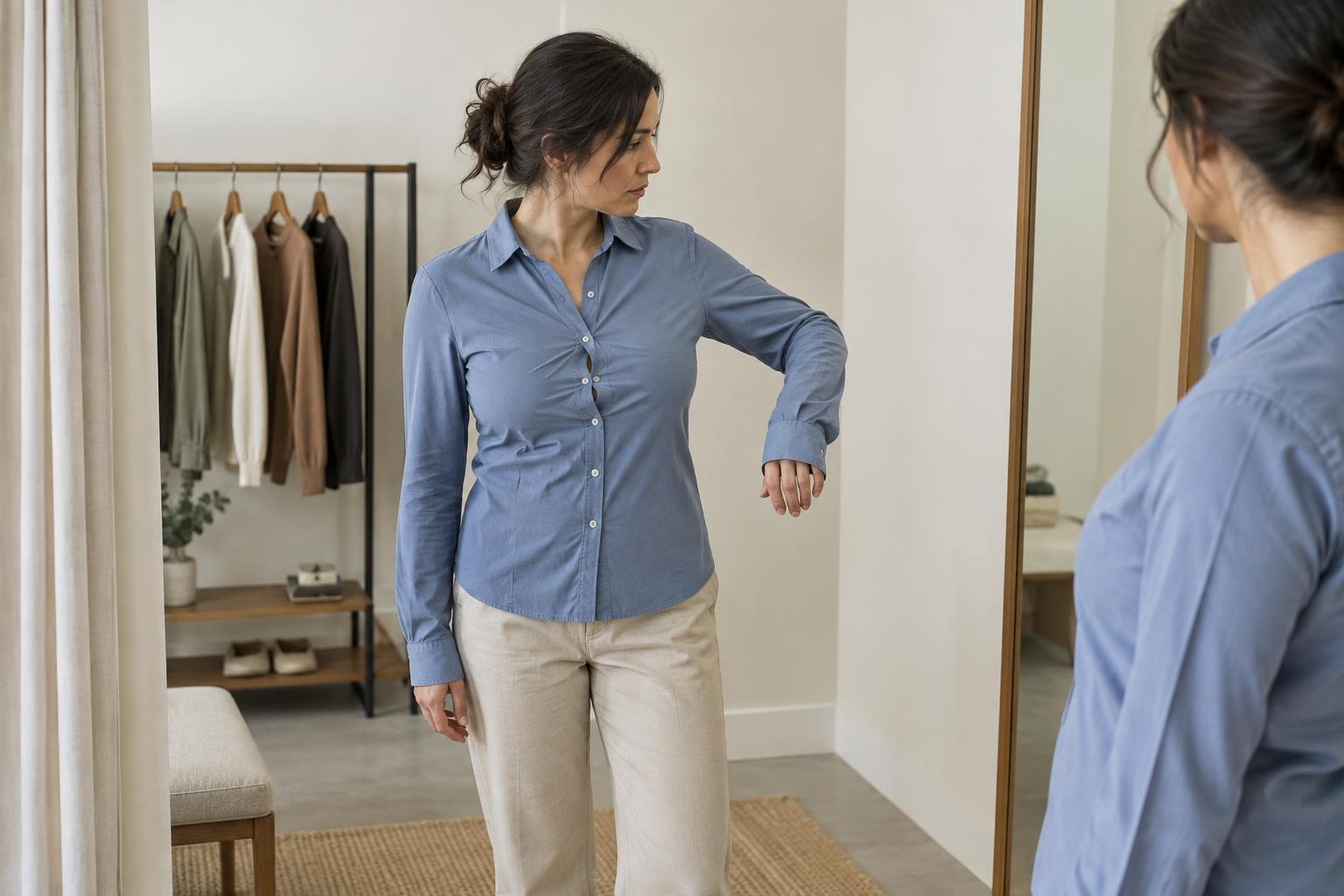
A quick inspection can reveal whether a sweater suits your needs. Look at the seams, cuffs and hem for even construction, and check that the neckline sits comfortably without needing constant adjustment. On a cardigan, fasten the buttons to see whether the front pulls or gaps. Gently press the knit in your hand and release it; notice how it settles, rather than expecting every fibre to behave the same way.
Finally, consider how you will store and care for it. Heavy knits may stretch if left on a hanger, so folded storage is often a practical choice. Follow the garment’s care label for washing and drying, and give the knit enough room to dry in the shape you want it to keep. The right sweater is not simply the warmest or softest one: it is the one you can wear comfortably, combine easily and look after without fuss.