Start with the care label, not the usual setting
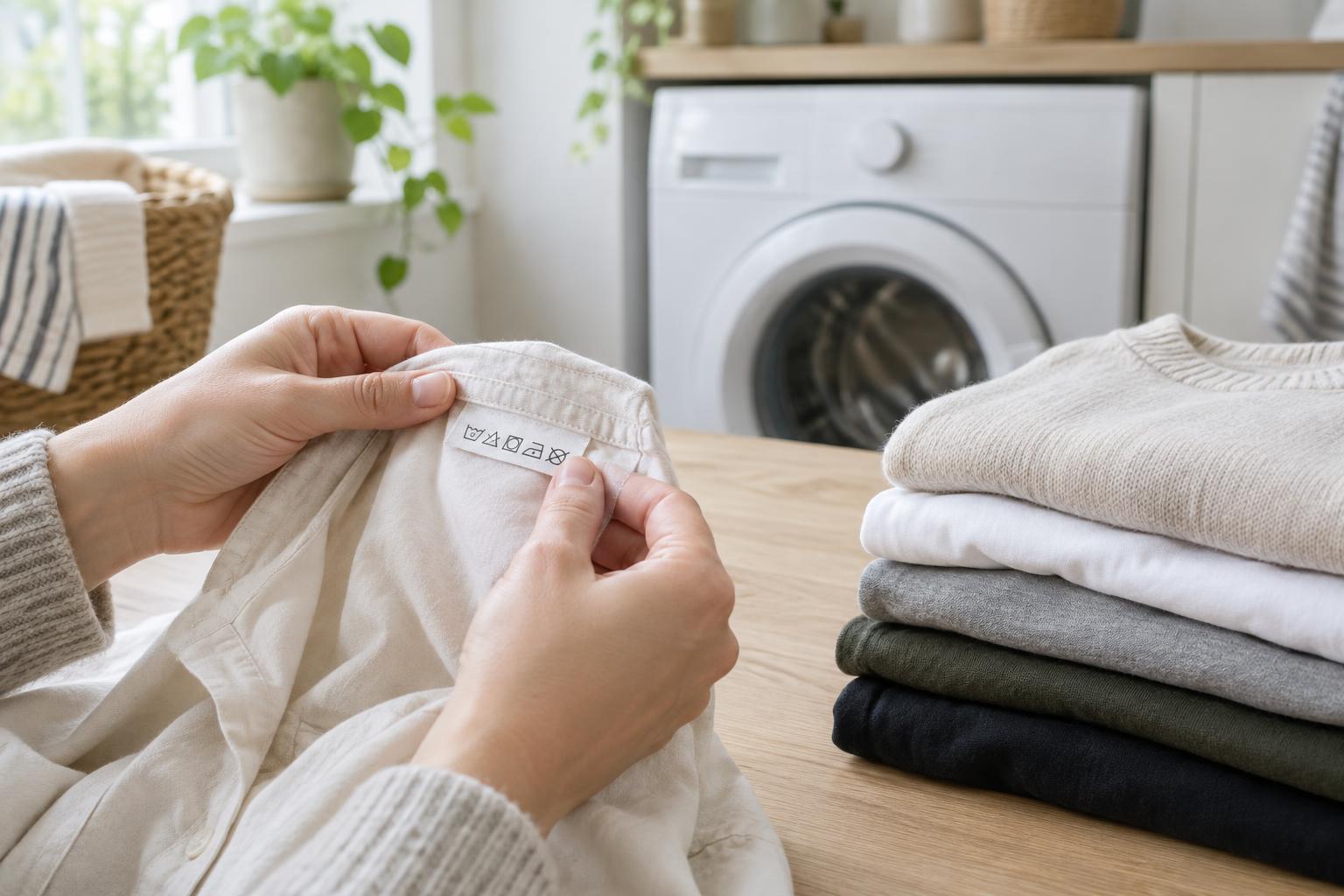
Choosing a washing temperature can feel like a choice between getting clothes clean and keeping them in good condition. A useful starting point is the garment’s care label. Its temperature indicates the maximum recommended for washing that item, not a target you must reach every time. If a label calls for a cool or cold wash, do not raise the temperature simply because other items in the load can tolerate it.
Temperature is only one part of the instructions. Check whether the garment needs a gentle cycle, a reduced spin or no machine wash at all. A wool jumper and a cotton T-shirt might both be washed at a low temperature, but they may need very different amounts of agitation. When you are unsure, follow the most restrictive label in the load—or wash the uncertain item separately.
Use a cool wash for lightly worn clothes
For many everyday garments that are only lightly worn, a cold or 30°C wash is a sensible first choice if their labels allow it. This often suits shirts, casual trousers, darker colours and mixed everyday loads. Cooler water can help limit colour fading and reduce the risk of shrinkage or damage to finishes, though it cannot prevent every fabric change. It generally uses less energy than heating water for a hotter wash.
A cool wash works best when you give the detergent and machine room to do their jobs. Choose a detergent suited to the temperature, measure it according to the product directions and local water conditions, and avoid packing the drum tightly. Wash similar colours together, especially when garments are new or strongly dyed. These steps may make more difference to an ordinary load than turning up the heat.
When a warmer wash makes sense
A 40°C wash may be useful for sturdier, more heavily soiled items if every care label in the load permits it. Think of durable cotton basics or clothes with a noticeable build-up of everyday dirt. It is not automatically better for every stain: heat can set some marks, while delicate fibres, dark dyes, prints and elastic components may fare better at lower temperatures.
Higher temperatures are sometimes chosen for washable towels, bedding or other items when there is a particular hygiene concern. Check both the textile label and your machine and detergent instructions before using one. Do not assume that a hot setting makes every item safe to wash together or guarantees a particular hygiene result. If an item needs special cleaning because of illness or contamination, follow relevant product guidance rather than applying one rule to the whole wardrobe.
Match the temperature to the fabric and the stain
Fabric construction matters as much as fibre content. A sturdy cotton towel can usually handle a different wash from a loosely knitted cotton top. Wool, silk, embellished pieces and garments marked dry-clean-only need particular care; some should not go in a standard machine cycle at any temperature. Stretch fabrics and clothing with decorative coatings also deserve a label check before you choose a warm setting.
Treat visible stains before washing instead of relying on heat to remove them. Blot or lift away excess material without rubbing it deeper into the fabric, then use a stain treatment that is suitable for the garment. For marks that may contain protein, such as food or bodily fluids, avoid starting with hot water, which can make some stains harder to remove. Test unfamiliar treatments on an inconspicuous area, and check that a mark has gone before tumble-drying or ironing the item.
Build a simple temperature routine
Sorting laundry into a few practical groups makes the decision easier. Keep delicate or label-restricted items apart; group lightly worn everyday clothes by compatible colours; and set aside sturdier, dirtier pieces for a warmer wash when their labels allow it. If one item in a load needs a lower temperature, wash the whole load at that temperature or move the item to another load.
After washing, notice what worked. If clothes still smell or look dirty, check the load size, detergent amount, cycle choice and stain treatment before assuming the water must be hotter. If colours fade or garments lose shape, try a gentler cycle or lower temperature where the label permits. The aim is not to use one setting for everything, but to choose the mildest routine that gets each type of clothing clean.