Start with your real everyday load
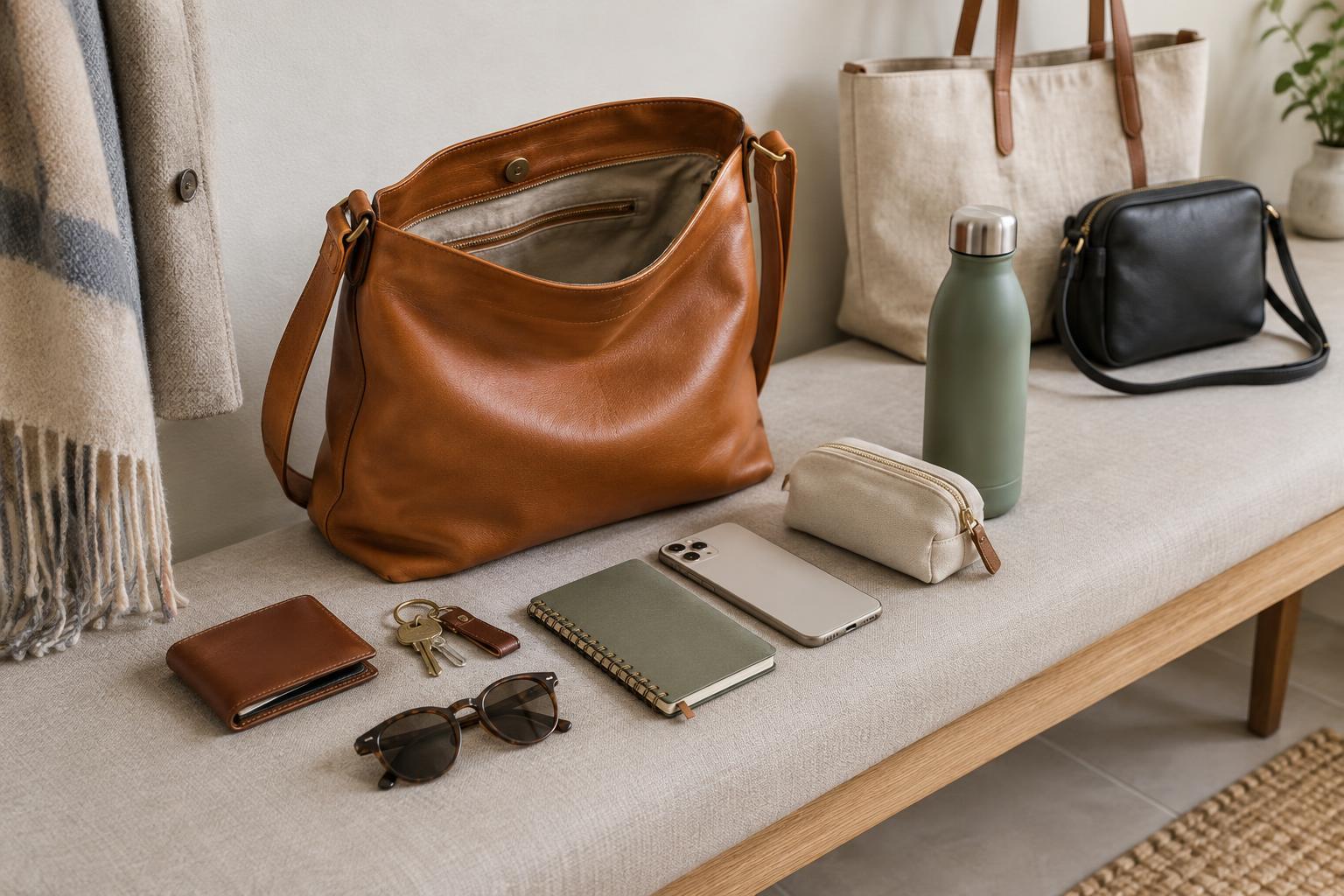
A bag can look ideal on a shelf and feel wrong by the end of a normal day. Before deciding between a small crossbody, a medium shoulder bag or a roomy tote, gather what you actually carry. Include the things you reach for regularly: keys, wallet, phone, glasses, a small pouch or other personal essentials. Add any items that accompany you on most days, such as a water bottle, notebook or folded layer.
Separate that group from things you carry only occasionally. An umbrella or a book might matter on some days without needing to determine the size of your main bag. If your daily load changes often, consider whether you would rather leave space for those extras or use a second lightweight bag when needed. The aim is not to pack as little as possible; it is to choose capacity deliberately.
Check usable space, not just outside dimensions
Two bags with similar measurements can hold very different amounts. A structured shape may have firm corners that limit what fits, while a softer bag can make better use of its interior. A wide opening makes it easier to reach items, and a secure closure can reduce the practical space at the top. If you carry a particular item every day, check that it fits without forcing the zip or distorting the bag.
Pay attention to how your belongings sit together. A phone, keys and wallet may technically fit in a compact bag but become awkward to retrieve when packed tightly. At the other extreme, a large open tote can leave small objects hard to find. Pockets or a pouch may solve that problem, but they do not replace an appropriate overall size. A useful bag lets you see or feel where essentials are without unpacking everything.
Match the size to your routine
Think through a typical day from leaving home to returning. If you travel light and rarely need to carry an extra layer, a compact bag may keep your hands free without excess bulk. If you move between work, errands and other plans without going home, a medium bag can provide room for a few changes in what you carry. A larger bag is most useful when those extra items are regular passengers rather than possibilities.
Also consider where the bag will go. A large tote can be convenient for carrying varied items but cumbersome in a crowded space or when you need both hands. A smaller bag may be comfortable while walking yet frustrating if you often have to carry a bottle or book separately. There is no size that suits every routine; the better choice is the one that handles your most common day with the fewest compromises.
Test comfort with the bag packed
Try a bag with a realistic load before judging its size. What feels light when empty may pull on one shoulder once filled. Check whether the strap stays in place, whether the bag bumps against you as you walk, and whether you can open it easily while wearing it. An adjustable strap gives you more options for positioning the bag over different outfits and outerwear.
Notice the relationship between size and weight. A roomy bag may invite you to add items simply because there is space, while a bag that is too small may leave you juggling things in your hands. If your packed bag feels uncomfortable, review both its design and its contents. A different strap, a smaller daily load or a more suitable shape may help more than choosing a different size alone.
Choose a shape you will enjoy using
Bag size also affects how an outfit feels. A compact bag can keep the overall look simple, while a larger one can become a noticeable part of it. Consider the clothes you wear most often rather than trying to match one imagined occasion. Check how the bag sits over a coat, beside a loose top or against your preferred silhouette. Its colour and finish matter, but a bag that is awkward to carry will be difficult to make part of your everyday style.
If possible, place your usual essentials inside a candidate bag and walk around with it. Open and close it, reach for your keys, and see what space remains. That short test can reveal more than a size label. The best everyday bag is not necessarily the smallest one that fits your belongings or the largest one you might need someday. It is the size that makes your ordinary days easier.