Start with the clothes and the care labels
A practical wardrobe lasts longer when washing is suited to the clothes, not just the laundry basket. Before choosing a detergent, check garment care labels for washing instructions. Separate items that need a gentle cycle or a specialist product from ordinary, washable clothes. Wool and silk, for example, may call for a detergent intended for those fibres; a standard everyday formula is not automatically the best choice.
Think about what you wash most often. If your loads are mainly cotton T-shirts, shirts and durable everyday pieces, a general-purpose detergent may be enough. If you regularly wash delicate fabrics, it may be more useful to keep a suitable second product than to use one detergent for everything. When a garment’s label and a detergent’s instructions seem to conflict, choose a method that meets both sets of directions or seek care guidance for that garment.
Compare formats by how you do laundry
Liquid detergent is easy to portion and can be convenient for treating a small mark before washing, provided the label permits it. Powder is another option for routine loads, though it needs to dissolve and rinse properly in the cycle you use. Premeasured pods or tablets reduce the need to pour detergent, but their fixed dose offers less flexibility for a small or lightly soiled load. Keep pods in their original packaging and out of reach of children and pets.
Also consider the machine. Some washers require detergent labelled for high-efficiency machines; use a product compatible with yours. Fragrance, dyes and added fabric-care features are matters of preference, but more features do not necessarily mean better results for every garment. If you prefer to avoid fragrance, compare labels rather than assuming that a mild-looking package is unscented.
Measure for the actual load
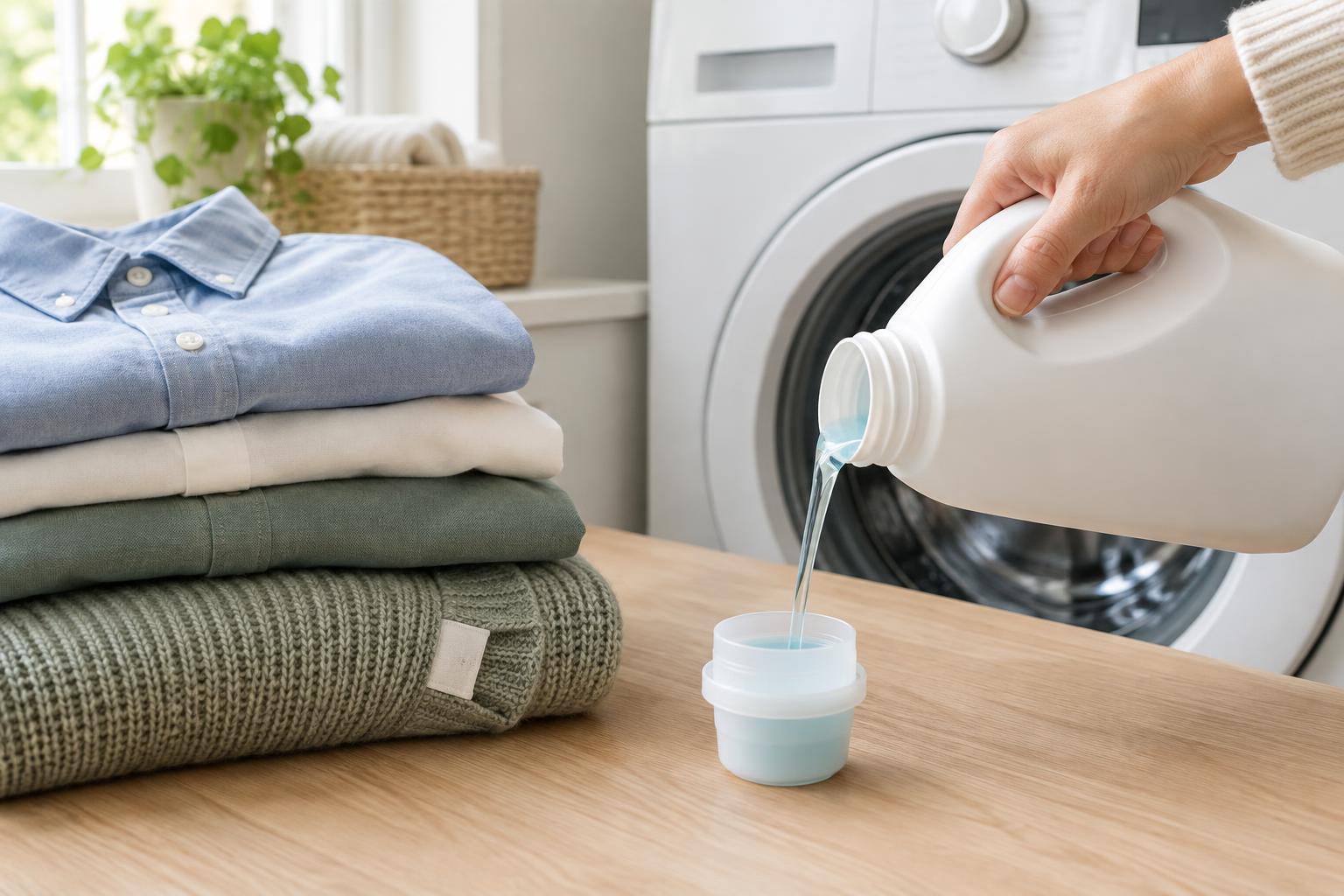
The amount to use depends on the detergent’s concentration and the conditions of the wash. Read the dosage directions on that product’s package each time you switch formulas: a capful or scoop from one brand may not equal a capful or scoop from another. Use the markings on the supplied cap or scoop if they are clear, rather than estimating by eye.
Start with the package recommendation for your load size, then follow its adjustments for heavily soiled clothes or hard water where applicable. A large drum does not always mean a large load; judge the amount of laundry actually inside. For a small or lightly worn load, use the lower dose specified by the manufacturer if one is given. Pods have a fixed dose, so check the package for the load sizes they are meant to cover rather than cutting them open or guessing.
Adding extra detergent as insurance can work against a clean finish. If a machine cannot rinse it away well, residue may remain on fabric or in the washer. If clothes routinely feel coated, look dull or emerge with visible detergent marks, review the dose and make sure the machine is not overloaded. Those signs can have other causes, so change one part of your routine at a time.
Match the wash to the garment, not just the detergent
Detergent is only one part of the result. Sort clothes in a way that makes sense for their colour, fabric and care instructions, and leave enough room in the drum for movement. A cool wash may suit many everyday items when their labels allow it, but follow the garment and detergent directions if a different temperature is needed.
For a noticeable stain, check the care label and treat it promptly using a method suitable for the fabric. Test a treatment on an inconspicuous area if you are unsure about colourfastness. Do not combine laundry chemicals unless their labels explicitly say it is safe to do so. More products in one wash do not necessarily make clothes cleaner, and they can complicate fabric care.
Keep a simple routine you can adjust
A useful starting setup is one detergent compatible with your machine and most of your washable clothes, plus a specialist option only if your wardrobe needs it. Store products in their original containers, follow the storage instructions and keep them away from children and pets. Keeping the dosing tool with its product makes it easier to use the right measure.
After a few washes, assess the clothes themselves: are they clean, comfortably rinsed and retaining the finish you expect? If not, revisit the load size, sorting, cycle and dosage before pouring in more detergent. A measured, repeatable routine makes everyday wardrobe care simpler and helps you give favourite pieces the attention they need.