Start with what your hands need to do
A glove can feel wonderfully warm in the shop yet become frustrating when you need to find keys, hold a bag or answer a call. Before comparing materials, think through a typical day. Are you walking outdoors for an extended stretch, moving between a car and buildings, or handling a bicycle lock? The more small objects you use, the more important it is that the glove lets your fingers bend and grip.
Warmth and dexterity usually involve a trade-off. Thick insulation creates space for warmth but can make precise movements harder. Thin gloves are easier to work in but may not be enough for a long wait outdoors. You do not have to find one pair for every situation: a slim everyday pair and a warmer pair for prolonged cold can be more useful than a single compromise.
Check the fit before judging the warmth
Gloves should follow the shape of your hand without squeezing it. A tight pair can feel uncomfortable when you make a fist, while excess fabric at the fingertips makes it harder to pick things up. Try gripping your phone, closing a zip and reaching for keys. Your fingertips should have room to move, but the glove tips should not fold over when you press a button.
Pay attention to the thumb and the space between your fingers. If the glove pulls across your palm when you spread your hand, try another size or cut rather than assuming the fabric will stretch enough. A cuff should cover your wrist when you reach forward. A close cuff can also help keep out drafts, especially if it fits beneath your coat sleeve. If you plan to wear a thin liner underneath, try both layers on together.
Match the material to your usual weather
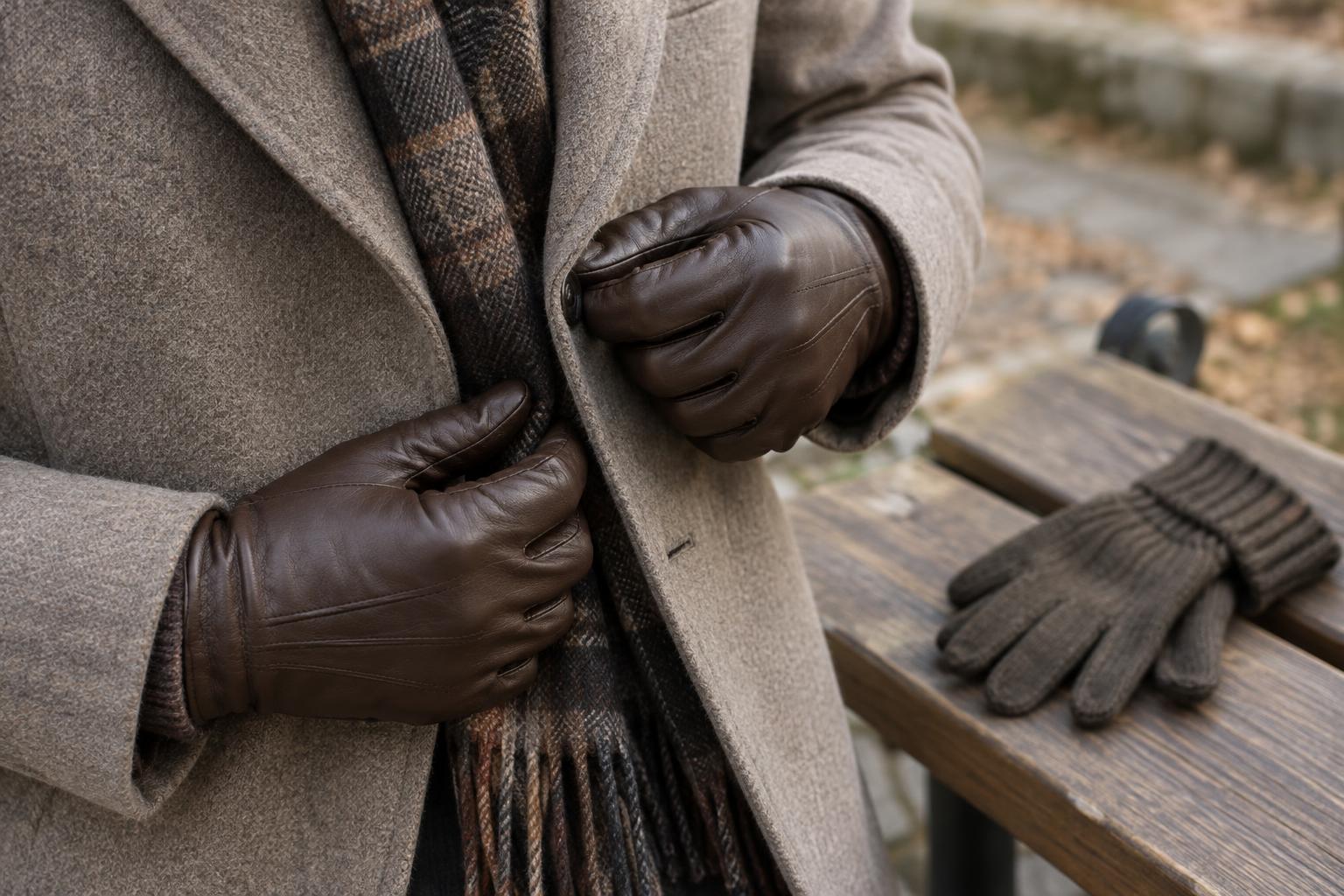
Knit gloves are flexible and easy to tuck into a pocket, making them convenient for short trips in cool, dry weather. A tighter knit or a lining may feel more protective than a loose, open knit. Leather can offer a neat shape and useful grip, though comfort and warmth depend on its lining and construction. Soft linings can make a glove pleasant to put on, but they do not automatically make it suitable for wet conditions.
For damp or windy days, look beyond how thick a glove feels. An outer fabric designed to block wind or shed light rain may be more comfortable than an absorbent knit in those conditions. Water-resistant does not necessarily mean waterproof, so check a product’s description if you expect sustained rain. Mittens often keep fingers warmer together, but they limit individual finger movement; a fold-back mitten design may suit someone who needs both warmth and occasional access to their fingertips.
Choose details you will actually use
Small features matter most when they solve a repeated annoyance. A textured palm can help with holding a steering wheel, bag handle or phone. Touchscreen-compatible fingertips may be convenient, but test them with your own device if possible: performance can vary, and a glove that is too large will still make tapping difficult. Clips that keep a pair together are useful if gloves often get separated in your coat pocket.
Think about how the gloves work with the rest of your outerwear, too. A slim cuff may slide under a tailored coat sleeve, while a longer cuff may overlap better with a casual jacket. Colour can be practical as well as expressive: a neutral pair may work with several coats, while a brighter pair is easier to spot in a crowded drawer. Prioritise the fit and function first, then choose the finish you enjoy wearing.
Test, care for and store your pair
If you can try gloves on, spend a minute doing more than opening and closing your hand. Pick up a small object, hold a bag strap and move your wrists as you would on a walk. Notice whether seams press against your fingers or the lining shifts when you pull a glove off. These quick checks reveal more about everyday usefulness than the label alone.
Follow the care instructions for the particular pair, since knit, leather and coated fabrics may need different treatment. Let damp gloves dry thoroughly before putting them away, and avoid placing them directly against strong heat unless their care instructions allow it. Store the pair together so one glove does not vanish between seasons. With a comfortable fit and a material suited to your routine, gloves become an easy part of getting dressed rather than an accessory you leave behind.