Start with the space around the neckline
Scarf volume is the amount of fabric that gathers around your neck once a scarf is tied, not simply how large it looks when laid flat. Width, thickness, length and the number of wraps all matter. A narrow wool scarf can look substantial when wound twice, while a broad, light scarf may lie almost flat when folded and draped.
Before choosing one, put on the coat or jacket and fasten it as you normally would. Notice whether the collar stands close to your face, opens into lapels or leaves a plain stretch of chest. That space gives you a useful starting point: a busy, structured neckline often needs less scarf bulk, while an open neckline can accommodate more. Comfort is the final check. You should be able to turn your head and close the outerwear without pushing a thick knot against your chin.
Keep stand collars and high necks streamlined
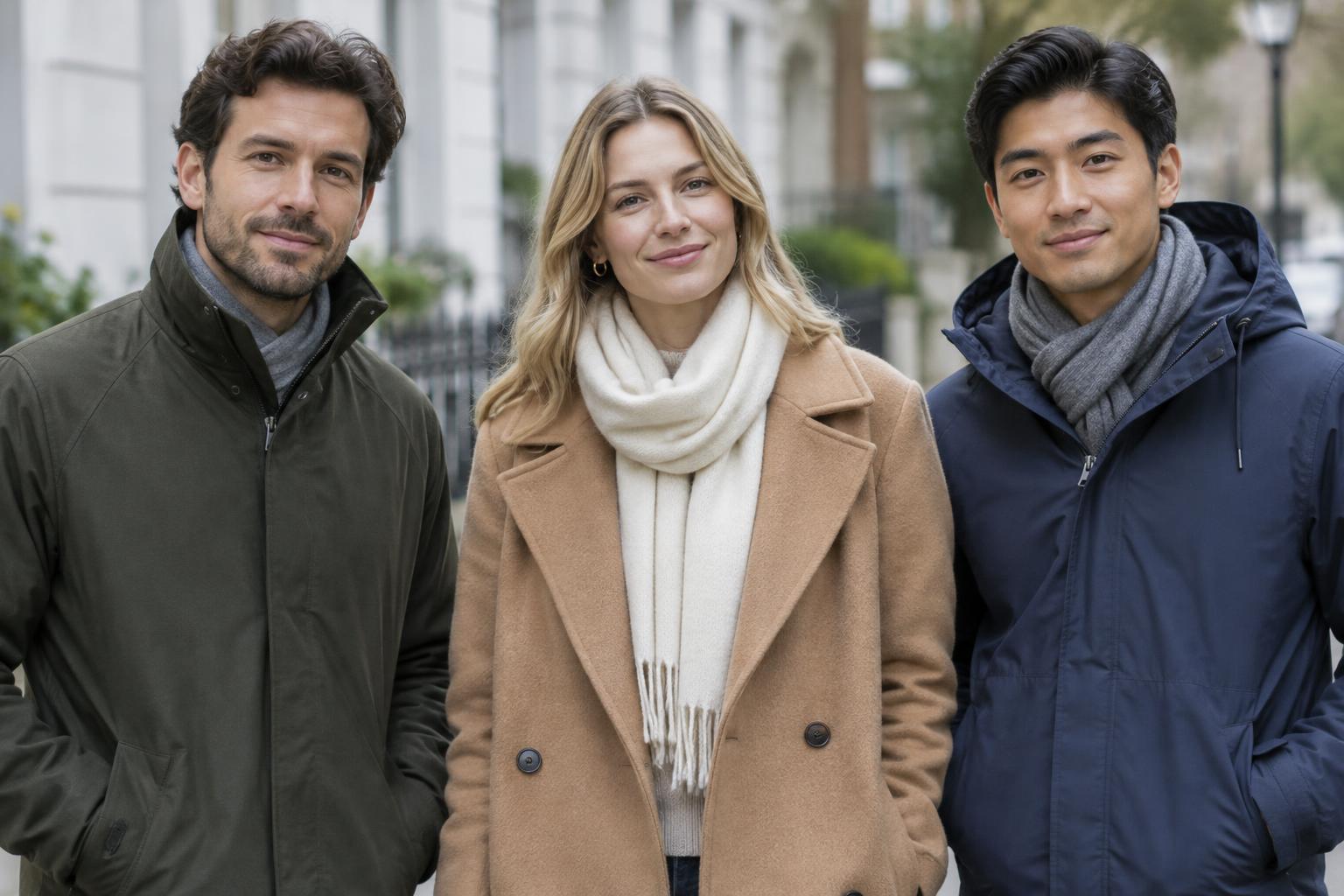
A stand collar, funnel neck or zipped-up jacket already frames the neck. Adding a large loop of scarf on top can make the area feel crowded and may stop the collar sitting as intended. Try a soft, relatively narrow scarf in a single loop, with the ends hanging down inside the jacket. A thin woven scarf can also be folded into a compact band and tucked just inside the opening.
If the jacket is roomy enough, a lighter scarf worn beneath it can provide coverage without changing its outline. If the collar fits closely, consider leaving the scarf off when the jacket is fully fastened and carrying it for times when the jacket is open. There is no need to force both pieces into the same small space. When trying a combination, zip or button the coat and move naturally; a scarf that works only while you stand still is unlikely to be an easy everyday choice.
Use open lapels to frame fuller scarves
Coats with open lapels create a V-shaped area that can hold a little more fabric. A medium-weight scarf draped down the front follows the lapel lines without covering them. For more coverage, make one loose wrap and let the ends fall within the opening. This fills the space while keeping the coat’s shape visible.
A wide or plush scarf can work particularly well over a simple coat, but placement makes a difference. Keep the fullest part in the open area rather than stacking it directly under the jaw. If you want to close the coat, test the scarf beneath the lapels first; a thick knot at the fastening point may cause the front to pull. On a coat with broad or prominent lapels, a flatter fold may give a calmer result than a large knot. You can adjust the volume by folding the same scarf lengthwise rather than buying a different one.
Adapt the wrap for hoods and simple collars
A hood adds fabric behind the neck, so a bulky scarf wrapped outside it can build up quickly. If you use the hood, try a low-profile scarf tucked inside the jacket, leaving the back of the neck clear enough for the hood to sit comfortably. If the hood stays down, place a single scarf loop in front and check that it does not press the hood against your shoulders. A smooth fabric is often easier to arrange here than a thick, springy knit.
By contrast, a collarless jacket or one with a plain round neckline offers an open canvas. A fuller scarf can supply the shape and coverage the jacket lacks. A loose loop, a broad folded triangle or a drape with unequal ends can each change the outline. Choose the arrangement that works with the jacket’s length and your preferred proportions. With a short jacket, for example, letting long scarf ends hang well below the hem creates a different effect from tucking them neatly inside.
Fine-tune volume without changing your wardrobe
You can make one scarf serve several necklines by changing how much fabric gathers in one place. Fold it lengthwise for a narrower band, use one wrap instead of two, or leave the ends untied. To add presence at an open neckline, unfold it, loosen the loop or spread the fabric across the chest. Fabric also affects the result: a soft, thin weave tends to compress, while a chunky knit holds its shape.
Look at the whole outfit before settling on a wrap. If the coat has large buttons, a textured collar or a bold pattern, a quieter scarf shape may let those details breathe. If the outerwear is simple, the scarf can take a larger visual role. Most importantly, check the combination as you will wear it: coat open or closed, hood up or down, scarf tucked or exposed. A good choice is one you can put on easily and leave in place comfortably throughout the day.