Start with the shoe, then choose the sock
A useful sock choice begins with the shoe’s shape and how you plan to wear it. Check where the shoe touches your foot and ankle: a low-cut trainer may need a different sock from a boot that rubs against the lower leg. Also consider whether you want the sock to disappear, blend into the outfit or become a visible detail.
Length and fabric work together. A sock can be the right height but feel bulky inside a close-fitting shoe, or have a comfortable fabric but slip below the heel. Try socks with the shoes you actually wear, rather than judging them on their own. If the combination makes the shoe feel tight, bunches around the toes or slides down as you walk, a different thickness or fit may help.
Match sock length to shoe height
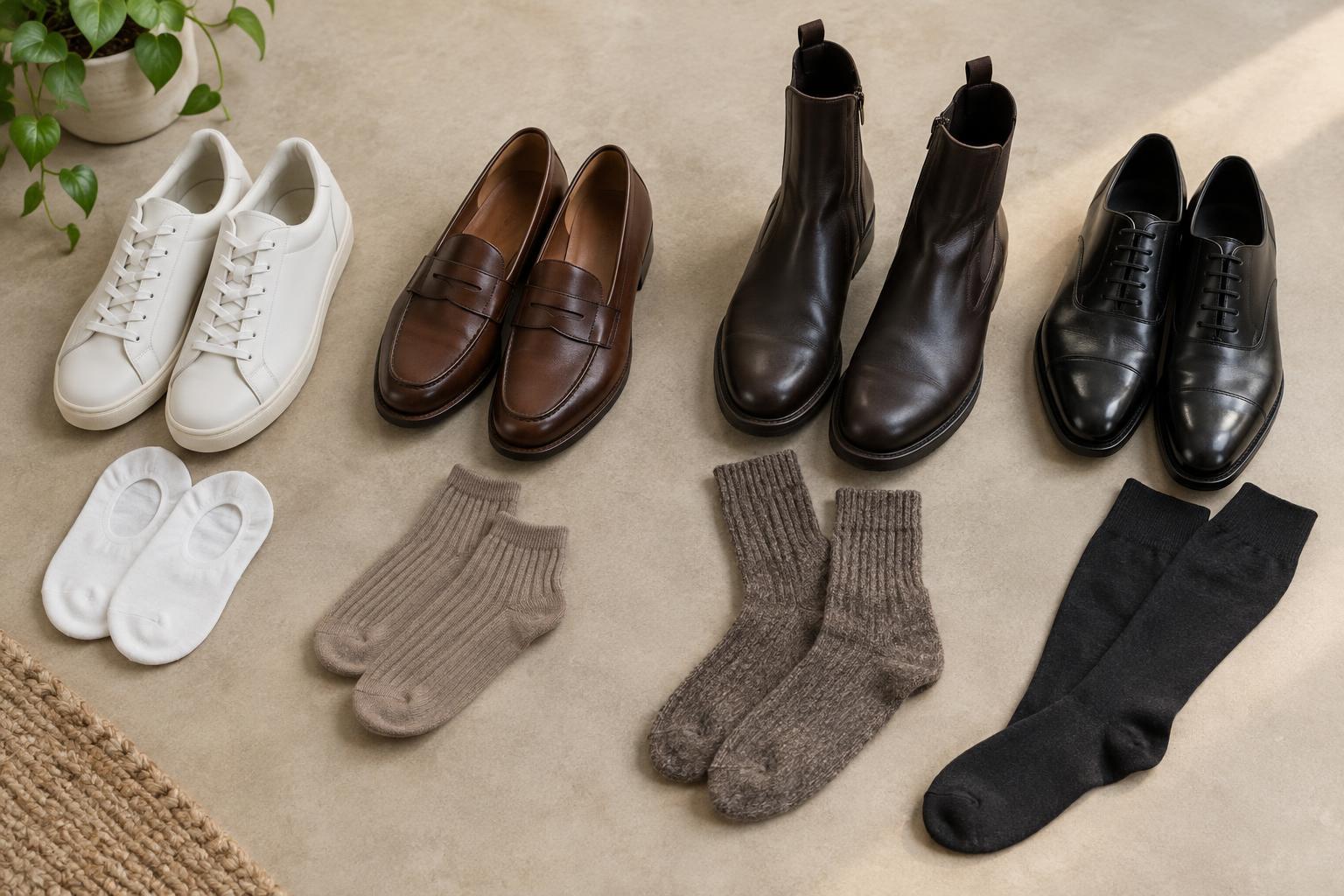
No-show socks sit below the shoe opening and suit low-cut trainers or loafers when you prefer a bare-ankle look. They should cover enough of the heel to stay in place; a pair that vanishes neatly but keeps slipping is rarely worth the adjustment. Ankle socks rise above the shoe opening and are a practical option with trainers, especially when the collar might otherwise rub.
Crew socks reach partway up the calf and pair easily with high-top trainers, everyday boots and many casual shoes. They offer space for colour or pattern without demanding much attention. For taller boots, choose socks that reach above the boot’s edge so the top does not press directly against your leg. With dress shoes and trousers, a longer sock can keep the leg covered when you sit down, if that is the look you want.
These are starting points, not strict rules. A visible white crew sock with loafers can look deliberate in a relaxed outfit, while a dark sock close to the trouser colour creates a quieter line. The key is to make the visible portion look chosen rather than accidental.
Choose fabric for comfort and shoe fit
Cotton socks are familiar and comfortable for many everyday outfits, but thick cotton can hold onto moisture and take time to dry. A lighter cotton blend may be more comfortable in snug shoes. Wool and wool blends can offer warmth without requiring a very thick sock, making them useful with boots and during cooler weather. If wool feels irritating against your skin, look for a smoother blend or choose another fabric.
Synthetic fibres vary, but they can add stretch, help a sock hold its shape and, in some constructions, move moisture away from the skin. That can be useful for long walks or shoes worn for hours at a time. Fabric alone does not tell the whole story: seams, cushioning and knit density also affect how a sock feels. A cushioned sole may be welcome in roomy trainers but uncomfortable in fitted loafers or dress shoes.
When comparing pairs, notice where the elastic sits and whether the toe seam presses against your foot. A sock should stay up without digging in. If a favourite shoe fits closely, changing to a thinner sock may work better than simply buying a different fabric.
Everyday pairings that are easy to adjust
For casual trainers, start with ankle or crew socks in a breathable, comfortable blend. Choose no-show socks if you want the shoe to stand out on its own, or use crew socks to echo a colour already present in your outfit. With loafers, thin no-show socks create a low-profile look, while fine crew socks make a visible pairing without adding too much bulk.
For boots, crew or taller socks usually offer more coverage at the ankle and leg. Match their thickness to the available space inside the boot; extra padding is not helpful if it makes your toes feel cramped. With dress shoes, a smooth, relatively thin sock often sits neatly under the shoe and trouser. A plain shade is easy to coordinate, but a restrained pattern can add interest when it appears as you move.
Build a small sock selection that works
You do not need a separate sock for every pair of shoes. A few reliable lengths in fabrics that suit your feet and climate will cover many outfits. Keep the pairs you reach for most in colours that work with your usual shoes and trousers, then add a pattern or brighter shade if you enjoy making socks part of the look.
After wearing a new pairing for a full day, note what worked. Did the sock stay up? Was the shoe still comfortable by the end of the day? Did the visible edge look right with your trousers or hem? Those small observations are more useful than a rigid rule, and they make future choices quicker.