Start with the whole outfit
Matching shoes and a bag exactly can create a tidy look, but it is not a requirement. The more useful question is whether both pieces make sense with the clothes you are wearing. A dark bag and light shoes, for example, can feel balanced when the outfit contains both dark and light elements. Before changing either accessory, look at the outfit from head to toe rather than comparing the bag directly with the shoes.
Decide what you want each piece to do. Shoes might be the quiet foundation of an outfit while a bag adds colour, or the bag might blend in while the shoes draw attention. Letting one piece take the lead is often easier than trying to make both equally noticeable. This works especially well when getting dressed from a small wardrobe: you can use what you already own without searching for a perfect match.
Give different colours a shared connection
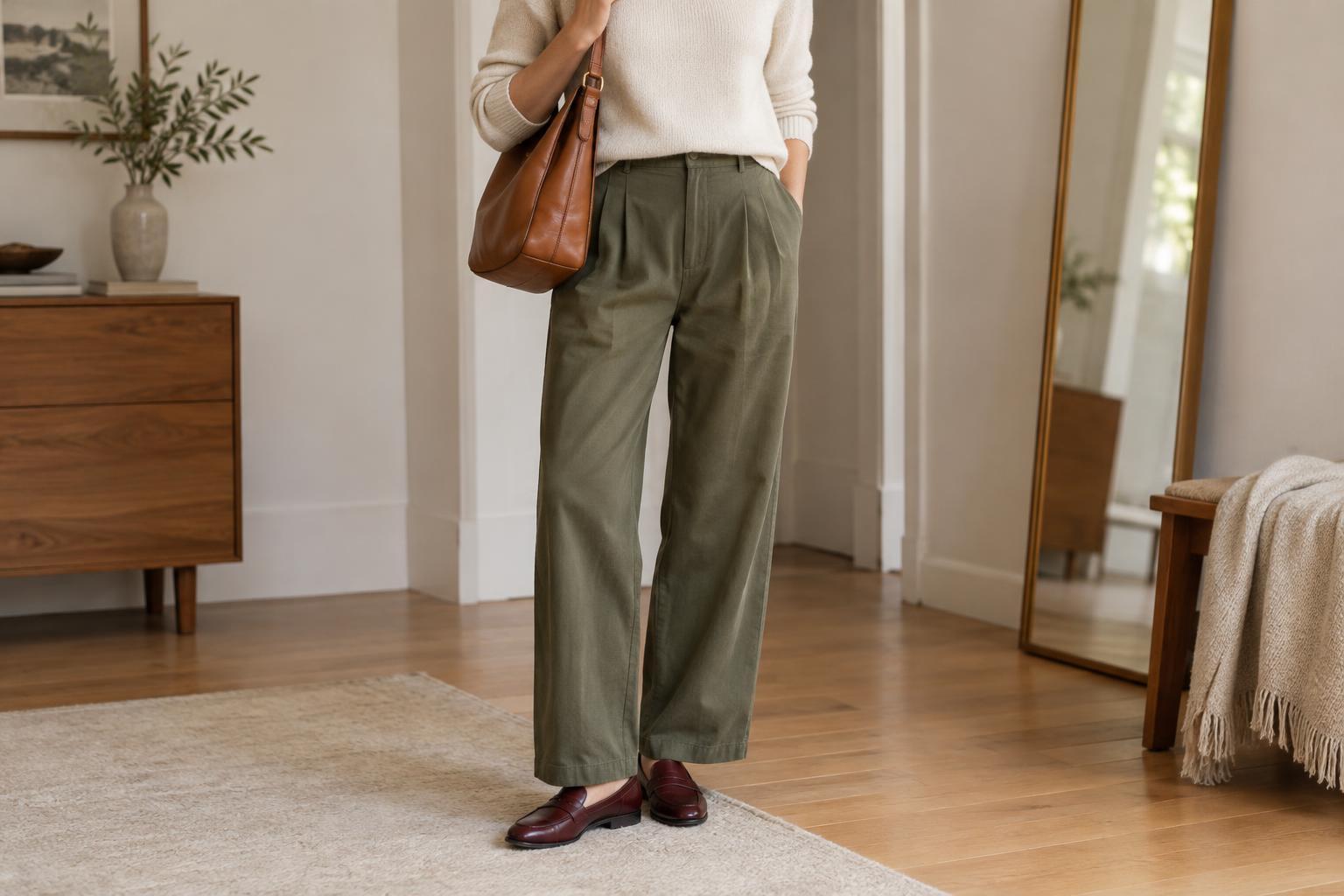
A simple way to coordinate shoes and bags is to choose colours that relate to something else in the outfit. Black shoes can sit comfortably with a burgundy bag if the clothing includes a deep red, charcoal or similarly muted tone. Tan shoes and a navy bag can work with jeans and a cream shirt because both accessories belong to an easy, understated palette. The colours do not need to repeat; they need a reason to be there.
If the clothes are mostly neutral, consider the strength of each accessory colour. A vivid green bag with quiet brown or black shoes gives the eye one clear focal point. Two strong colours can also work, but a calmer outfit gives them more room. When a combination feels busy, try swapping just one item for a softer shade rather than replacing everything.
Use contrast on purpose
Contrast can look more deliberate than a near-match. White trainers and a black bag, or dark loafers and a light canvas tote, create a clear difference that is easy to understand. You can make the contrast feel connected by repeating light and dark elsewhere: a white shirt with dark trousers, for instance, gives both accessories a place in the outfit.
Be more attentive when two colours are almost, but not quite, the same. Different shades of brown or beige are not automatically a problem, yet they may stand out if both items are similar in size and finish. Try wearing them with clothing that includes a range of warm neutrals, or add a scarf or belt that bridges the shades. You can also lean into the difference and treat one shade as light and the other as dark.
Consider texture and level of dress
Colour is only part of the picture. A structured leather bag and polished shoes can feel connected even when their colours differ, because both have a refined finish. Likewise, a relaxed fabric tote can make sense with canvas trainers or casual sandals. Think about whether the pieces suit the same kind of day, not whether they were made from the same material.
They do not have to share exactly the same level of formality. A simple, neat bag can soften the look of dressier shoes, and clean trainers can make a tailored outfit feel more relaxed. If the pairing seems off, check whether one accessory is noticeably more worn, ornate or practical than everything else. Changing the surrounding clothes may bring the outfit together without requiring a different bag or pair of shoes.
Build a few reliable combinations
You do not need a separate bag for every pair of shoes. Instead, identify a few combinations you enjoy wearing with your usual clothes. You might pair black boots with a tan crossbody bag for everyday outfits, cream trainers with a navy tote for casual days, and brown loafers with a dark green bag when you want a little more colour. These are starting points, not rules.
When testing a new pairing, put on the complete outfit and check it in natural light if possible. Notice whether your attention moves comfortably around the outfit or gets stuck on one item. If something feels disconnected, try changing one colour, adding a familiar layer or choosing a quieter accessory. Over time, keeping track of combinations that feel like you is more useful than following a matching formula.