Start with the days you actually dress for
An outfit formula is a simple pattern you can use again: a type of top, a type of bottom, a layer and a pair of shoes that work well together. It is not a fixed outfit or a rule about what you should wear. Think of it as a starting point that saves you from making every choice from scratch.
Before choosing formulas, look at a typical week. You might need comfortable clothes for working at home, practical outfits for errands and something a little more polished for meeting people. Pay attention to where you go, how much you move and what the weather usually demands. A formula earns its place when it suits a real part of your routine, not just a look you admire.
Find combinations that already work
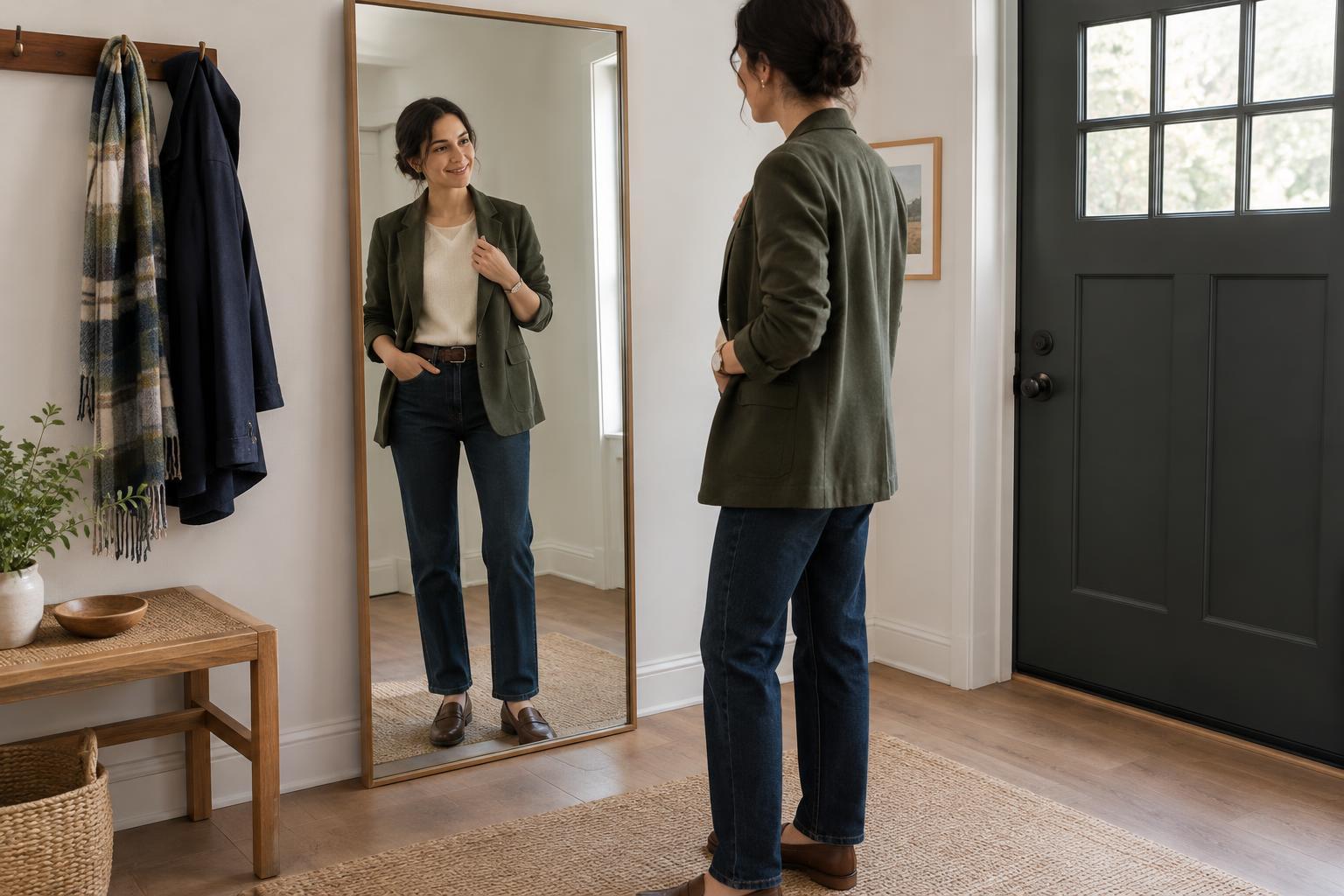
Begin with two or three outfits you enjoy wearing. Instead of listing the exact garments, describe the structure of each one. “Relaxed shirt, straight-leg trousers, simple shoes” is more useful than “blue shirt and black trousers” because it leaves room for substitutions. Other possible formulas include “fitted top, loose skirt, flat shoes” or “T-shirt, jeans, lightweight jacket, trainers.” Choose shapes that feel comfortable and let you move through your day.
Notice why each combination works for you. Perhaps a shorter top balances a fuller bottom, or an open overshirt makes a plain base feel finished. Your preferences matter more than a universal rule about proportions. If a favourite outfit depends on a garment you rarely want to wear, it may not be a useful everyday formula. Look for combinations you would willingly repeat.
Give each formula an easy colour plan
A small colour plan can make a formula quicker to assemble. One approach is to pair a familiar neutral with a colour you enjoy: navy trousers with a green top, for example. Another is to keep the main garments close in colour and add contrast through shoes, a scarf or a bag. You do not need a perfectly coordinated wardrobe; you need a few pairings you know you like.
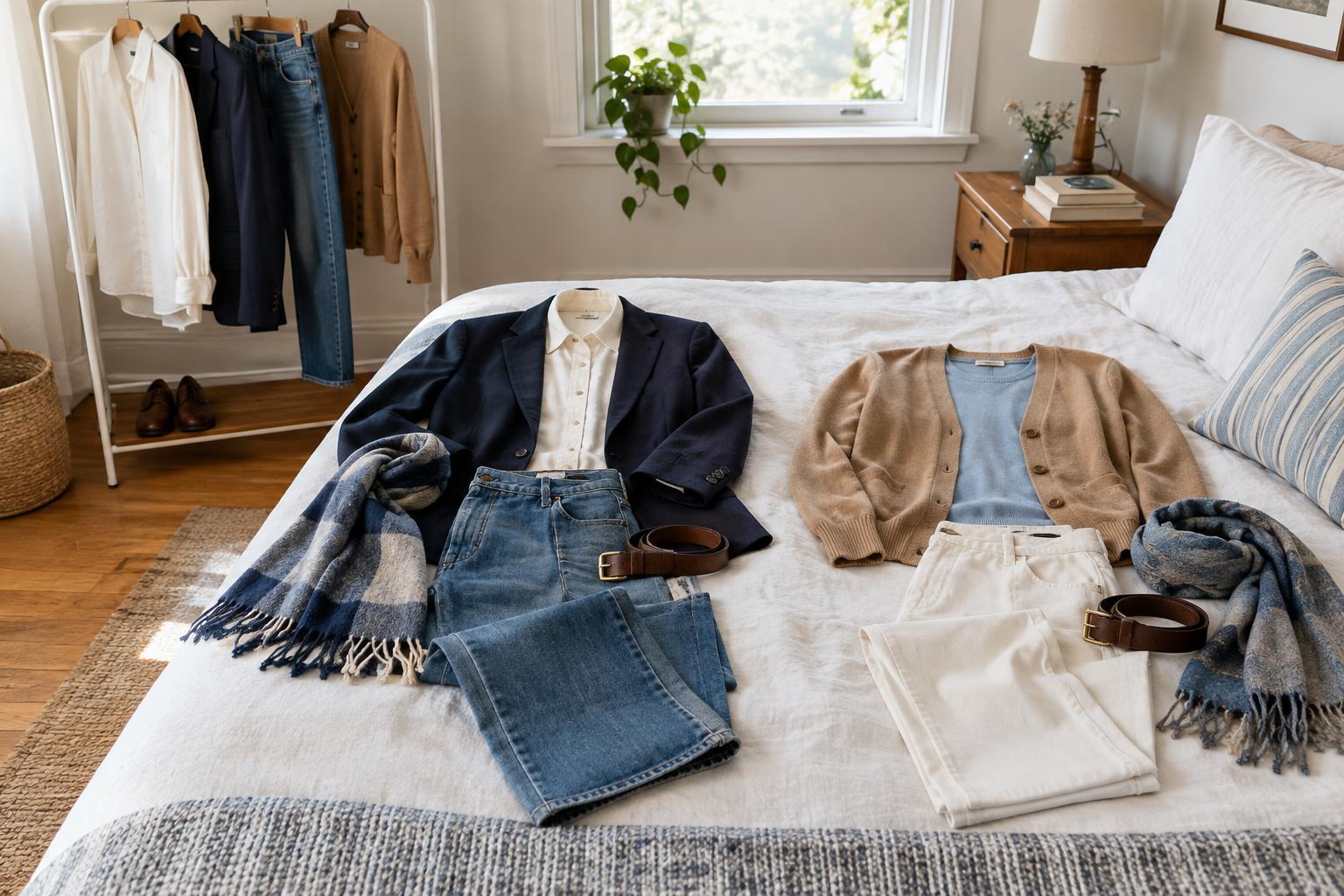
Try writing down two colour options for each formula. A shirt-and-trousers formula might work with a light shirt and dark trousers, then again with a dark shirt and trousers in a softer neutral. If you are unsure about a combination, put the pieces together in good light before the morning you plan to wear them. This small trial helps you spot whether a colour, print or contrast feels right to you.
Build in variations without adding decisions
The best formulas can adapt to temperature and occasion. Keep the core combination the same, then change one element at a time. Swap trainers for loafers, add a cardigan instead of a jacket, or choose a patterned scarf with otherwise plain clothes. This creates variety while preserving the part of the outfit you already know works.
Accessories are most helpful when they have a purpose. A scarf can add warmth or bring a preferred colour near your face; a belt can change the shape of a loose outfit; a bag can carry what the day requires. You do not have to add an accessory to make an outfit complete. If a formula feels comfortable and appropriate without one, leave it as it is.
Test your formulas, then keep only the useful ones
Choose three formulas to try over the next few times you get dressed. Keep a brief note of the pieces you used and anything that bothered you. Maybe a layer felt too warm, a shoe choice did not suit your route, or a top needed more adjusting than you wanted. Those details tell you more than whether an outfit looked good on a hanger.
Once you know which formulas work, make them easy to use. Store suitable pieces where you can see them, and keep clean alternatives available when possible. You could also take a photo of a combination you would like to repeat. Revisit your formulas when your routine, the season or your preferences change. The goal is not to wear the same thing every day; it is to have a dependable way to begin.