Work out what feels busy
A busy outfit is not necessarily a bad outfit. Some people enjoy layered patterns, bright colour and plenty of accessories. The question is whether the pieces work together in a way you like. If you feel distracted when you look in the mirror, pause before changing everything. Try to identify what draws your eye first, where it goes next and whether there is a clear place for it to rest.
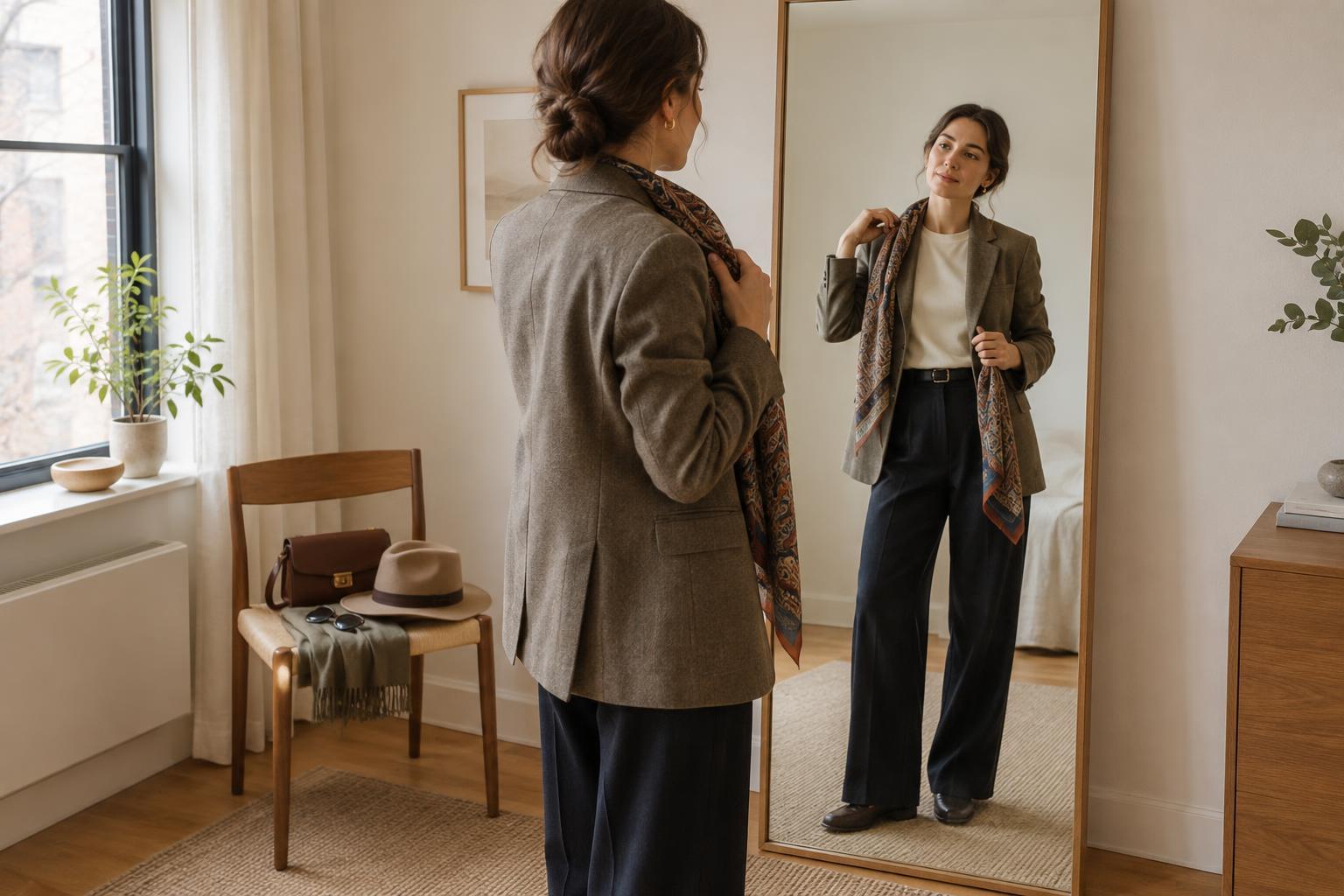
Look at the outfit from a few steps away as well as up close. Notice its colours, prints, shapes, textures and details, including shoes and a bag. You might find that each piece works on its own, but several are asking for attention at once. Or the issue may be practical: a scarf hides a neckline you wanted to show, or a long jacket covers the shape of your trousers. Naming the specific problem makes editing easier than deciding the whole outfit is wrong.
Choose one thing to lead
Pick the part of the outfit you most want to keep. It could be a patterned shirt, colourful trousers, a striking scarf or an interesting silhouette. Treat that piece as the focal point, then ask the other items to play a quieter role. If a printed skirt is the feature, a simpler top may give its pattern room to stand out. If your accessories are the feature, straightforward clothing can provide a useful backdrop.
You do not have to make every supporting piece plain. A subtle texture, a small repeated colour or an understated print can connect the outfit without competing with its focal point. Try removing one noticeable element at a time rather than changing several pieces together. Set aside a necklace, switch the bag or take off an extra layer, then look again. This helps you see which edit actually makes a difference.
Simplify the overall shape
Sometimes the outfit feels busy because several pieces create strong shapes. A wide top, full trousers, chunky shoes and an oversized bag can each add visual weight. If you want a calmer look, try changing just one proportion: tuck or half-tuck a top, choose a shorter outer layer, or swap a bulky bag for a less prominent one. The aim is not to follow a fixed rule about what shapes you should wear. It is to make the outline feel intentional to you.
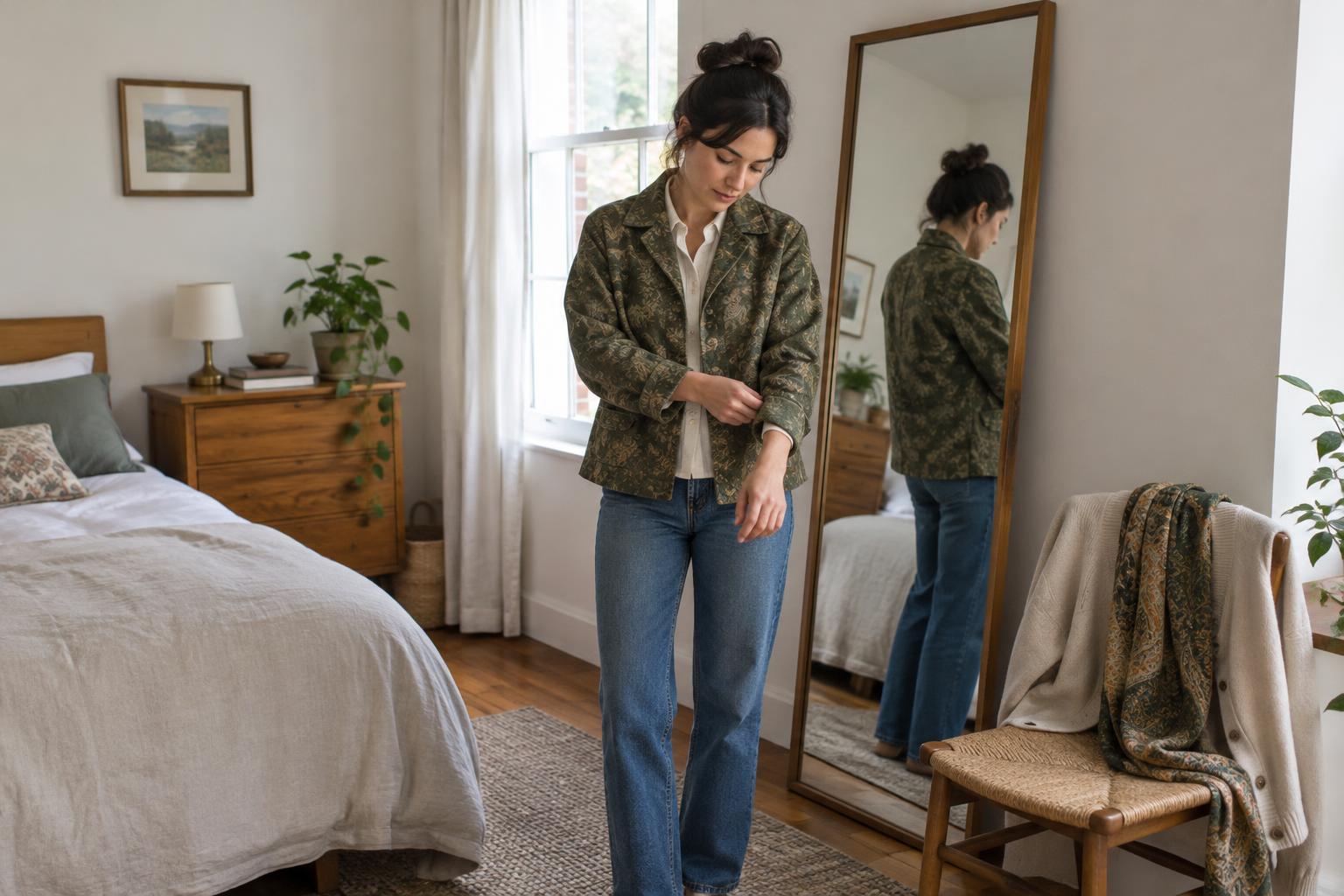
Layers can also obscure the parts of an outfit that hold it together. Before replacing anything, adjust what you already have. Open a jacket, roll a sleeve, loosen a tightly wrapped scarf or let the hem of a shirt show. A small change may reveal a clearer line and make the outfit easier to read. Check that the result still feels comfortable for the day ahead; an edit that needs constant adjustment is unlikely to be helpful.
Give colours and patterns some breathing room
Colour can make an outfit feel lively, but several unrelated colours may compete when they appear in similar amounts. One way to edit is to choose a main colour, a supporting colour and, if you like, a smaller accent. You can often do this without replacing the key garment: change a scarf, bag or pair of shoes so it repeats a colour already present. Repetition gives the eye a connection between separate pieces.
With prints, look beyond whether they technically match. Consider their scale, contrast and placement. Two bold prints next to each other create a different effect from a bold print paired with a fine stripe or a lightly textured fabric. If you enjoy the combination, keep it. If it feels crowded, make one print less prominent by changing a layer or accessory. A quiet section of solid colour can give patterned pieces space without making the outfit dull.
Make a final edit that still feels like you
Once you have made a change, stop and check the whole outfit rather than continuing to remove details out of habit. Ask whether your chosen focal point is visible, whether you can move comfortably and whether the outfit suits what you plan to do. An outfit does not need to be minimal to look considered. A collection of jewellery or a mix of prints may be exactly what makes it feel personal.
If you are unsure, take note of the version you prefer and why. Perhaps changing the shoes brought balance, while removing the scarf made the outfit feel unfinished. That observation is more useful than a universal rule: it helps you make quicker choices the next time an outfit feels crowded. Editing is simply a way to bring the parts you love into focus.