Start with what you actually reach for
Personal style does not have to begin with a label such as minimalist, classic or romantic. A more useful starting point is the clothing you put on when you want to feel comfortable and ready for the day. Those choices reflect your routines, preferences and practical needs. They may tell a different story from the pieces you admire in a shop but rarely wear.
Choose five to ten outfits you have worn recently and would happily wear again. Include ordinary days, not only occasions when you made a special effort. If you cannot remember each outfit, look at photos or lay out the pieces you use most often. Write down complete combinations, including shoes, outerwear and accessories. A pair of trousers may feel entirely different with trainers and a relaxed shirt than it does with polished shoes and a fitted top.
Look for the details that repeat
Once you have a small collection of outfits, look for patterns without trying to judge them. Do you prefer loose layers or a defined waist? Crisp fabrics or soft ones? Quiet colours or noticeable contrast? Perhaps you repeatedly choose straight-leg trousers, an open neckline and a scarf near your face. These recurring details are more informative than any single favourite item.
Pay attention to proportions as well as individual garments. You might like a roomy top with a narrow bottom, or a short jacket over a longer dress. Notice how much detail feels right to you: some people enjoy a patterned scarf and earrings together, while others feel best with one accent. Even small habits, such as rolling sleeves or leaving a shirt untucked, can reveal how you prefer an outfit to sit and move.
Separate what you like from what works for your day
The outfits you wear most often are shaped by circumstances. A workplace dress code, weather, walking distance or laundry routine can all influence your choices. Ask two questions about each outfit: “Do I enjoy how this looks?” and “Does it make my day easier?” An outfit can answer yes to one and no to the other. That distinction helps you avoid mistaking convenience for preference, or treating an impractical favourite as something you should wear every day.
Think about the moments when you change clothes immediately after getting home, adjust a garment throughout the day or avoid a pair of shoes despite liking its appearance. These are useful clues, not failures of taste. Your style can include the colours and shapes you love while making room for the comfort and care requirements you can realistically manage.
Describe your style in your own words
Try writing a short description based on what you have noticed. For example: “Relaxed shapes, simple colours and one expressive accessory,” or “Neat layers with soft fabrics and comfortable shoes.” This is a working description, not a rule. It should help you recognise an outfit that feels familiar and appealing, even when the individual pieces are different.
Then identify two or three reliable outfit formulas. A formula might be wide-leg trousers, a close-fitting top and a short jacket; another might be a simple dress, flat shoes and a colourful scarf. Keep the formulas broad enough to adapt to different seasons or occasions. They give you a starting point on busy mornings without requiring every outfit to look the same.
Test small changes before buying more
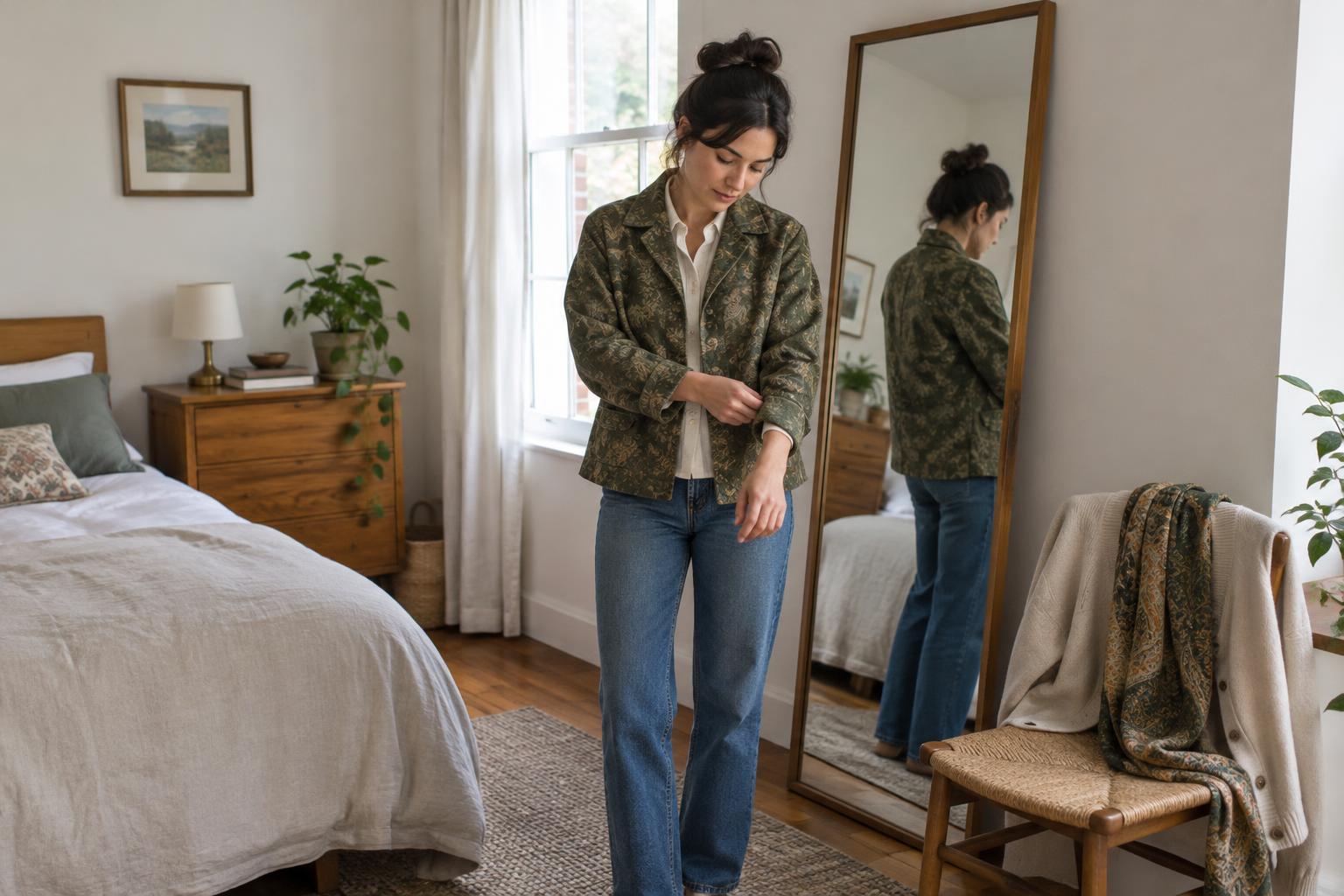
Use the clothes you own to see which parts of your description hold up. Swap the shoes in a favourite outfit, try a different colour combination or wear an accessory you usually save for special occasions. Change one element at a time so you can tell what makes the difference. A quick mirror photo can help you compare combinations, but how you feel wearing them for several hours matters just as much.
Keep a note of what you repeat and what stays unworn. If you consider adding something to your wardrobe, ask whether it works with your existing outfit formulas and whether you would enjoy wearing it in your real life. Your personal style is not a finished list of approved items. It is a set of preferences you can keep refining as your routines and tastes change.