Start with the scarf and the outfit underneath
A scarf’s tendency to move depends on more than how tightly you tie it. Smooth fabrics, such as silk or satin, can slide against a smooth coat lining or a slippery blouse. A textured scarf may stay put more easily, but its surface can catch on rough fastenings. Before adding a clip or making a tighter knot, notice where the scarf moves: does it slip off a shoulder, loosen at the neck or slide out from under a coat?
Try changing the surface beneath it first. A scarf laid over a cotton top or knit sweater may grip better than one laid over a slick jacket. If the scarf is part of an outdoor outfit, putting it beneath the coat collar can help hold it in place without fastening the scarf itself. Check that the collar does not press hard on a delicate weave or leave the scarf bunched at the neck.
Use folds and knots that distribute pressure
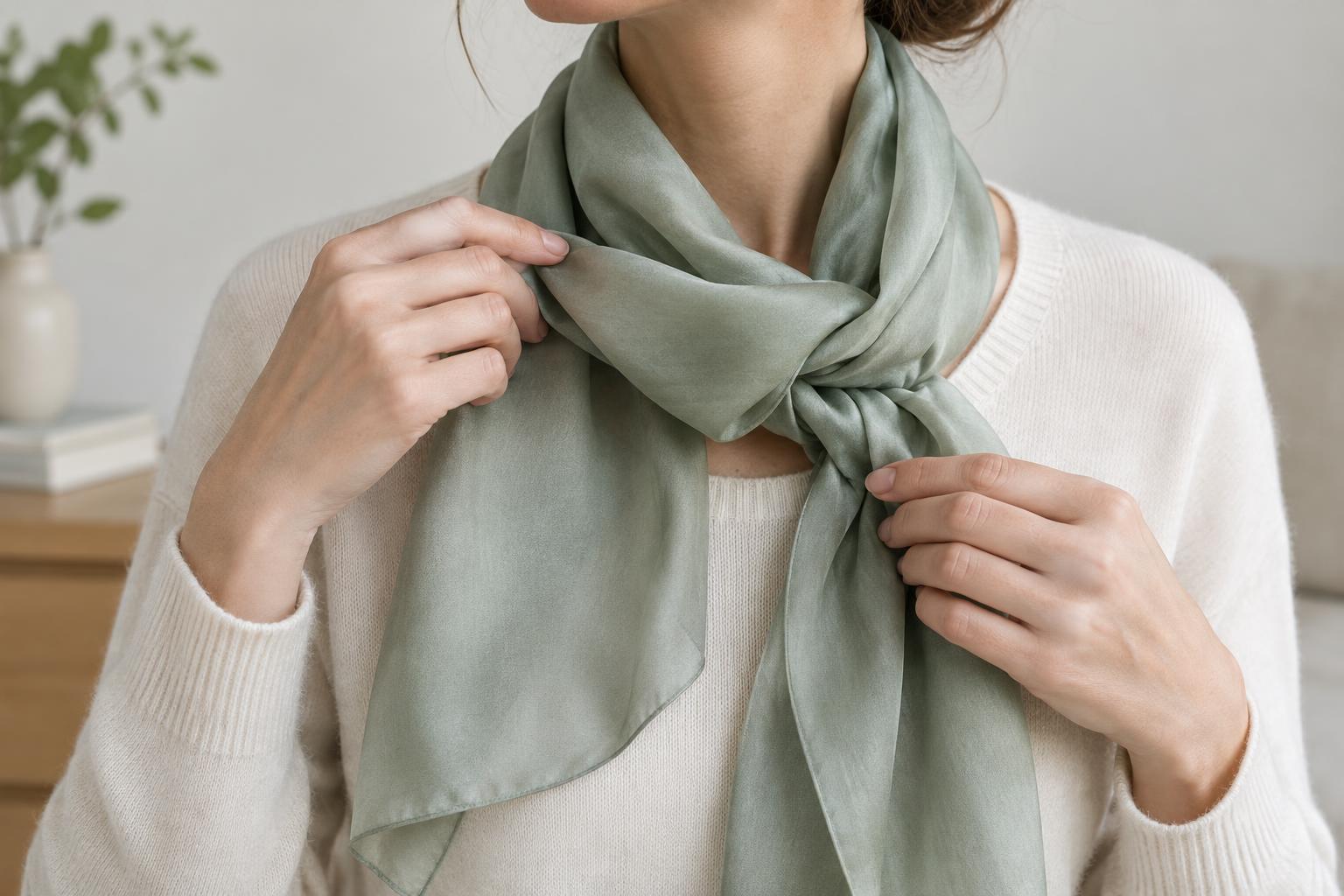
For a long scarf, fold it lengthwise before wrapping it around your neck. A narrower fold is easier to arrange and is less likely to spread across your shoulders as you move. Bring both ends forward and try a loose, simple knot, adjusting it until it rests comfortably rather than pulling it tight. If the ends are uneven, the longer one may gradually drag the scarf to one side; starting with more even lengths can help.
A loop-through style can work well for a soft rectangular scarf: fold it in half, place it around your neck and pass the ends through the loop. Leave enough room for the fabric to move comfortably. For silk or loosely woven scarves, avoid repeatedly tightening a small knot in the same spot. A broader, looser fold spreads the pressure and is often easier to undo without tugging on individual threads.
Choose accessories that touch fabric gently
A scarf ring can hold folds together without a knot, provided its edges are smooth and its opening suits the scarf’s thickness. Slide the fabric through slowly rather than forcing a bulky section into a narrow ring. Before wearing a ring or clip, run a finger around its edges and check for rough seams, exposed teeth or sharp corners. If it catches your skin, it may catch a fine scarf too.
If you want to use a brooch, fastening it to a sturdy coat lapel or sweater beside the scarf is generally gentler than piercing the scarf itself. Arrange the scarf under or around the brooch so the garment carries the pin. Be cautious with magnetic holders, too: they should not be so heavy that they drag on a light scarf, and they should not be used where they could interfere with a medical device. When in doubt, use a fold or knot instead.
Place the scarf for the way you move
A scarf can look secure in the mirror and still shift when you put on a bag, turn your head or sit down. Once you have arranged it, make a few ordinary movements and check where the ends fall. If a shoulder bag repeatedly pushes one end backward, bring both ends to the front or place the scarf beneath the bag strap. This may be more effective than adding another fastening.
For a square scarf worn at the neck, keep the point or folded edge centred before tying the ends. For a larger scarf draped over the shoulders, fold it into a narrower shape and tuck one end beneath the opposite side or under a coat lapel. These arrangements rely on overlapping fabric rather than a firm grip. They may need an occasional adjustment, but they let the scarf move with you instead of putting strain on one small area.
Prevent snags when adjusting and storing
Take a moment to loosen a knot or remove a scarf ring before pulling the scarf off. If fabric catches, stop and find the point of resistance rather than tugging harder. Rings, zips, hook-and-loop closures and rough bag hardware can all snag a scarf while you wear it. Keeping the scarf clear of these details is especially useful for fine knits and open weaves.
After wearing, let the scarf settle back into shape before storing it according to its care label. Folding it loosely or laying it flat can avoid leaving a tight knot in place between wears. The best method is the one that keeps the scarf comfortable during your day and leaves the fabric easy to handle afterward. If an arrangement needs constant tightening, try a different fold, placement or layer underneath rather than adding more pressure.