Start with the print you want to wear
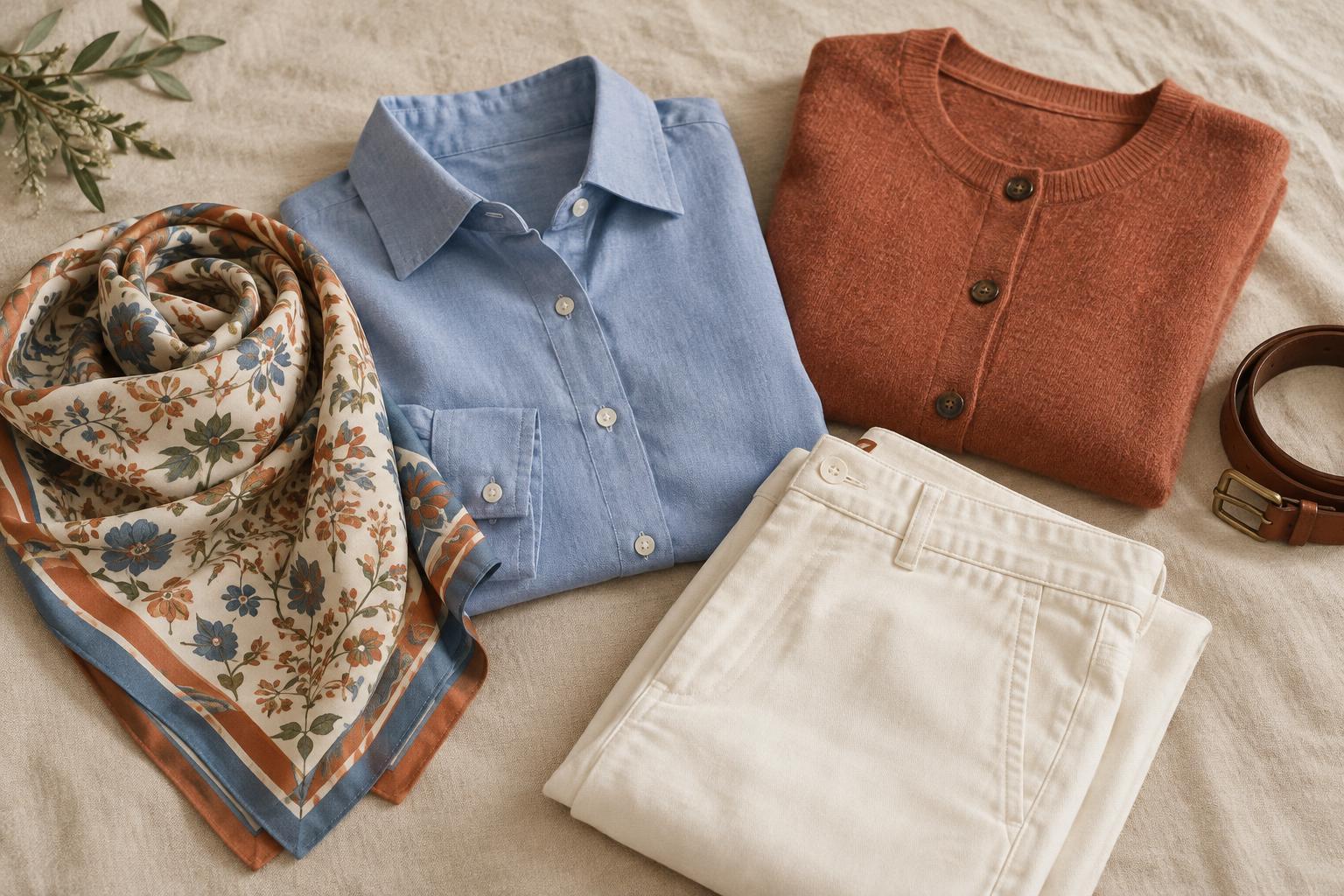
A printed piece can give an outfit direction before you choose anything else. Lay out the patterned shirt, skirt, dress or scarf and notice its background colour, its most visible colour and any smaller accent colours. You do not need to use all of them. Treat the print as a small palette from which you can choose one or two solids.
It also helps to notice how busy the print feels from a few steps away. A widely spaced stripe may read as calm, while a dense floral may draw attention quickly. Neither is harder to wear, but they may call for different partners. A quiet print leaves room for a stronger solid colour; a busy print often looks balanced beside a simpler, less attention-grabbing piece.
Pull a solid colour from the pattern
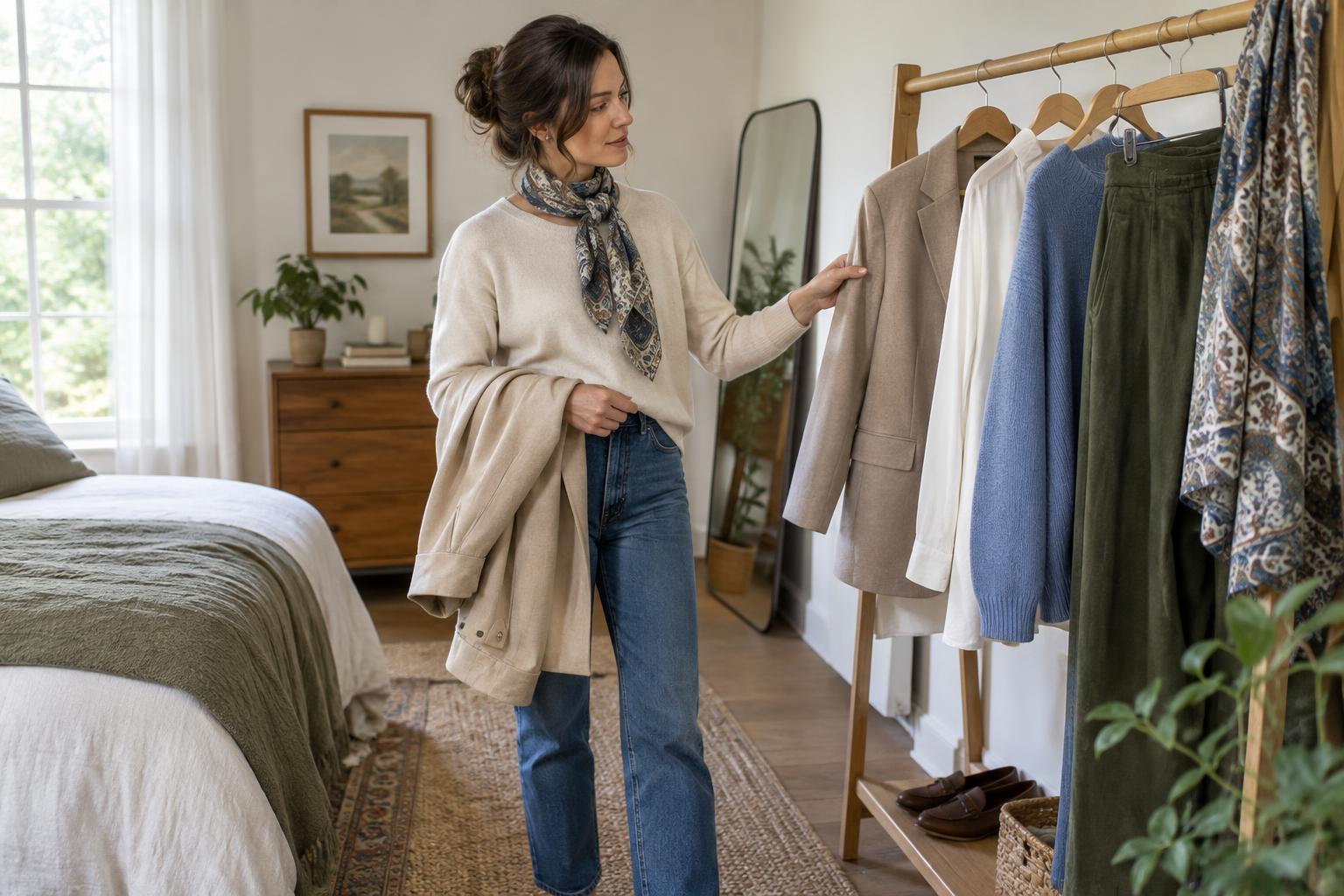
The most direct pairing is a solid that repeats a colour already in the print. If a scarf has a navy background with small cream and rust details, a navy top will make the scarf feel connected to the outfit. A cream top will bring out the lighter details, while rust trousers or a rust bag will make a smaller colour more noticeable. Each choice changes the emphasis without requiring a new palette.
The solid does not have to be an exact match. Similar shades can work together, especially when they are separated by another item: for example, a deep blue patterned blouse with medium blue jeans. If two near-matching pieces sit directly against each other and the difference looks accidental to you, try a clearly lighter or darker shade instead. Look at the whole outfit in ordinary light rather than judging colours one garment at a time.
Use neutrals when you want the print to lead
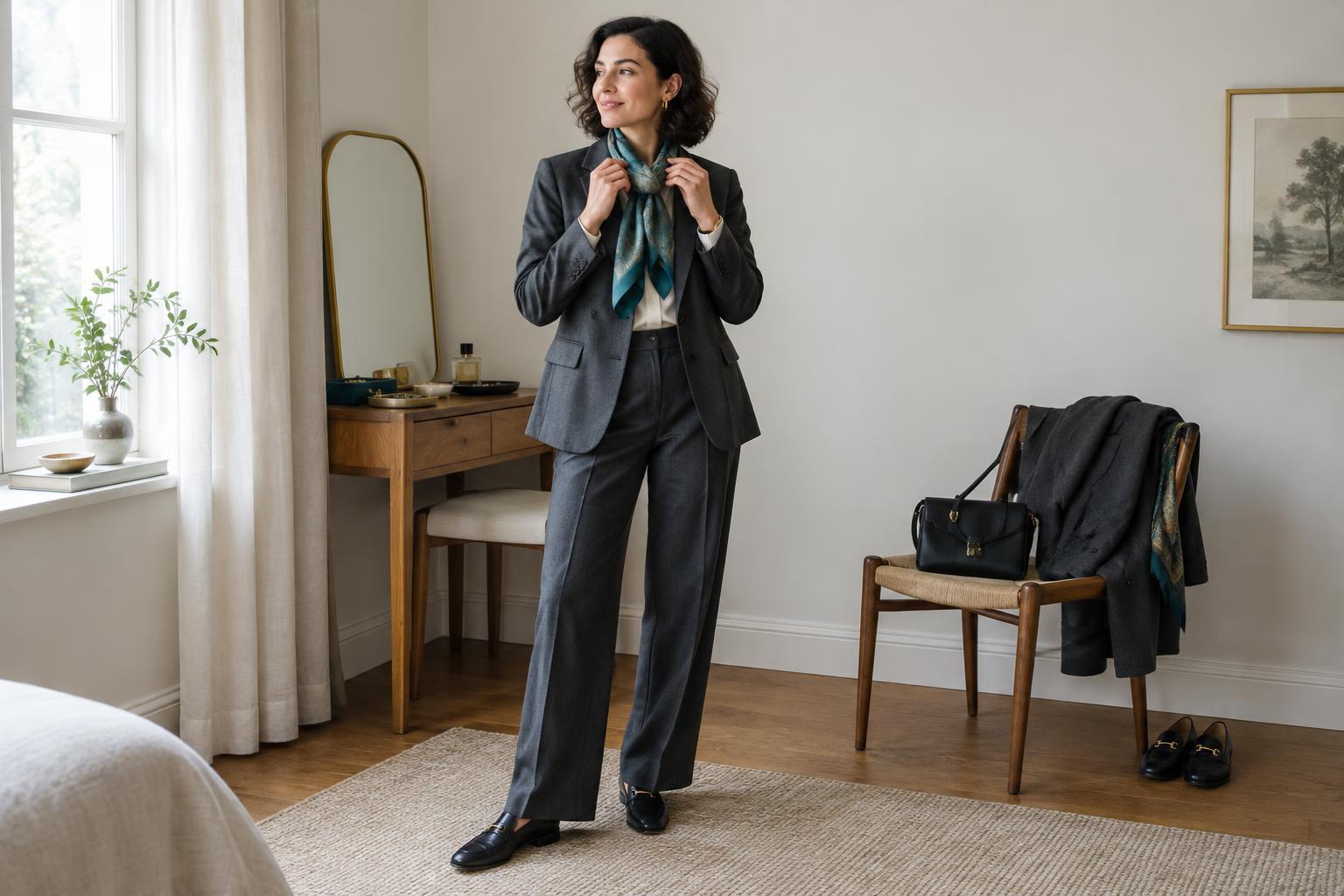
A neutral solid gives the eye a place to rest. Black, white, grey, navy, brown, cream and denim can all serve this purpose, depending on the print and your wardrobe. The best choice is not always black: a soft cream trouser may suit a light botanical print better than a stark black one. Likewise, a dark patterned skirt may feel more grounded with charcoal or navy.
If the outfit seems disconnected, check whether your neutral relates to something else you are wearing. Tan shoes can echo a warm colour in a print even when your trousers are plain denim. A navy jacket can repeat the background of a patterned top. These small connections are useful, but they are optional; a print and a solid do not need to match at every point to make a comfortable outfit.
Balance contrast, colour strength and placement
A solid can either calm a print or make it stand out. For a gentle effect, choose a solid with a similar depth of colour: a muted green blouse with a softly coloured patterned skirt, for instance. For a sharper effect, pair a light printed top with dark trousers, or choose a vivid solid that repeats a vivid detail in the pattern. If the combination feels too strong, change just one element before starting over.
Placement matters as much as colour. A printed scarf near your face may feel prominent even if it is small, while printed shoes may read as a subtle detail. If you prefer one focal point, keep the other visible pieces relatively simple. If you enjoy a bold outfit, you can let a bright solid compete with the print deliberately. The useful question is whether the result feels intentional and suits where you plan to wear it.
Build a few combinations you can repeat
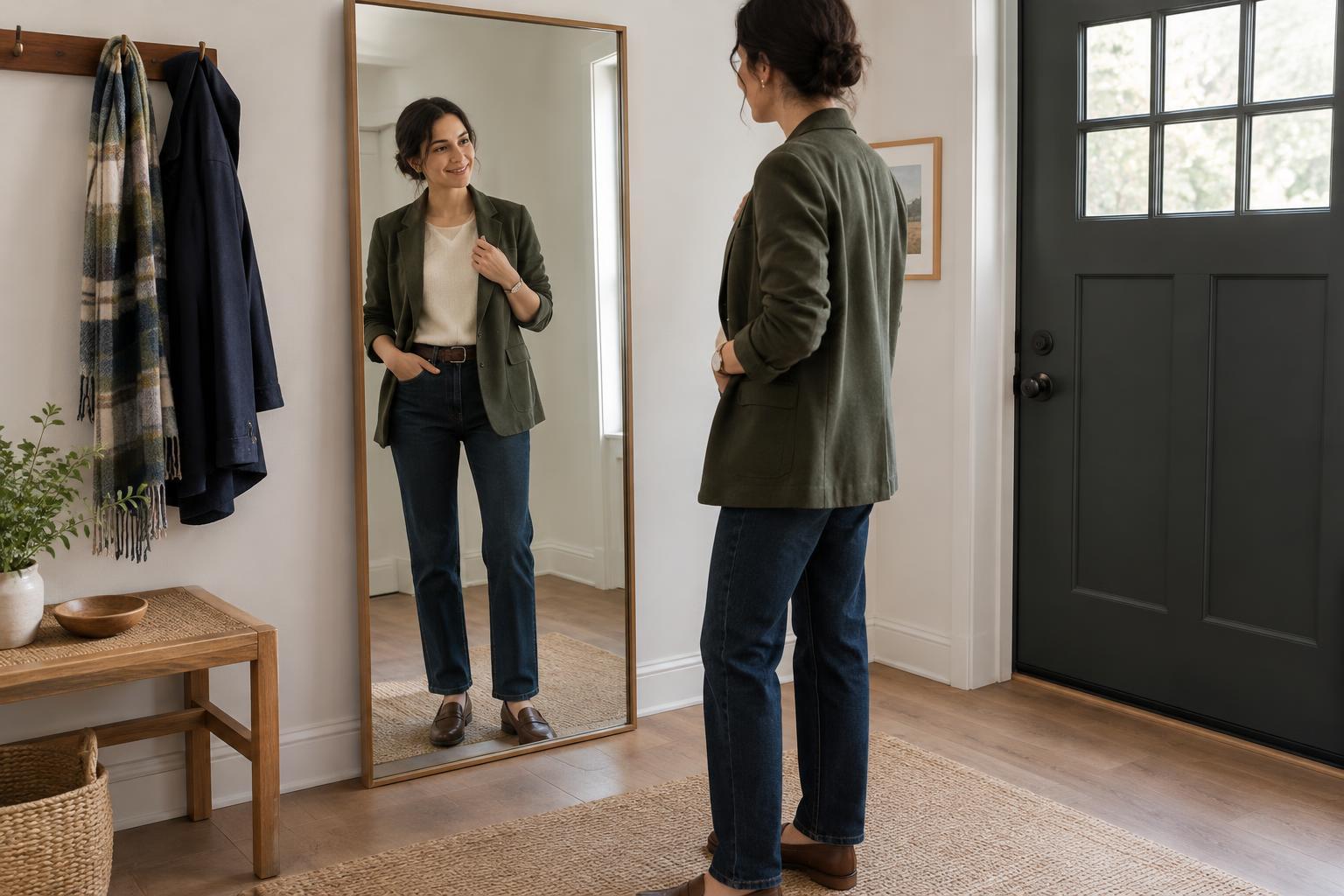
Try making three outfits around one printed piece. First, pair it with a solid in its background colour. Next, use a solid that picks up a smaller accent colour. Finally, wear it with a neutral you already rely on. For a patterned blouse, that might mean navy trousers, muted red trousers and familiar jeans. Seeing the options together can reveal which version feels most natural to you.
Before putting everything away, consider what makes each outfit practical. Check whether the layers work at the same time of year, whether the shoes suit your day and whether you feel comfortable in the amount of colour on display. You can take a quick photo or make a short wardrobe note if that helps you remember a combination. Pairing prints with solids becomes simpler when you have a few tested choices to return to, rather than inventing an outfit from scratch each morning.