Start with a colour family, not a perfect match
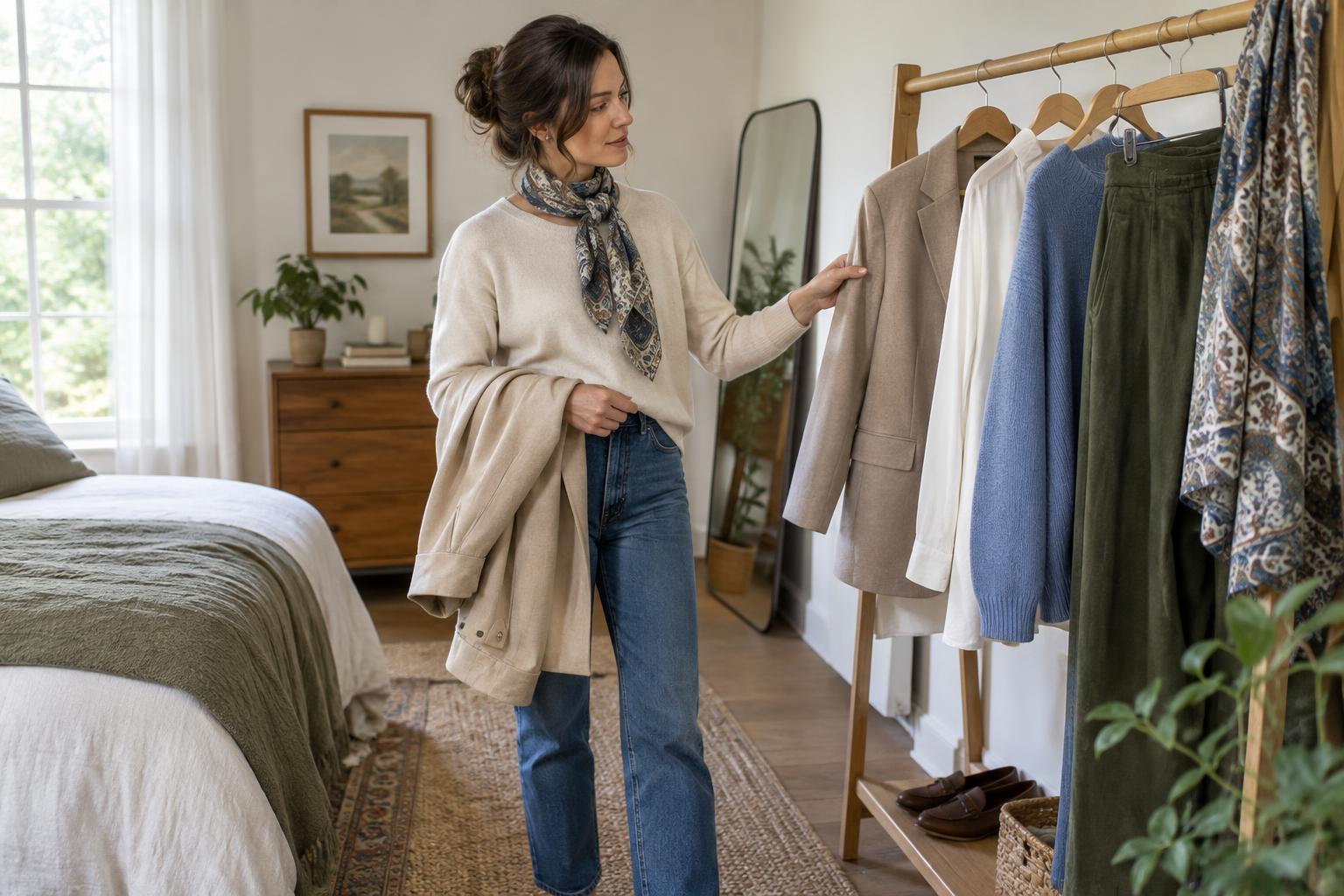
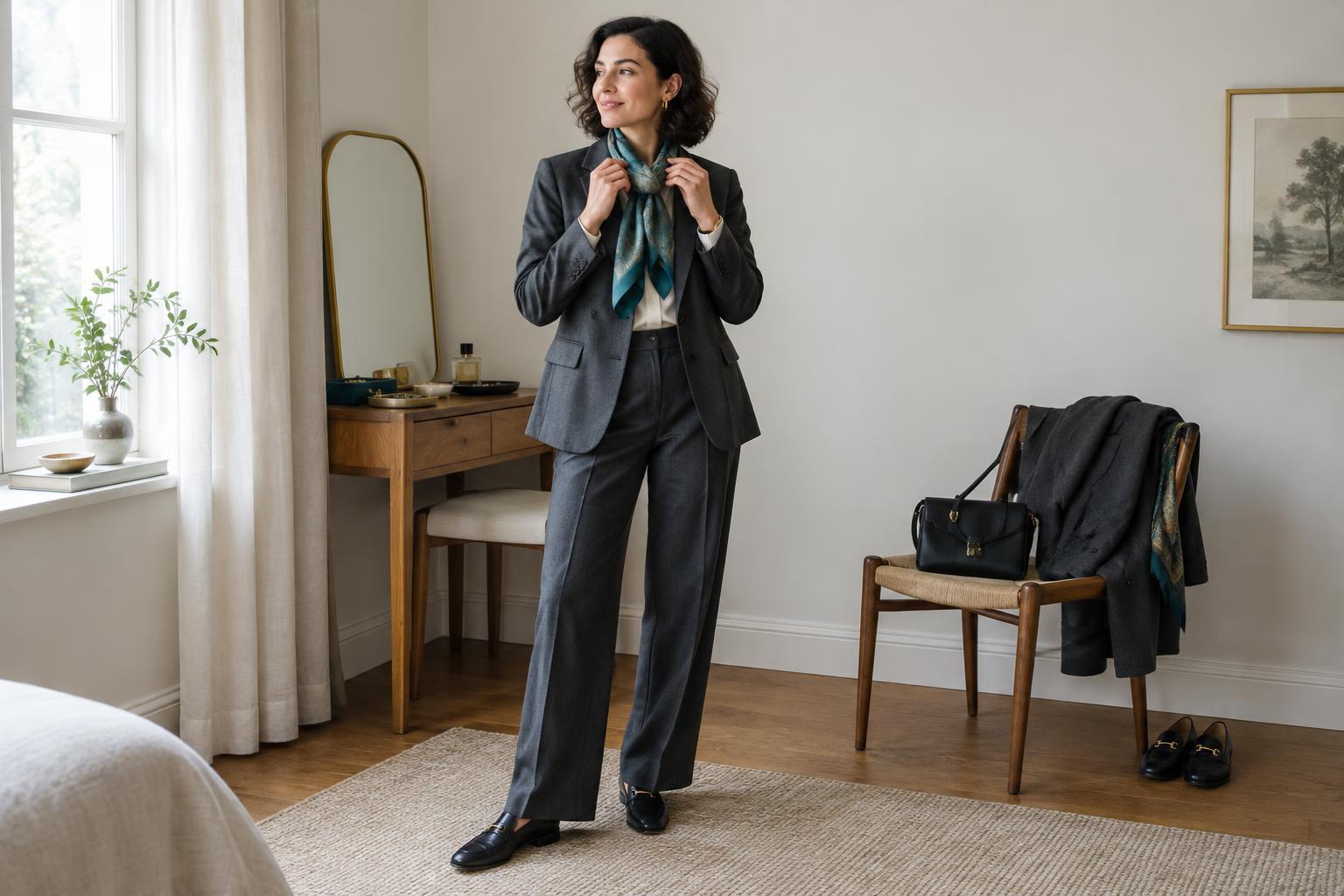
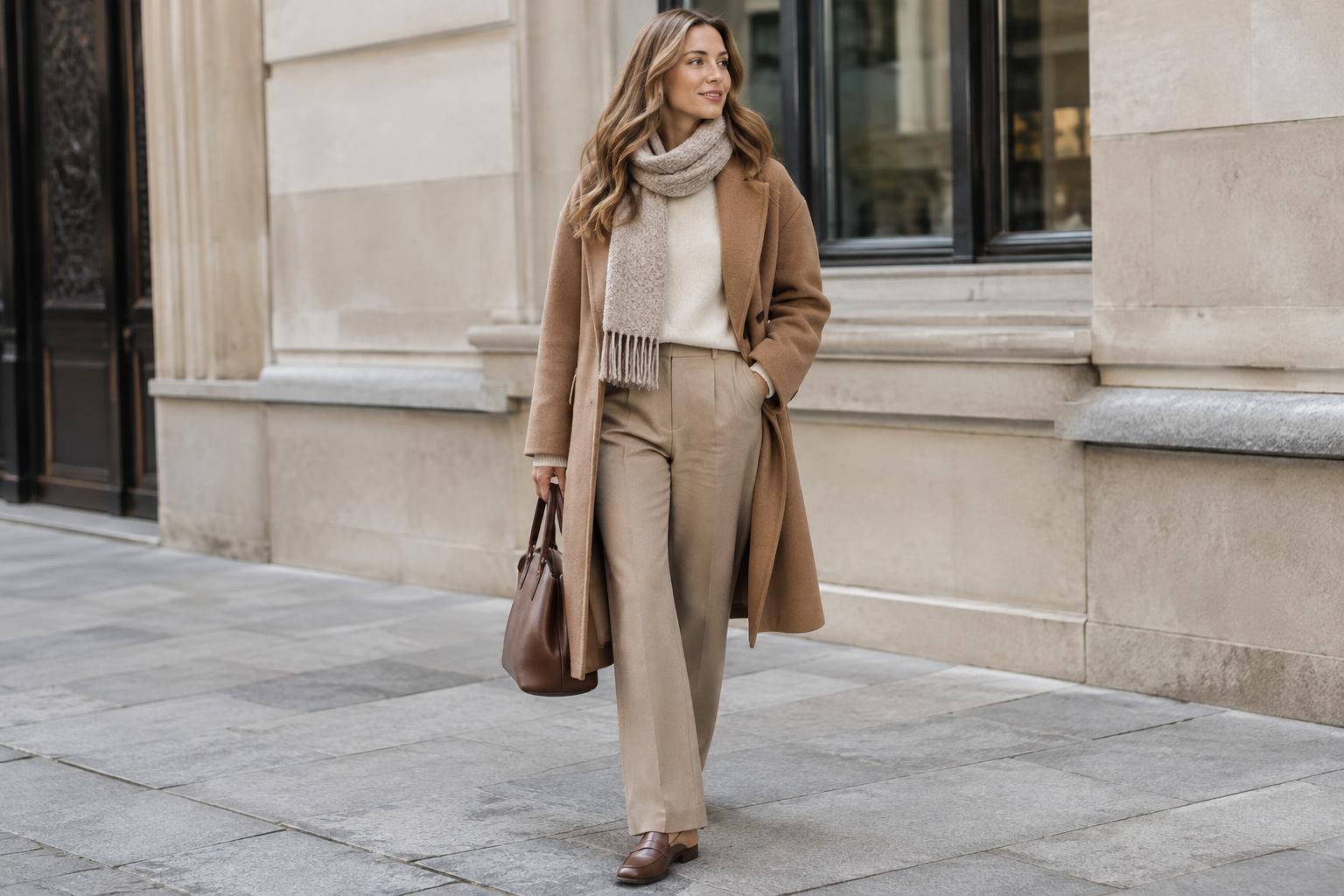
A monochrome outfit is built around one colour family, but its pieces do not have to be identical. In fact, an exact match can be harder to achieve than a pleasing mix of related shades. Think of cream with oatmeal and warm white, or charcoal with mid-grey and soft silver. The shared colour gives the outfit unity; the differences help each garment remain visible.
Begin with one item you want to wear, such as trousers, a skirt or a favourite knit. Then choose pieces that sit comfortably alongside it. If one item is noticeably warmer or cooler than the others, look at the whole outfit in natural light when you can. A cream top with a yellow cast may feel separate from a cool, bluish white jacket, while an off-white or beige layer might connect them. You do not need strict colour rules: the useful test is whether the combination looks intentional to you.
Create depth with light and dark shades
When every piece has a similar colour and a similar level of lightness, the eye may read the outfit as one uninterrupted block. Introduce a lighter or darker shade to give it a focal point. With a blue outfit, for example, dark navy trousers can anchor a medium-blue shirt and a paler blue scarf. The contrast is gentle, but it helps define the layers.
Decide where you want that contrast to sit. A darker outer layer can frame a lighter top; lighter trousers can make a dark sweater stand out. There is no requirement to place the darkest shade at the bottom. If you prefer a soft, low-contrast look, small differences are enough. The aim is to give the eye a way to move through the outfit, not to turn a quiet palette into a dramatic one.
Mix textures that show up at a glance
Texture is especially helpful when you want to wear nearly identical shades. A smooth cotton shirt, ribbed knit and structured denim each catch light differently, so they create separation without adding another colour. Matte and slightly lustrous finishes can work together, too: a silky scarf against a wool coat often adds more depth than another piece in the same flat fabric.
Choose texture according to the day rather than adding it for its own sake. A linen shirt and cotton trousers may suit a warm day; a soft knit and a sturdier jacket may feel better in cooler weather. Two distinct textures are usually enough to make a difference. If you are unsure whether a combination looks flat, stand back from the mirror. If you can still make out the main garments, the outfit probably has enough visual definition.
Let shape and layering do some of the work
Colour is only one part of how an outfit reads. Silhouette can create interest even when all the shades are close. Try pairing a relaxed shirt with straighter trousers, or a fitted top with a fuller skirt. A visible cuff, an open collar or a partial tuck can break up a large area of colour without making the outfit feel busy.
Layers offer another way to add structure. An open cardigan or jacket creates vertical lines and reveals the piece underneath; a coat worn over a shorter knit gives the look a clear outline. Pay attention to how the garments feel as well as how they look. If an outfit depends on constant adjusting, a simpler combination may serve you better. Monochrome dressing works best as an everyday option when you can move comfortably in it.
Finish with accessories, then check the whole outfit
Shoes, bags, belts and scarves can either blend into the colour family or provide a subtle point of contrast. Tan leather may soften a cream outfit, while dark shoes can ground an all-grey look. Metallic jewellery can add a little brightness without becoming the centre of attention. These are options, not finishing requirements; an outfit can feel complete with very few accessories.
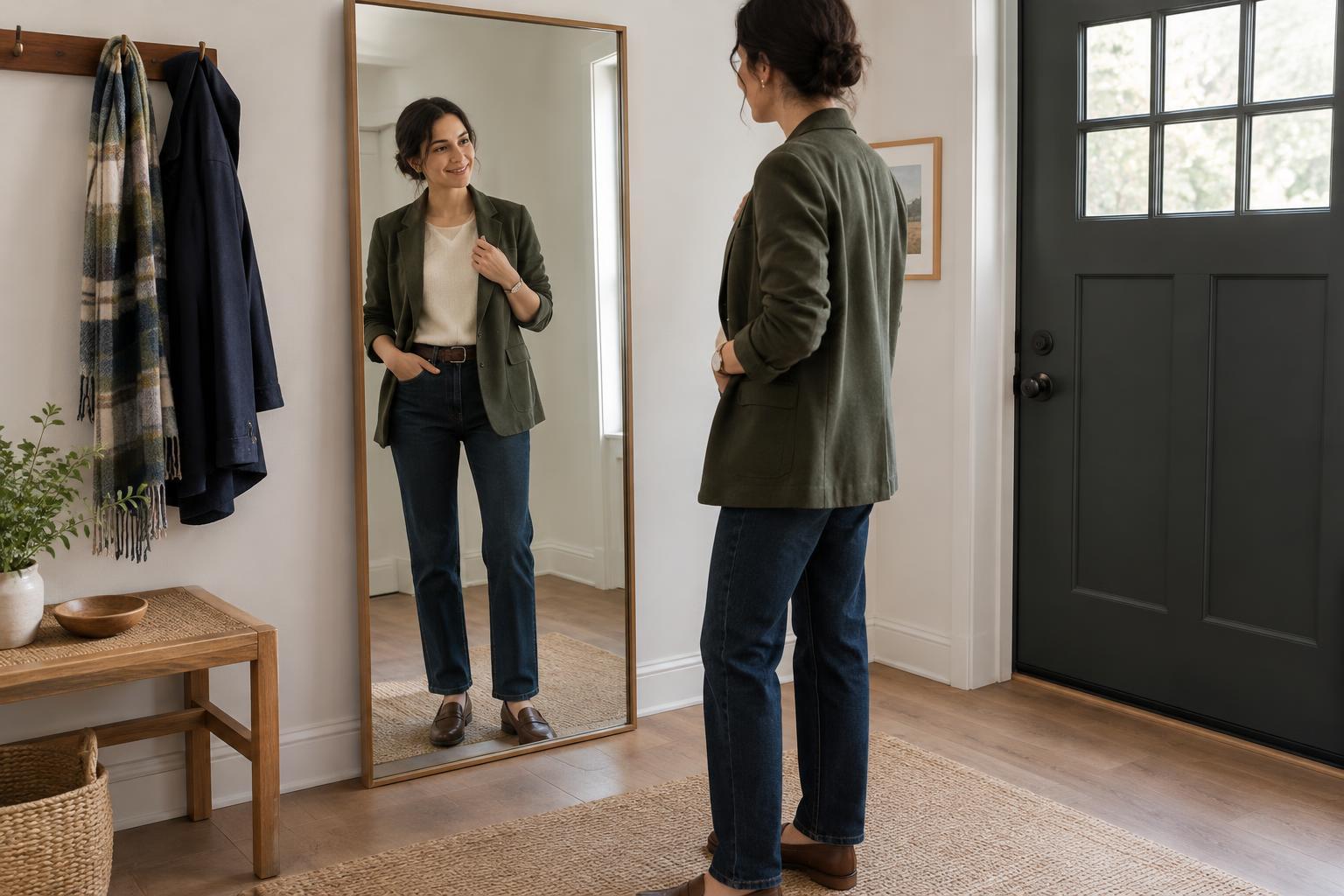
Before leaving, look at the outfit as a whole rather than judging each match separately. Ask whether one piece has a clear role, whether the shades and fabrics have enough variation, and whether the result suits where you are going. If it feels flat, change just one thing: swap a smooth layer for a textured one, add a lighter scarf or choose shoes with a different finish. Small adjustments are often more useful than rebuilding the entire outfit.