Start with the week you actually have
Before pulling clothes from the wardrobe, take a few minutes to look at the coming week. Note the days when you need to dress for work, travel, exercise, a social plan or time at home. Check the likely weather close to the day, but avoid building the entire plan around a forecast that may change. The aim is to identify what each outfit needs to do, not to assign a rigid look to every hour.
Write a short description beside each day, such as “comfortable for walking” or “neat enough for a meeting.” Include practical details: shoes that suit the distance you will cover, layers for changing temperatures and clothes that meet any dress requirements. This gives you a useful starting point for choosing from what you own, rather than trying to invent seven unrelated outfits.
Choose your anchors, then fill the gaps
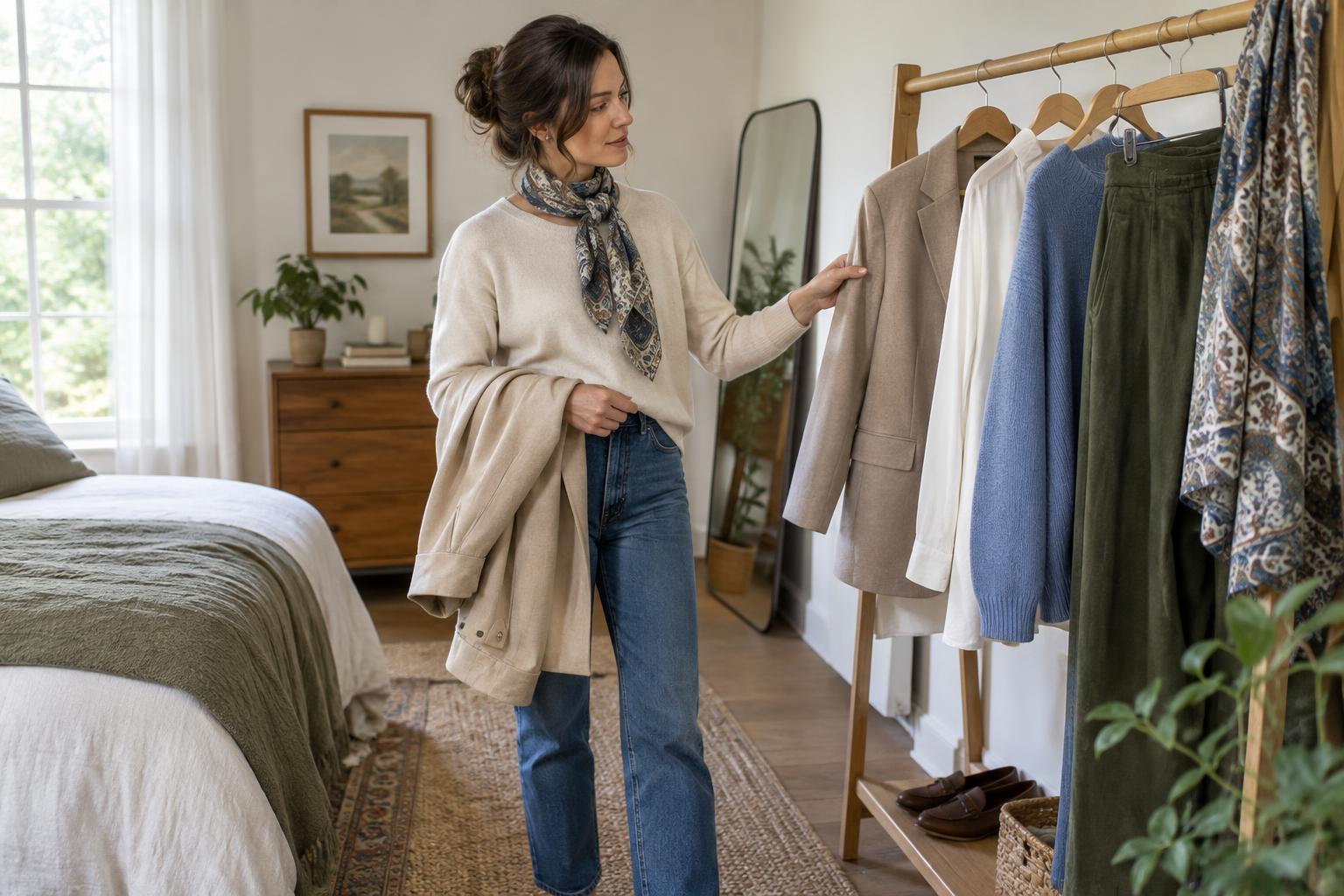
Begin with the pieces that have the fewest substitutes. If you have one pair of shoes you prefer for a long day on your feet, set those aside first. Do the same with a jacket needed for a particular setting or trousers that work well for travel. These are your outfit anchors. Once they are in place, choose tops, layers and accessories that work around them.
Next, look for pieces you enjoy wearing and can combine in more than one way. A shirt might be worn buttoned on one day and open over a simple top on another. A cardigan may suit several outfits without making them feel identical. You do not need a special “capsule wardrobe” to do this; you are simply noticing useful connections among the clothes you already have.
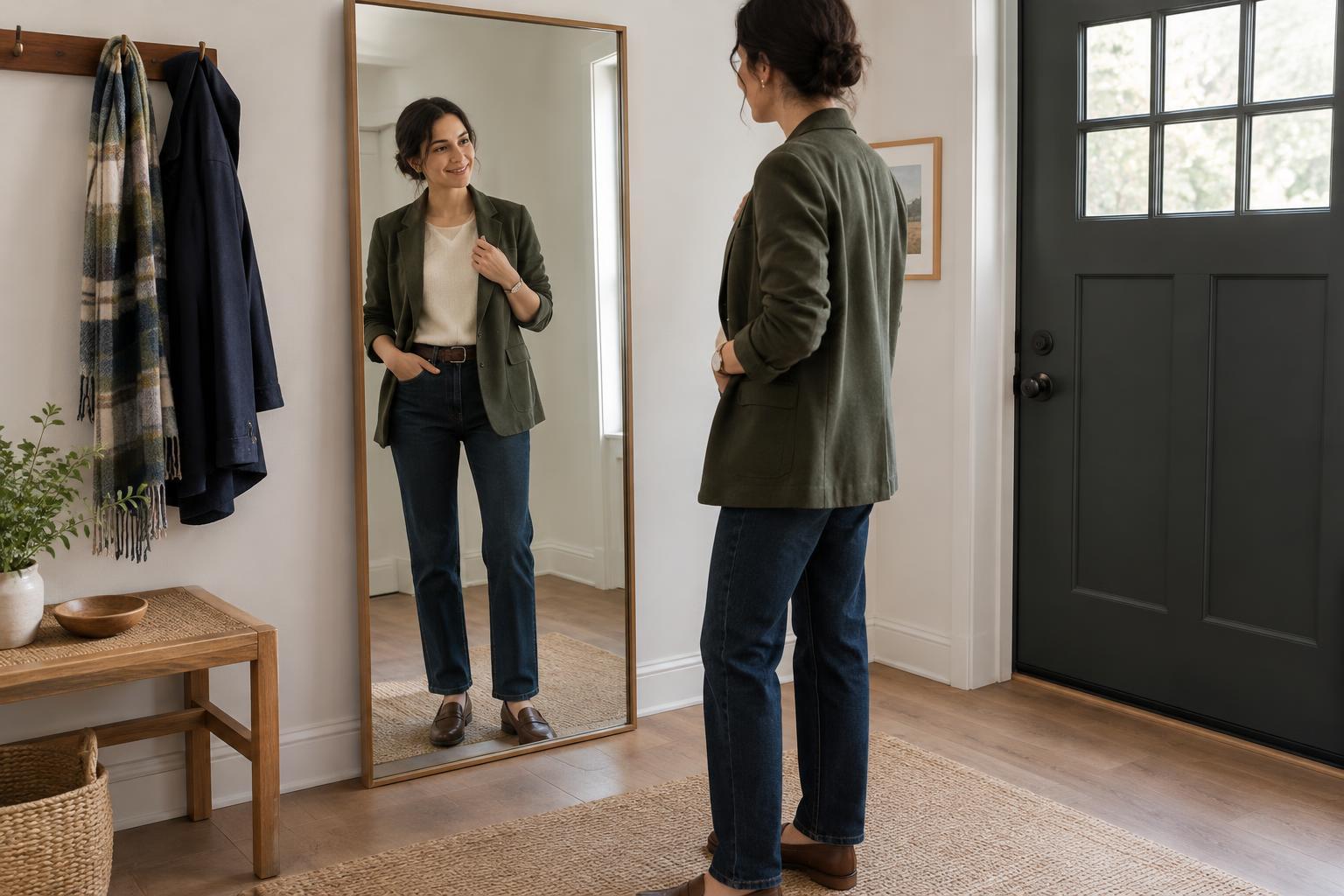
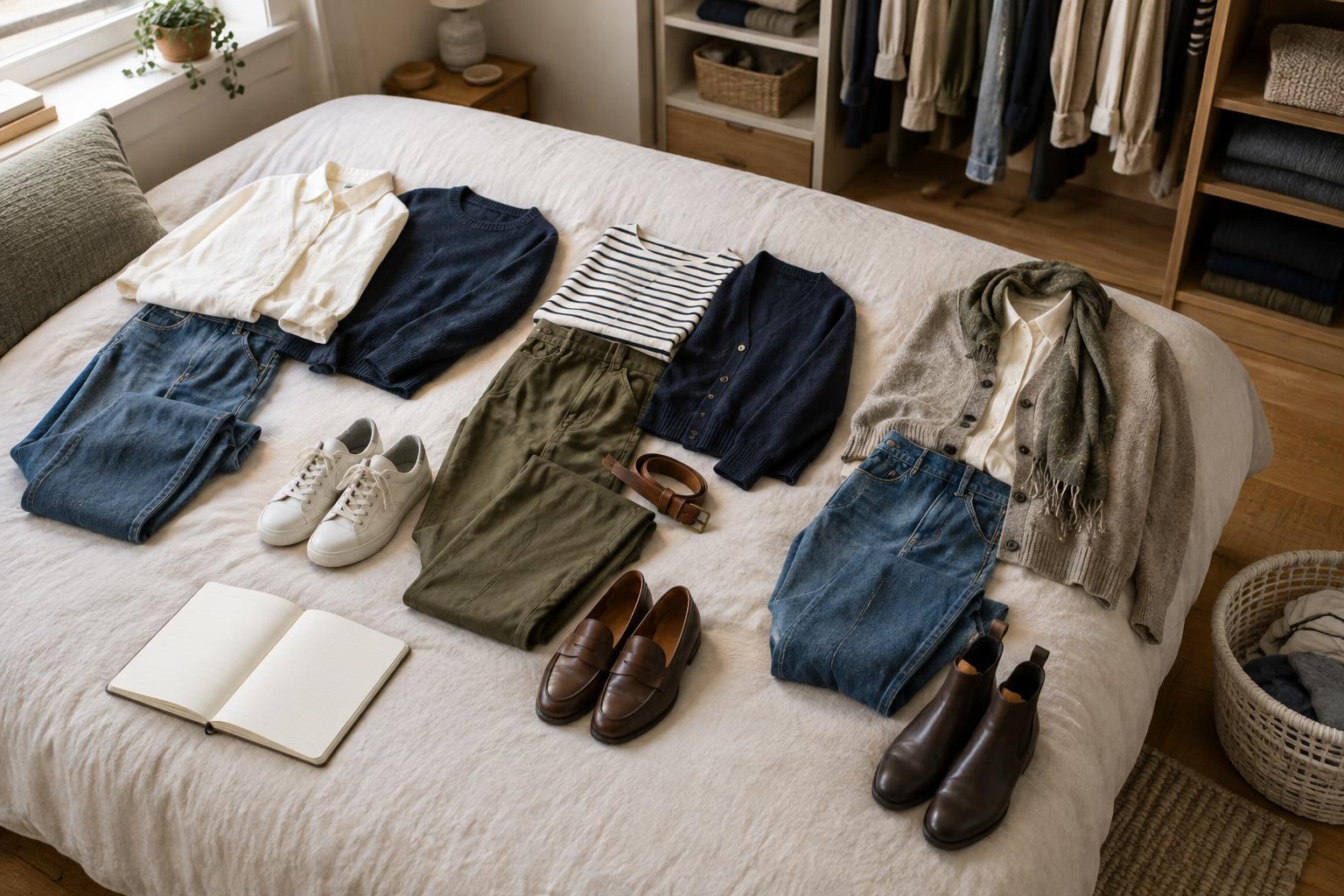
Lay each planned outfit on a bed or hang its pieces together if you have space. Seeing the full combination makes it easier to spot missing layers, awkward proportions or a shoe choice that does not suit the day. Try on any pairing you are unsure about. A combination that looks good on a hanger may feel less comfortable once you move around in it.
Make colour do some of the planning
A loose colour plan can help the week feel coordinated without requiring every outfit to match. Start by identifying two or three colours already present in several of your clothes. These might be neutrals, such as navy and cream, or colours you simply like wearing together. Then add other shades where they make sense; there is no need to limit yourself to a strict palette.
If a combination feels difficult, repeat one colour in a small way. A scarf can pick up a shade in a top, or shoes can echo the colour of a belt or bag. Another option is to keep the main garments quiet and let one colourful piece take the focus. Neither approach is a rule: the useful question is whether the outfit looks and feels right to you.
Colour also affects how easily you can reuse a layer. If one jacket works with several planned outfits, you may need fewer alternatives ready for the week. That is especially helpful when wardrobe space is limited or when you are packing a bag rather than dressing from home.
Plan repeats and laundry honestly
A week of outfits does not require seven completely different sets of clothes. Repeating shoes, outer layers, bags or suitable garments can make planning simpler. Decide what you are comfortable wearing again based on the item, how it was worn and whether it is clean and fresh. Check care labels and allow enough time for anything that needs washing or drying before its next planned use.
Before finalising the week, inspect the pieces you have chosen. Look for a loose button, a mark you had forgotten or shoes that need cleaning. Small problems are easier to handle now than when you are about to leave. If an item is not ready, swap it out rather than making it the fragile centre of your plan.
It can help to keep an outfit note on your phone or on paper. List the main garments and shoes for each day, along with any item that needs laundering. The note is a reminder, not a contract. Its purpose is to reduce decisions when you are busy.
Leave room for a change of plans
Keep one flexible outfit option in reserve: for example, a comfortable top and bottom that work with shoes already in your rotation. You can also identify a simple swap for an uncertain day, such as a warmer layer or a different pair of shoes. This is usually more useful than planning a complete second wardrobe for every possibility.
At the end of the week, notice which outfits you reached for and which stayed unworn. Was something uncomfortable, too warm or difficult to style? Use those observations the next time you plan. Over time, this small habit can show you which clothes genuinely support your routine and which combinations deserve another try.