Start with the piece you want to wear
A statement piece is simply the item you want people to notice first. It might be a patterned shirt, a vivid coat, sculptural earrings or a scarf in an unexpected colour. It does not have to be expensive or dramatic. If it feels more expressive than the rest of your wardrobe, it can serve as the starting point for an outfit.
Before choosing anything else, consider where you are going and what the piece needs to do. A bright bag may be easy to carry through a workday, while shoes you can only tolerate briefly may be better for a shorter outing. Let practical requirements narrow the options: check the weather, the amount of walking involved and any dress expectations. Then place the statement piece beside a few clothes you already wear comfortably. This keeps the outfit connected to your life rather than an imagined occasion.
Build a colour plan from what is already there
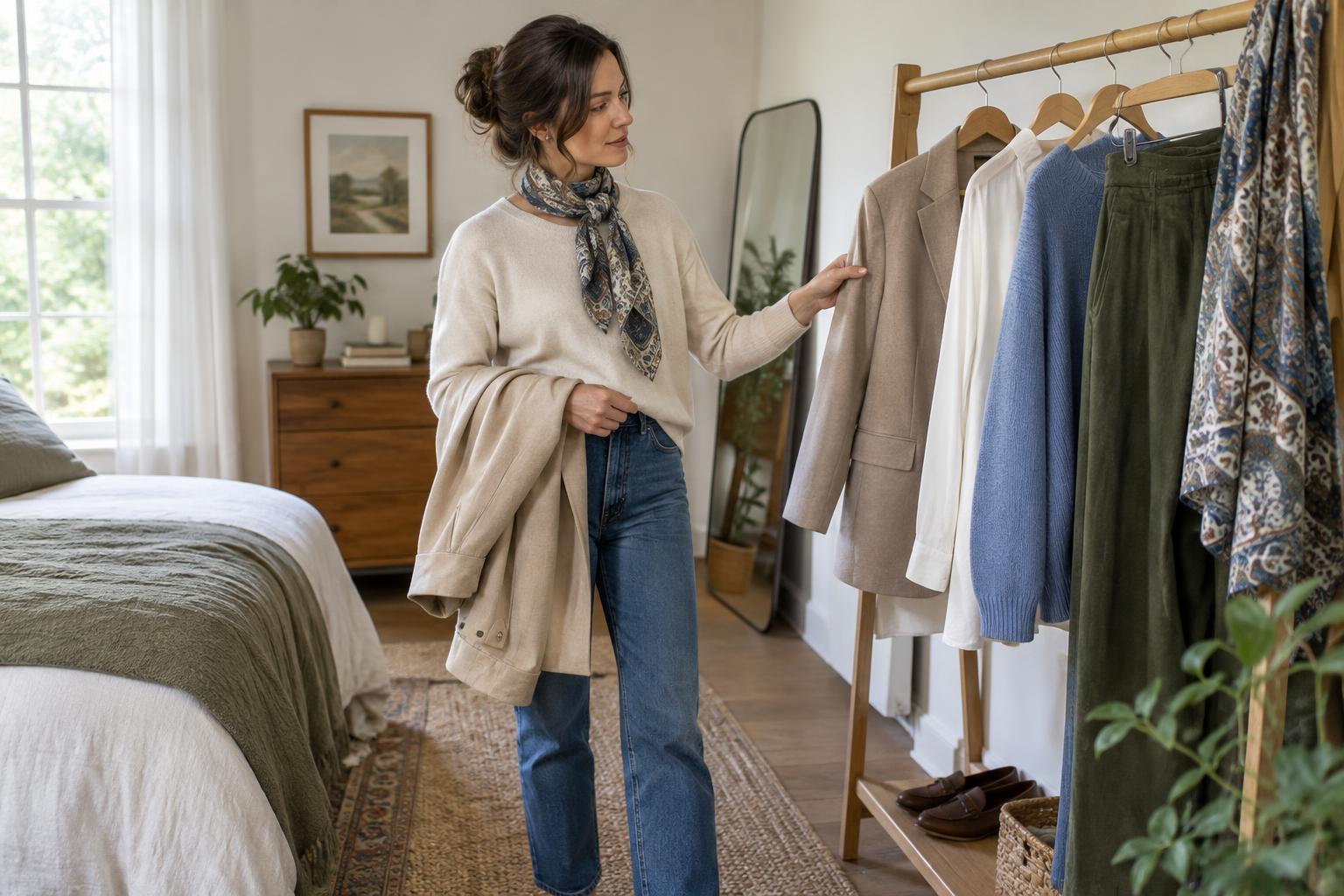
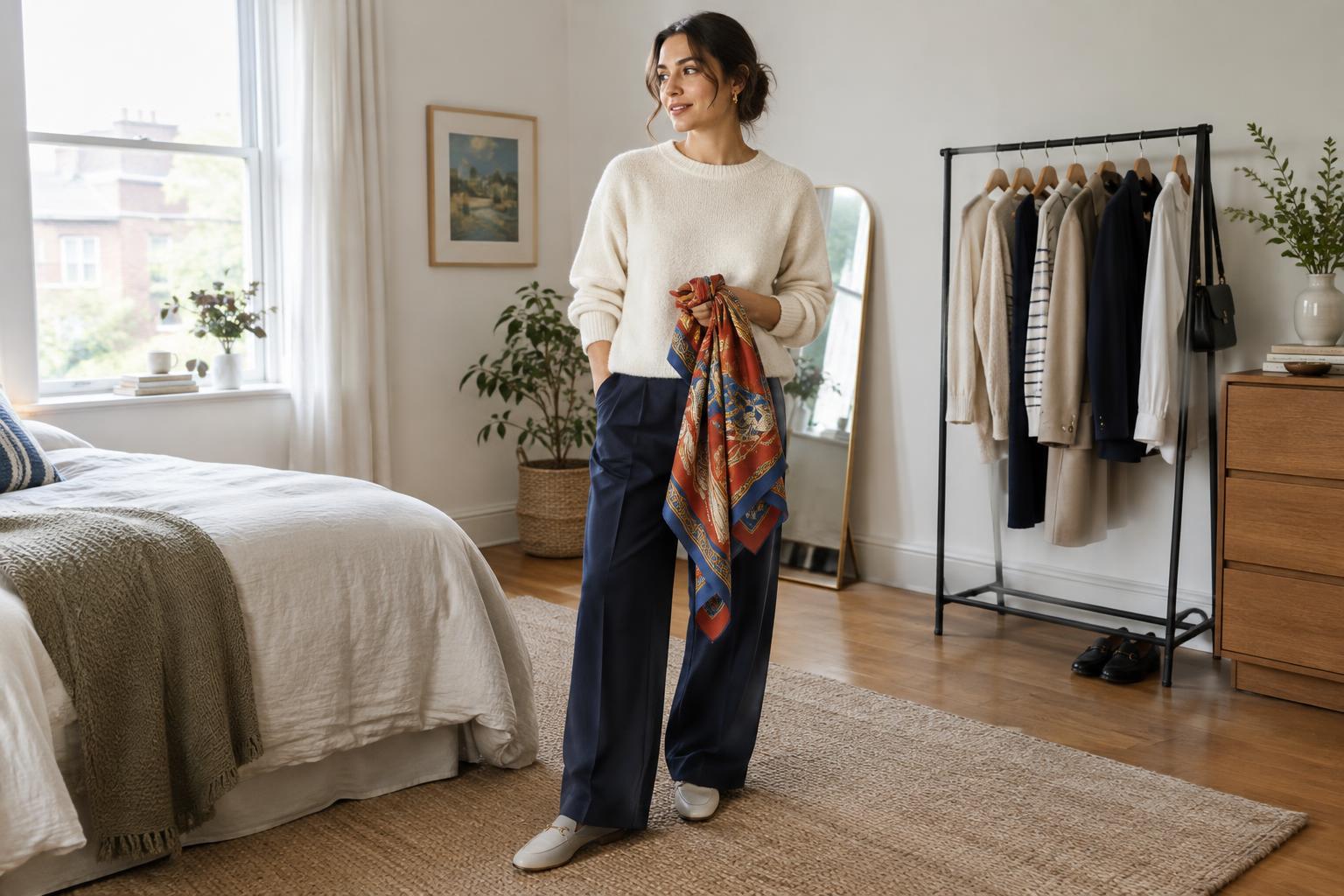
Look closely at the piece for colours you can repeat. A printed scarf might contain navy, cream and a small touch of orange. Navy trousers and a cream top would give the scarf a clear setting without requiring another orange item. Repeating one colour is an option, not a rule; sometimes a statement piece looks strongest when it is the only source of its colour.
If the piece is a single vivid colour, try it with familiar neutrals first. Black, white, grey, denim and softer shades such as beige can each create a different effect, so choose the combination that feels right to you. A cobalt sweater with dark jeans may feel relaxed, while the same sweater with light trousers may feel brighter. When colours seem to compete, set the garments next to each other in daylight if possible. Seeing them together is often more useful than trying to remember exact shades.
Give the focal point room without losing your style
A simple supporting outfit can make a statement piece easier to wear, but simple does not have to mean plain. Texture, shape and small details still matter. A patterned skirt might work with a ribbed knit and uncomplicated shoes; a bold necklace might sit well over a crisp shirt. These choices add interest while leaving a clear visual focus.
Pay attention to proportions as well as colour. If an oversized coat is the feature, slimmer or more defined pieces underneath can make its shape easier to see. If a full skirt is the feature, a tucked or shorter top may help show the waist. These are starting points, not requirements: loose shapes can also look intentional together. Try the complete outfit on and notice whether you can move comfortably and whether the overall shape looks the way you intended.
Decide what other accessories should do
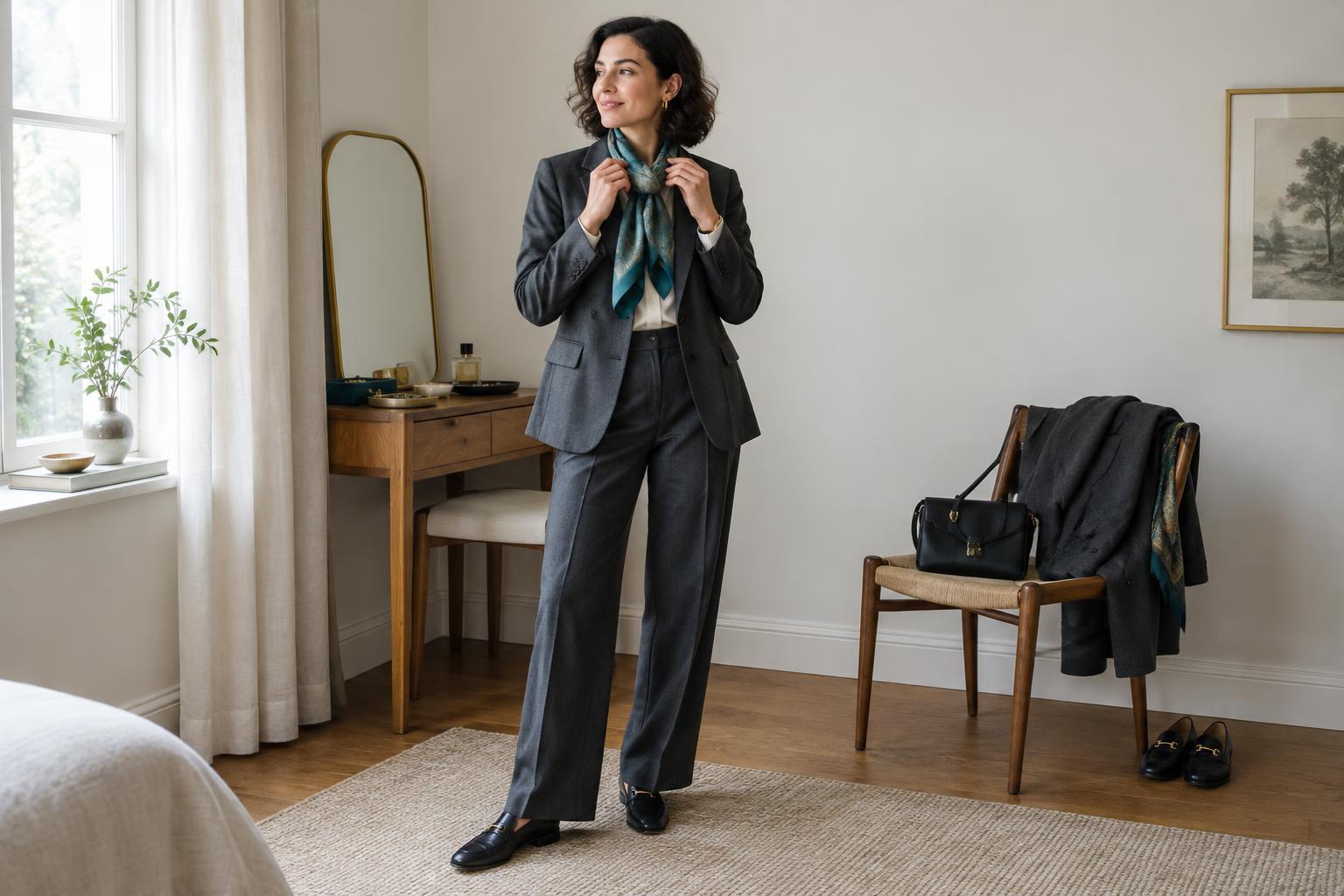
Accessories can echo the statement piece, soften it or stay quietly in the background. With large earrings, for example, you might skip a necklace and choose a bag in a familiar colour. With a striking coat, a plain scarf and practical shoes may be enough. If you enjoy combining bold items, look for a connection between them, such as a shared colour or a similar mood, rather than assuming you must limit yourself to one interesting piece.
Also consider what remains visible during the day. A patterned top hidden under a closed coat will not have the same effect as a bright bag you carry indoors. If you plan to remove a layer, check that the outfit still feels complete without it. Thinking through these small transitions helps the statement piece feel like part of your outfit rather than something added at the last moment.
Make the idea easy to repeat
Once you find a combination you like, notice its useful parts: perhaps the colour pairing, the balance of fitted and loose pieces, or the shoes that make it comfortable. You can repeat that structure with a different statement piece. A simple shirt-and-trousers outfit, for instance, can provide a base for several scarves, bags or jackets without looking identical each time.
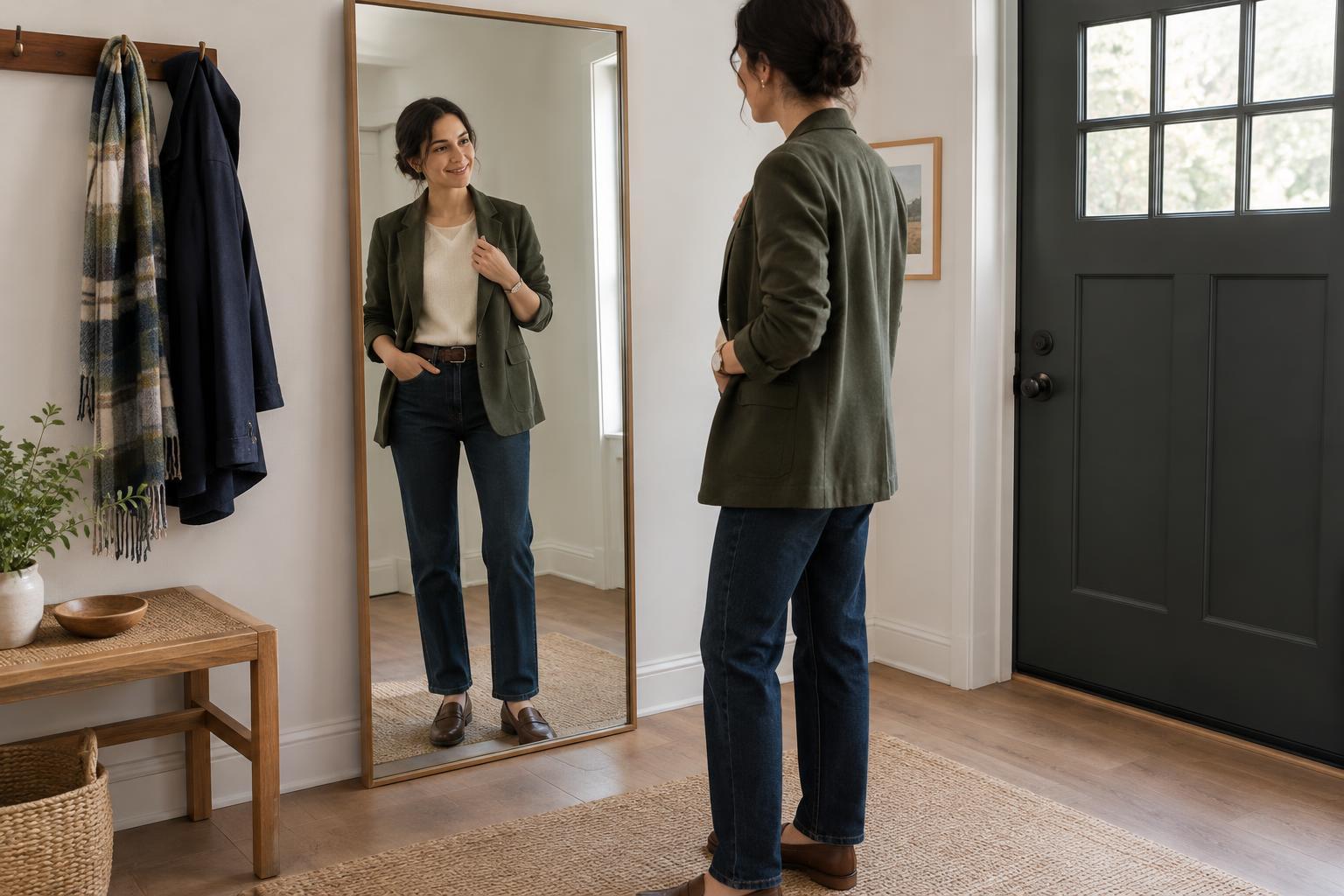
Before leaving, make one final check for comfort and ease. Adjust anything you expect to fuss with all day, and remove an item if the outfit feels crowded. The goal is not to make every element match perfectly. It is to give a piece you enjoy a place in an outfit you will actually want to wear.