Plan for the day, not just the morning
A cool start can make a warm sweater seem like the obvious choice, but that choice may feel uncomfortable by lunchtime. Before getting dressed, think through where you will spend the day: outdoors, in an office, on public transport, or moving between different spaces. Consider when you will be most active and whether you will have somewhere to put a layer you remove.
Temperature is only part of the picture. Wind can make a mild day feel cooler, while direct sun or a crowded indoor space can make the same outfit feel too warm. Rather than trying to predict exactly how you will feel, choose clothes that let you make one or two easy adjustments. The goal is not to prepare for every possibility. It is to stay comfortable through the changes you are most likely to encounter.
Build an outfit in adjustable layers
Start with a base piece that works on its own, such as a comfortable T-shirt, shirt, or lightweight top. If you remove everything worn over it, you should still feel appropriately dressed for your plans. This simple test prevents the common problem of wearing a thick outer layer over a top you would rather keep hidden.
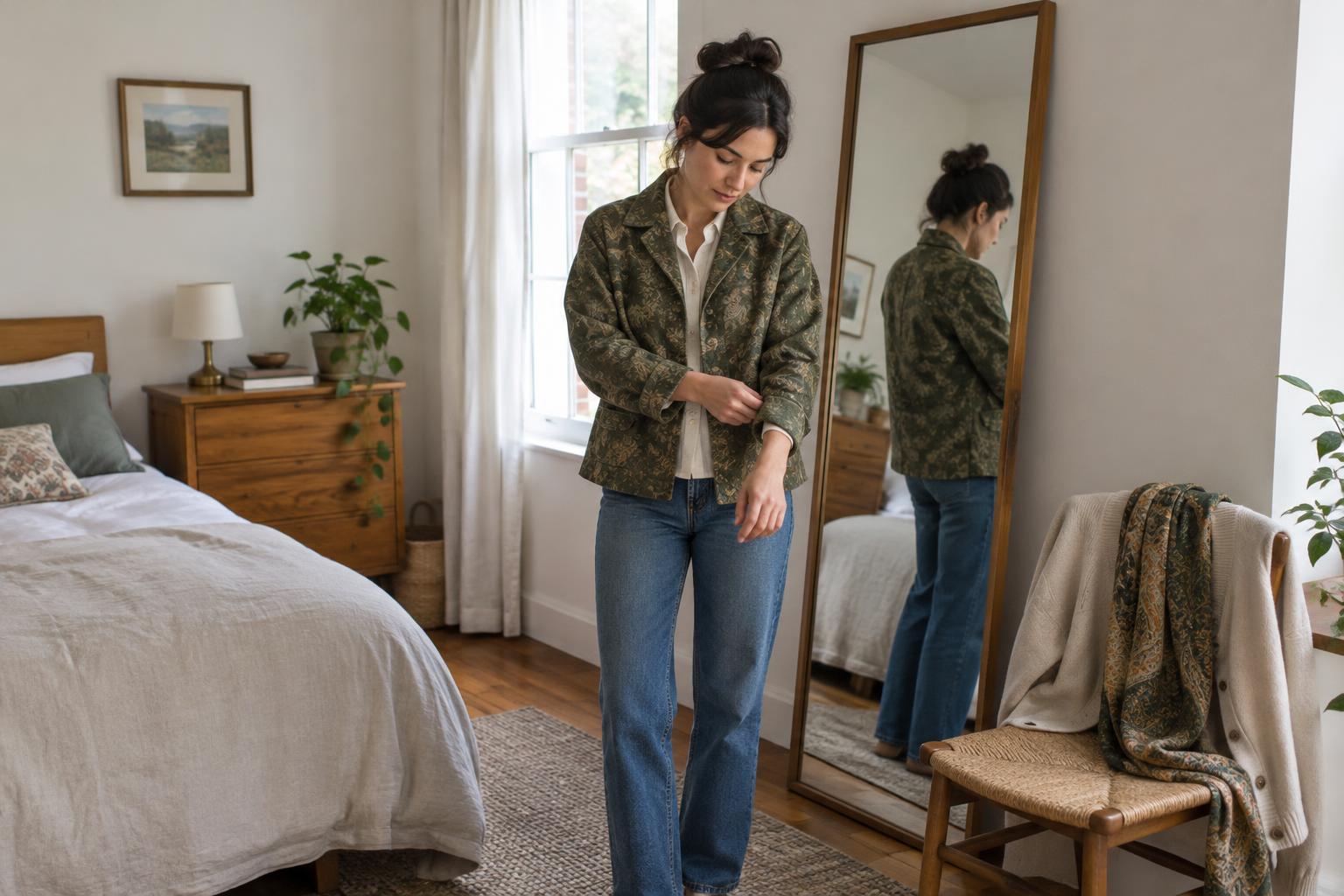
Add a middle layer that is easy to take off: an open shirt, cardigan, or light knit. Finish with an outer layer if the morning, evening, or weather calls for one. Each piece should be comfortable both together and separately. If sleeves bunch up or the jacket feels tight over the knit, try a thinner middle layer rather than relying on an outfit that only works while you stand still.
Think about how you will carry what you remove. A packable jacket or a cardigan that fits in your bag is more useful than a bulky piece you must hold all afternoon. If you will be walking a lot, carrying less may matter more than having an extra layer for every possible temperature.
Use colour to keep layers looking intentional
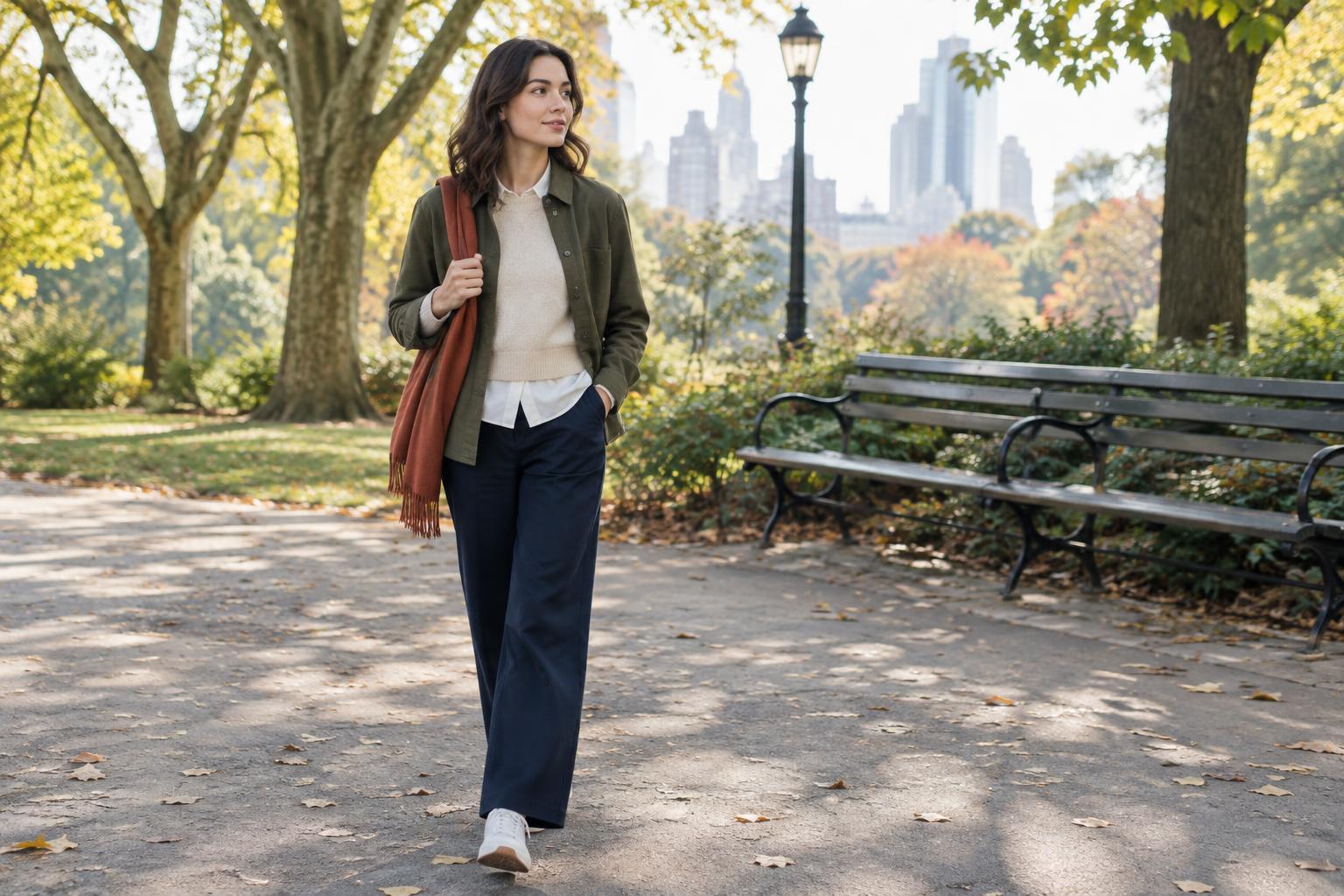
An adjustable outfit looks more cohesive when its layers share a simple colour plan. One approach is to choose a base neutral, such as navy, grey, brown, or black, then add a second neutral and one accent colour. For example, navy trousers and a cream top can work with a muted green overshirt. When the overshirt comes off, the remaining pieces still make sense together.
You do not need to match every item precisely. Repeating a colour in a small detail, such as a scarf, bag, or shoe, can help connect the outfit. If you enjoy brighter combinations, keep the pieces you are likely to remove in mind: the outfit should feel like yours at midday as well as in the morning.
Before leaving, look at the outfit with the outer layer on and off. This quick check is especially helpful when a coat hides most of what you are wearing. It also gives you a chance to notice whether the colours and proportions still feel balanced after you make an adjustment.
Choose accessories that do useful work
Small accessories can make a noticeable difference without changing the whole outfit. A scarf can add warmth around the neck on a cool walk and then tuck into a bag indoors. Socks that suit your shoes and trouser length can help you feel comfortable when the temperature drops. On a day with variable sun, a hat may be more practical than an extra clothing layer.
Choose accessories you will actually use and have room to store. A large scarf may be lovely, but if you have a small bag and a busy schedule, a lighter one could be easier to manage. Shoes deserve similar thought: a pair that suits both your outfit and the amount of walking you expect can make a changeable day simpler.
Make a repeatable plan from what you own
You do not need a separate wardrobe for unpredictable days. Try identifying a few combinations from clothes you already own: a base top, a removable middle layer, and an optional outer layer. Check that the pieces fit together, then note which combinations work for a walk, a workday, or a casual outing. Having two or three reliable options can make mornings quicker.
After wearing an outfit, notice what you kept on, what you carried, and what you wished you had chosen differently. Perhaps your middle layer was too warm indoors, or your bag was too small for your jacket. Use that observation to refine the combination next time. A flexible outfit is not one that handles every condition perfectly; it is one you can adjust easily while still feeling comfortable and like yourself.