Start with the garment, not the stain remover
Before applying anything, check the garment’s care label. A washable cotton shirt gives you more options than a silk blouse, a wool jumper or an item marked dry-clean-only. For delicate fabrics or garments with dye that may run, blot away excess liquid and consider taking the item to a professional cleaner. Tell them what caused the mark and whether you have already treated it.
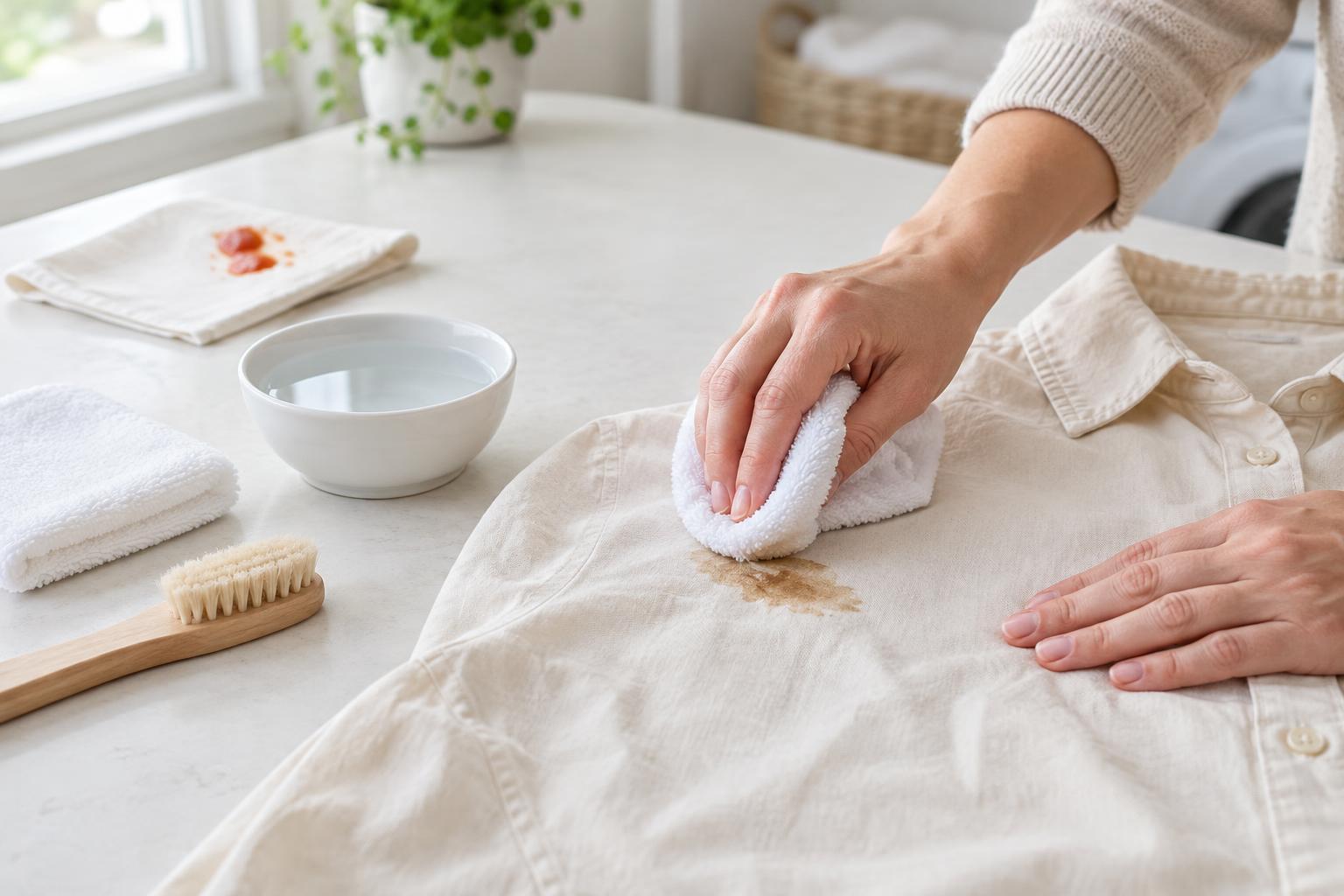
For washable clothes, remove any solid food with the edge of a spoon, then blot liquid with a clean cloth or paper towel. Work gently: rubbing can spread the stain or push it deeper into the fibres. If possible, rinse from the back of the fabric with cool water so the spill moves out the way it came in. Place a clean towel behind the stained area if you need to keep the mark from transferring to another part of the garment.
Test any detergent or stain remover on an inconspicuous area first, particularly on dark or brightly coloured clothing. Follow the product label as well as the garment label, and never mix cleaning chemicals. Pretreatment improves the chances of removal, but it cannot guarantee that every mark will disappear.
For oil and greasy foods, tackle the fat first
Salad dressing, cooking oil, butter and creamy sauces can leave a dark-looking patch that water alone may not lift. After scraping off any food, blot the area without pressing hard. Apply a small amount of liquid laundry detergent or a stain remover labelled for grease to the mark. Gently work it in with your fingers and let it sit for the time stated on the product label before washing.
Some washable fabrics may tolerate a drop of mild dish soap, but it can produce too much foam in a washing machine. If you use it, rinse it out thoroughly by hand before laundering. Avoid adding large amounts of any product: excess residue can be difficult to remove, especially from a lightweight blouse or a closely woven fabric.
Wash at a temperature permitted by the care label, then inspect the garment while it is still damp. An oil mark can be hard to spot on wet fabric, so let the item air-dry if you are unsure. Do not put it in a tumble dryer until you are satisfied the stain is gone; heat can make a remaining mark harder to remove.
For coffee, tea, wine and fruit drinks, rinse promptly
These spills often contain pigments that can colour fabric. Blot up as much liquid as you can, then rinse the back of the stain with cool running water if the garment is washable. For a spill that includes milk or cream, cool water is a sensible first choice because heat can make protein-containing residue more stubborn. Pretreat with liquid laundry detergent or a product suitable for coloured drink stains, following its directions.
Coffee, tea and red wine marks may need more than one treatment. If the care label allows, a laundry product containing oxygen-based bleach may be an option for a persistent mark; check that the product is suitable for the fabric and colour, and test it in a hidden spot. Do not assume that a white garment can tolerate chlorine bleach: trims, finishes and some fibres may not. Wash, inspect and repeat a suitable treatment if needed before machine-drying.
For tomato sauce and protein-rich foods, choose a gentle first rinse
Tomato sauce combines colour with oil, so remove any sauce sitting on the surface before rinsing the fabric from behind with cool water. Work a little liquid laundry detergent into the remaining mark, giving particular attention to any greasy area. Follow the detergent’s directions, then wash as the garment label permits. A second pretreatment may be more useful than aggressive scrubbing, which can wear the fabric or leave a pale patch.
Egg, yoghurt and other protein-rich foods also call for a cool-water rinse at the start. Avoid hot water until the residue has been removed, as heat can make protein stains more difficult to shift. After rinsing, use a laundry detergent suitable for the garment and wash according to the care label. If a sauce contains several ingredients, such as cheese, oil and tomato, expect to check for both a coloured mark and a greasy patch after washing.
Make a final check before putting clothes away
Good stain care is often a short sequence rather than a single trick: remove excess food, blot or rinse, pretreat with a suitable product, wash, and inspect before applying heat. If the stain remains, repeat only a treatment the fabric can tolerate. Avoid ironing over a mark as well as tumble-drying it.
Once the garment is clean, wash out any remaining pretreatment product and dry it according to its care label. Keeping a suitable laundry detergent and a clean cloth within reach makes small spills easier to address without turning every meal into a wardrobe emergency. When an item is delicate, valuable or unfamiliar to you, taking a cautious approach is usually better than trying a stronger product.