Start with the shape of the symbol
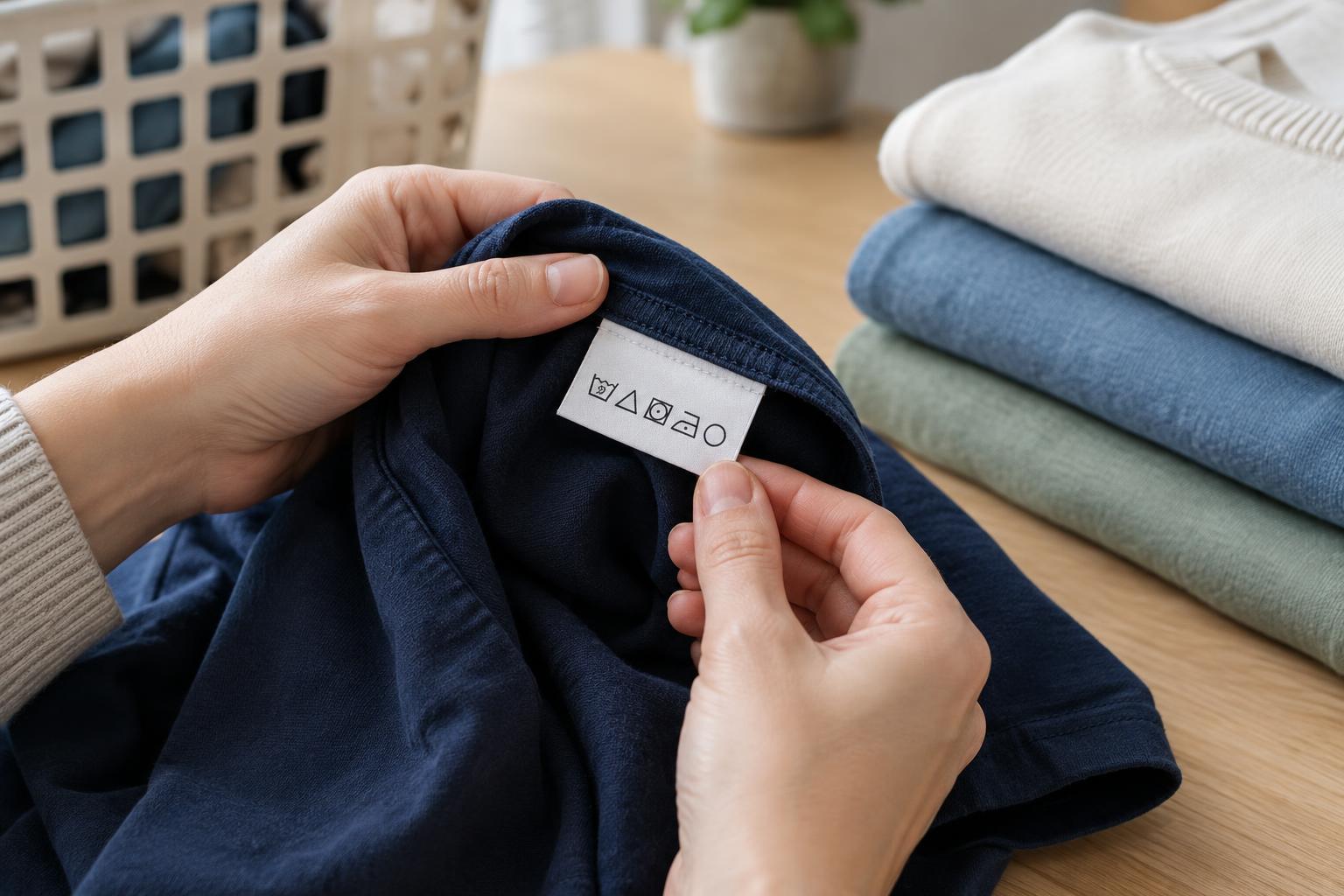
A care label is a compact set of instructions for looking after a garment. The five main shapes are a washtub for washing, a triangle for bleaching, a square for drying, an iron for ironing and a circle for professional cleaning. Read each shape separately: a top that can be machine-washed may still need to be kept out of the tumble dryer.
Across these symbols, a cross usually means “do not,” while dots indicate a heat setting. A line beneath a washtub or professional-cleaning circle calls for a gentler process. Before cutting out an itchy label, take a clear photo of it and keep the photo where you can find it. Care instructions are particularly useful for pieces with linings, trims or mixed fabrics, whose needs may not be obvious from how the garment feels.
Read the washing and bleaching instructions
A washtub means the garment can be washed. A number inside it gives the maximum wash temperature in degrees Celsius, not a temperature you must use. Dots may be used instead of a number to indicate temperature: fewer dots mean cooler water. A hand in the tub means hand wash, while a crossed-out tub means do not wash. One line beneath the tub indicates a gentle cycle; two lines indicate an even more delicate cycle. When in doubt about your machine’s settings, choose a gentler programme and avoid crowding the drum.
The triangle covers bleach. An empty triangle permits bleaching, a triangle with two diagonal lines permits non-chlorine bleach only, and a crossed-out triangle means do not bleach. Check this symbol before treating a stain, since many stain-removal products contain bleaching agents. If the label permits washing but says nothing about bleach, do not assume bleach is suitable. For an unfamiliar product, follow its directions and test it cautiously on a hidden area when appropriate.
Choose a drying method before you wash
A square containing a circle refers to tumble drying. Dots inside the circle indicate the heat setting: one dot means low heat and two dots mean a higher setting. A cross through the symbol means do not tumble dry. Heat and movement can affect some fabrics, finishes and garment shapes, so this instruction matters even when the washing directions seem straightforward.
A plain square with lines inside describes drying without a machine. A horizontal line means dry flat, which can help a knit retain its shape. Vertical lines indicate line or drip drying, depending on the particular symbol. If you are unsure how to interpret a drying mark, laying the item flat on a clean towel or hanging it with adequate support is often a cautious starting point, provided the label does not specify otherwise. Smooth seams and reshape the garment gently while it is damp rather than trying to correct its shape after it dries.
Check ironing and professional-care marks
The iron symbol tells you whether and how to iron. One dot means low heat, two mean medium heat and three mean high heat; a crossed-out iron means do not iron. Start lower than you think you need, especially with synthetics, prints or decorative finishes. If a garment has a design or embellishment, ironing it inside out or using a pressing cloth may help protect its surface, but the label’s temperature limit still applies.
A circle indicates professional cleaning. Letters inside the circle give a cleaner instructions about the appropriate process; they are not settings to copy on a home washing machine. A crossed-out circle means do not dry clean. Some labels also use a W inside a circle to indicate professional wet cleaning. If a piece says not to wash and shows a professional-care symbol, take the garment and its label to a cleaner rather than experimenting at home.
Turn the label into a simple laundry routine
Before washing, check pockets and fasten closures that might catch on other clothes. Sort by colour and care needs, not just by garment type: a delicate dark blouse may need a different load from sturdy dark jeans. Give heavily dyed new items a separate wash if you are concerned about colour transfer. A mesh bag can help protect small or delicate pieces, but it does not replace the cycle and temperature specified on the label.
Finally, treat the label as the starting point and pay attention to how the garment responds. Use a suitable amount of detergent, leave room for clothes to move in the machine and remove damp items promptly. If an item is important to you or difficult to replace, choose the least demanding permitted method first. A brief label check before each unfamiliar garment goes into the laundry is easier than trying to undo shrinkage, fading or a misshapen knit afterward.